


Key Takeaways
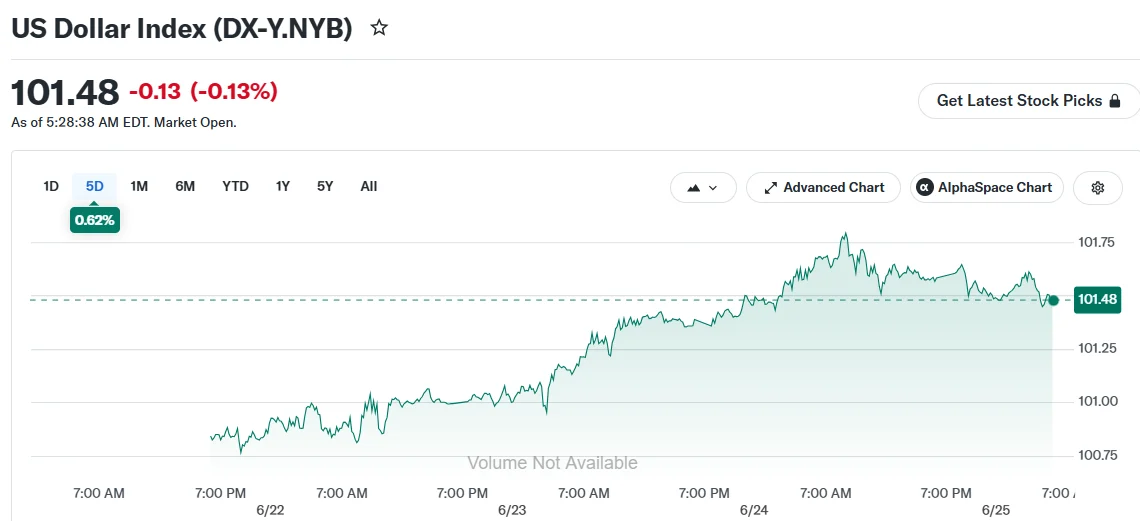
- The greenback index climbed to a 13-month summit of 101.8, driving the euro beneath $1.14 and sterling to its weakest in seven months
- Market participants now anticipate at least one Federal Reserve rate increase by October, reversing earlier predictions of rate reductions
- Bitcoin tumbled beneath $60,000 for the first time in 2024 while gold momentarily dropped below $4,000 per ounce
- Thursday’s release of the Fed’s favored inflation metric, core PCE for May, is projected at 3.4% — significantly above the central bank’s 2% objective
- Market watchers are monitoring Japan for possible currency intervention as the yen lingers near four-decade lows at approximately 161.79 per dollar
The U.S. currency is poised to record its strongest monthly performance in almost twelve months, driven by growing expectations that the Federal Reserve will implement interest rate hikes before 2026 concludes.
The dollar index, measuring the American currency against a basket of six major global currencies, reached a 13-month summit of 101.8 on Wednesday before moderating to approximately 101.60 on Thursday.
The common European currency declined below $1.14, marking its lowest valuation in more than twelve months. The British pound slipped to $1.314 at its nadir, a threshold unseen since November. While both currencies experienced modest rebounds on Thursday, they continued facing downward pressure.
The Japanese currency remained anchored near 161.79 per dollar, hovering close to its feeblest position in four decades. Market observers and financial experts are vigilantly monitoring for any indication that Japanese officials might intervene to bolster their currency.

“Given the accumulation of yen shorts, we would expect the impact to be significant if intervention were to be carried out,” said Hirofumi Suzuki, currency strategist at SMBC in Tokyo.
Monetary Policy Expectations Fuel Greenback Rally
The transformation in market outlook has been dramatic. Earlier in the year, financial markets broadly anticipated Federal Reserve rate cuts. Currently, traders are factoring in at least one rate hike as early as October, with approximately 50% probability of a subsequent increase before year’s conclusion.
This reversal follows the U.S.-Israeli military engagement with Iran, which heightened inflation concerns and diminished the rationale for accommodative monetary policy.
Two-year U.S. Treasury yields, serving as indicators of near-term rate projections, have advanced nearly 14 basis points this month to 4.15%. This contrasts sharply with merely a 2 basis point increase in German yields and approximately 9 basis point decline in UK gilt yields, expanding the differential that enhances dollar asset appeal.
MUFG currency strategist Lee Hardman noted that markets are clearly wagering the Fed will “back up tough talk on inflation by hiking rates this year.”
Digital Assets and Precious Metals Succumb to Dollar Dominance
The strengthening dollar has created waves across alternative asset classes. Bitcoin descended below $60,000 for the first time since 2024, pressured by the robust greenback and evolving risk sentiment.
Gold temporarily slipped beneath $4,000 per ounce for the first time in over seven months before staging a modest recovery.
Critical Inflation Measurement Awaits Market Scrutiny
Market attention has converged on Thursday’s release of the core Personal Consumption Expenditures price index for May. Economic forecasters surveyed by Reuters anticipate a 3.4% increase, substantially exceeding the Federal Reserve’s 2% inflation target.
An elevated reading could propel the dollar to even loftier heights, while a softer-than-expected figure might provide respite to competing currencies.
The Australian dollar retreated 0.12% to approximately $0.69 following inconsistent employment figures. The New Zealand dollar similarly lingered near seven-month troughs, with both antipodean currencies taking cues from U.S. monetary policy expectations.
