



Key Takeaways
- Bitcoin declined 2.5% to approximately $62,674 on Tuesday, June 23, 2026.
- Federal Reserve’s aggressive monetary policy stance continues to pressure cryptocurrency markets.
- Bitcoin ETFs recorded approximately $160 million in withdrawals this week, marking the sixth consecutive week of negative flows.
- Technology sector weakness pulled down speculative assets, with the Nasdaq dropping more than 2%.
- Blockchain analytics identify $60,587 as crucial support; breaching this threshold could trigger a decline toward $46,702.
The leading cryptocurrency has faced significant headwinds this week, approaching the psychologically important $60,000 threshold as macroeconomic challenges and institutional capital flight create sustained downward pressure.
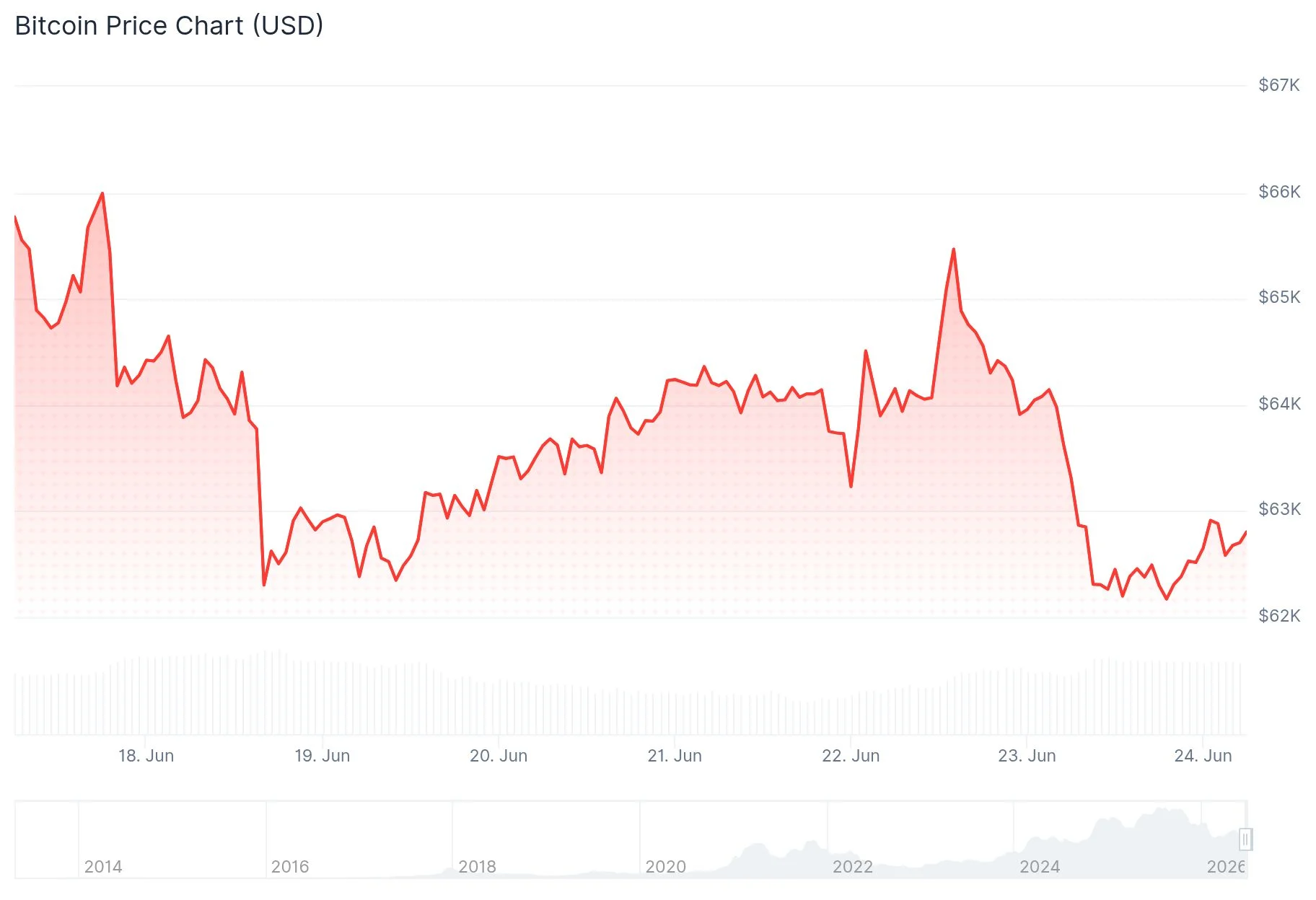
Bitcoin retreated 2.5% to $62,674.70 on Tuesday, June 23. This represents a decline of over 50% from its peak valuation of $126,000 achieved in October 2025.
The downturn materialized as market participants processed aggressive monetary policy signals from the Federal Reserve. During last week’s policy meeting, the Fed maintained current interest rates but eliminated previous language suggesting potential cuts—the first session led by newly appointed chair Kevin Warsh. The majority of Federal Reserve officials now indicate support for increasing rates before year-end.
Elevated interest rates typically disadvantage non-yielding assets like Bitcoin. Current market expectations, based on CME FedWatch Tool data, indicate nearly 70% probability of a September rate increase.

Thursday’s Personal Consumption Expenditures (PCE) inflation release represents the next crucial catalyst. Economists anticipate Core PCE will register a 3.4% annual increase for May, significantly exceeding the Federal Reserve’s 2% inflation objective. Nexo analyst Dessislava Ianeva observed: “A hawkish PCE surprise reinforces the post-FOMC dollar bid, the most consistent headwind for bitcoin since the June meeting.”
Geopolitical tensions involving the U.S. and Iran compound market anxiety. The ongoing conflict has disrupted the Strait of Hormuz, creating energy market instability and dampening appetite for risk assets.
Institutional Withdrawal Pattern Continues
Spot Bitcoin exchange-traded funds have recorded outflows for six consecutive weeks. Approximately $160 million exited these investment vehicles during the current week. Throughout the past month, cumulative net withdrawals from the spot Bitcoin ETF ecosystem have surpassed $6 billion.
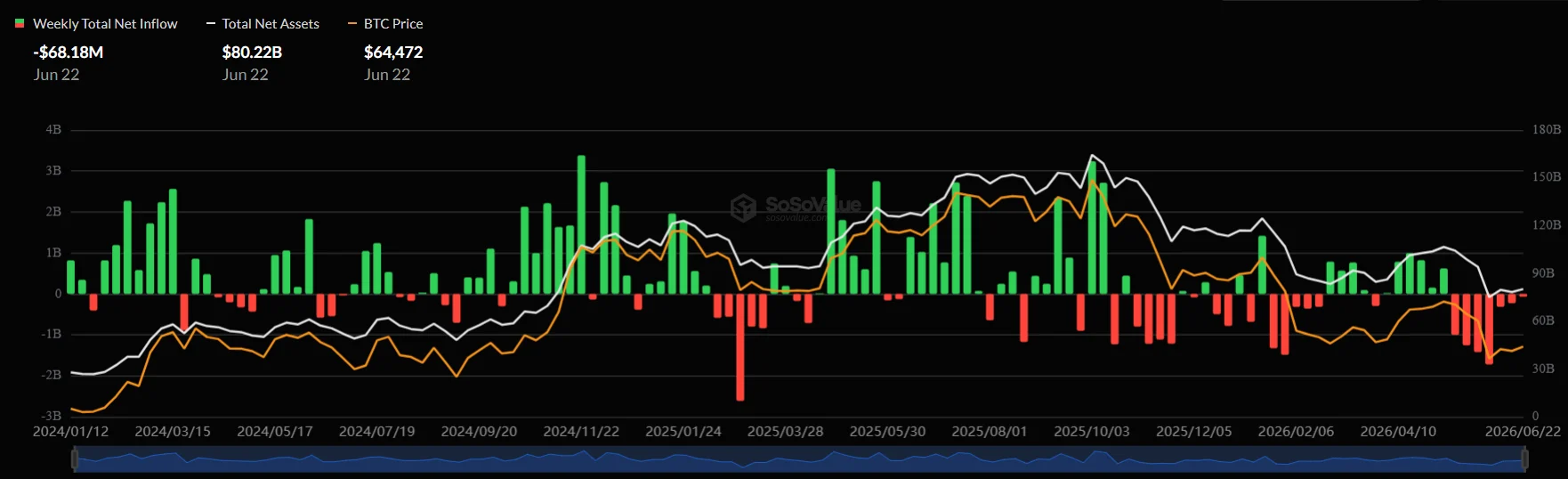
Mike McCluskey, co-founder of cryptocurrency tokenization platform TX, emphasized the significance of ETF momentum: “Until this flow data demonstrates a definitive reversal, any relief rallies are likely to find a hard ceiling.”
The Coinbase premium indicator revealed Bitcoin trading below fair value on America’s leading exchange, suggesting diminished domestic retail participation.
Critical Price Zone Under Scrutiny
Cryptocurrency analyst Ali Charts identified a pivotal on-chain price region. Data reveals over 1.3 million BTC changed hands between $60,000 and $63,000, establishing this as the most significant volume concentration on record.
Ali Charts emphasized: “Immediate support at $60,587 must hold to maintain the current trend. A break below it opens a path to $46,702, where 150,000 BTC moved.”
Broader technology sector weakness on Wall Street intensified cryptocurrency selling pressure. The Nasdaq Composite surrendered more than 2% on Tuesday. Bitcoin mirrored the risk-averse sentiment pervading financial markets.
With inflation data scheduled for Thursday release and institutional flows remaining negative, the $60,587 support threshold has emerged as the most closely monitored price point among traders.
