



TLDR
- Crude prices plunged more than 3% Monday with further declines Tuesday following diplomatic progress between the U.S. and Iran
- A 60-day U.S. sanctions exemption now permits Iran to export crude oil to international markets
- Shipping traffic through the Strait of Hormuz has restarted after a prolonged suspension
- America’s Strategic Petroleum Reserve reached its most depleted state in over four decades
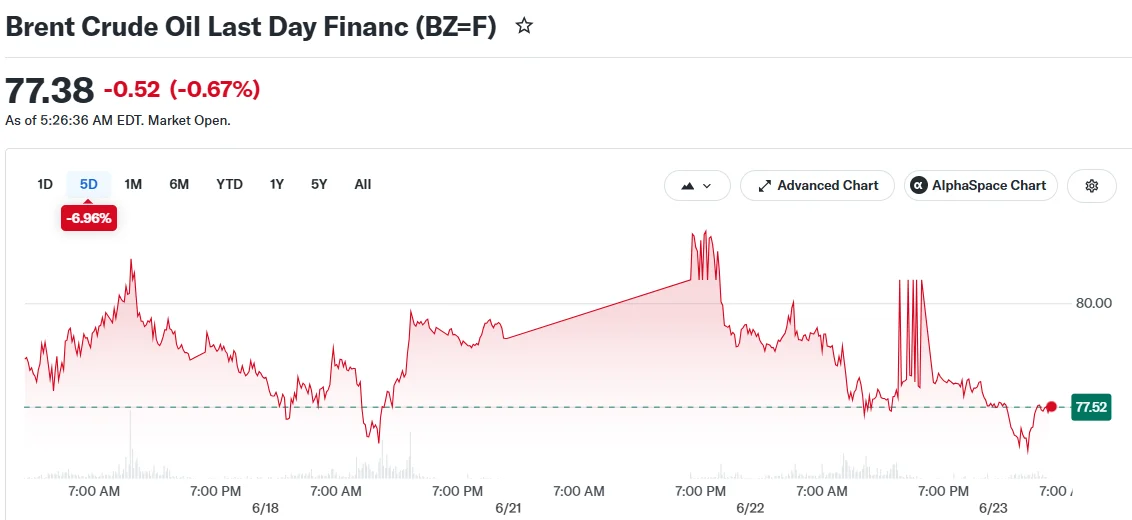
- Brent crude slipped to approximately $76.76, retreating significantly from conflict-driven peaks above $120
Following diplomatic negotiations, the United States has authorized a 60-day sanctions exemption for Iran, alleviating global oil supply anxieties and driving crude prices down for consecutive sessions.
What’s Behind the Oil Price Decline
Oil prices experienced significant declines Monday before extending losses Tuesday after Washington issued a 60-day general authorization permitting Iran to market crude oil and refined petroleum products worldwide.
Brent crude retreated approximately 1.5% to settle at $76.76 per barrel. West Texas Intermediate dropped 1.3% to $72.88 per barrel.
The exemption encompasses more than just petroleum sales—it extends to associated banking transactions, insurance coverage, and maritime transportation services. This development unlocks additional markets for Iranian oil, potentially including American buyers.

“Iran had already started ramping up exports following the lifting of the US blockade. This sanctions waiver will open more markets for Iran to sell its oil, including the US,” ING analysts said.
During the conflict’s peak, oil prices had skyrocketed beyond $120 per barrel when maritime passage through the Strait of Hormuz faced severe interruptions.
Strait of Hormuz Shipping Gradually Resumes
The Strait of Hormuz serves as a critical passage for approximately 20% of global oil and liquefied natural gas shipments. The waterway had remained closed for more than three months during the hostilities.
Vessel movement through the strait recommenced Monday. According to MarineTraffic tracking data, two medium-sized crude carriers transporting nearly 2 million barrels navigated into the Gulf of Oman.
Nonetheless, industry experts cautioned that normalization won’t occur overnight. Maritime operators are demanding verification that naval mines have been completely removed. Additional challenges include damaged port infrastructure, underwater debris, and vessel backlogs.
“Ship owners and operators will require assurances that the threats posed by mines have been fully eliminated,” said Tamas Varga, analyst at PVM Oil Associates.
U.S. Strategic Reserve Hits Four-Decade Nadir
The U.S. Strategic Petroleum Reserve’s crude inventory declined to 331.2 million barrels in the most recent week. This represents the reserve’s lowest point since June 1983.
The substantial drawdown illustrates the severity of supply constraints experienced throughout the conflict period. Iranian representatives characterized the recent negotiations as yielding “major progress,” with expectations for a comprehensive agreement within the 60-day timeframe.
Saxo Bank’s Ole Hansen observed that the sanctions exemption redirects market focus entirely toward supply dynamics. The influx of additional Iranian crude into global markets has emerged as the predominant factor influencing price movements.
Meanwhile, a Reuters survey of analysts suggests U.S. crude stockpiles likely contracted last week, providing additional context for a market rapidly recalibrating to evolving geopolitical developments.
