



Key Takeaways
- Central scenario forecasts ETH ranging from $8,000 to $12,000 by 2031
- Optimistic scenario envisions $20,000 to $30,000 if Ethereum dominates digital finance infrastructure
- Pessimistic scenario estimates $2,500 to $4,000 amid heightened competition
- Weighted probability analysis suggests approximately $10,500 as a realistic target
- Ethereum’s advantage stems from its extensive network spanning DeFi, stablecoins, and asset tokenization
Ethereum has evolved far beyond its origins as a simple digital currency. It has transformed into the backbone infrastructure supporting stablecoins, decentralized financial protocols, tokenized real-world assets, and countless blockchain-based applications.
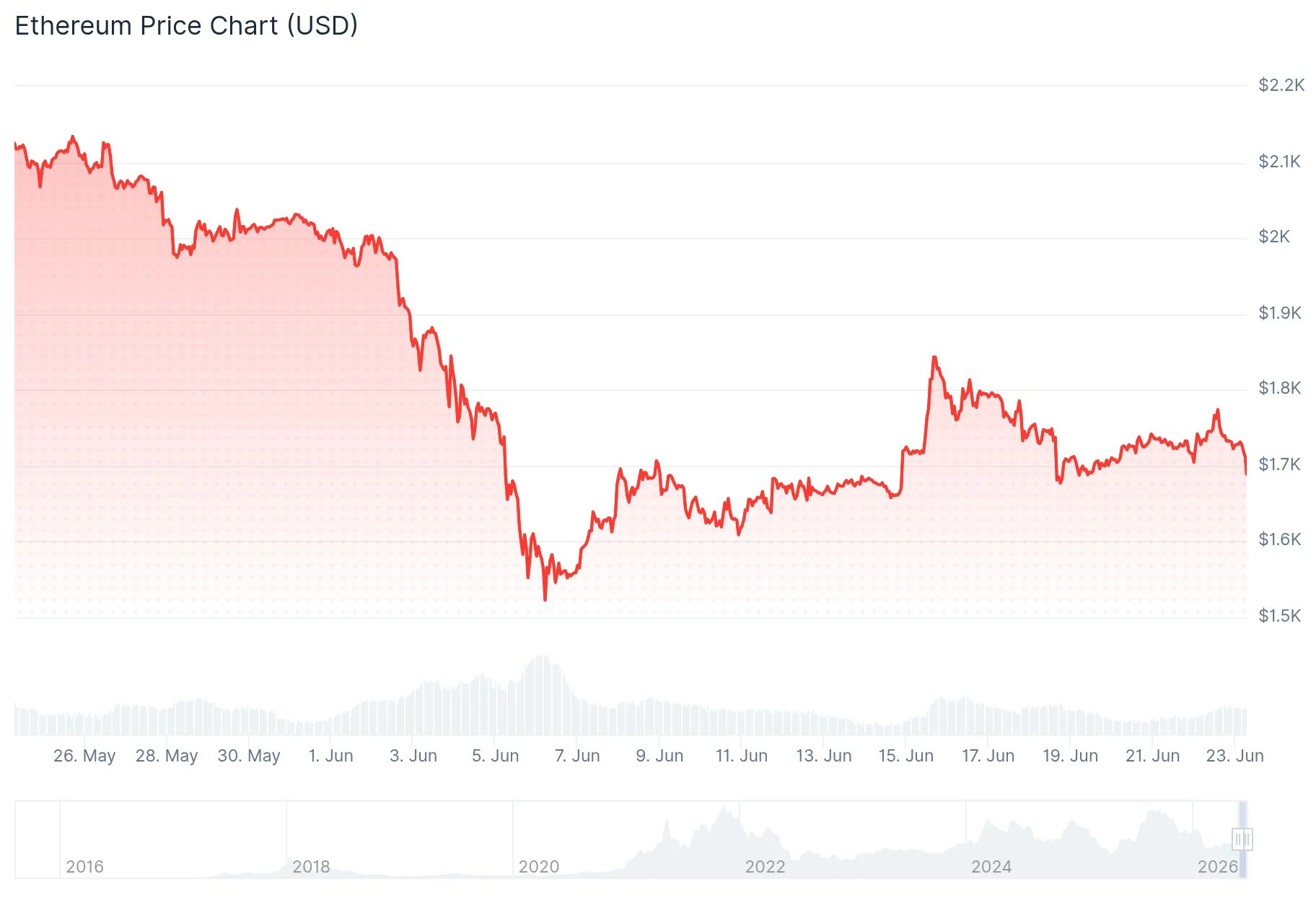
This positions ETH distinctively as we look toward the next half-decade.
A comprehensive five-year analysis examines potential Ethereum price levels by 2031 across three distinct pathways.
The probability-adjusted projection settles near $10,500.

Central Scenario: $8,000 to $12,000 Range
The primary forecast presumes Ethereum maintains its dominance as the premier smart contract blockchain.
Stablecoin usage is projected to accelerate. Tokenized securities, commodities, and property are expected to proliferate across blockchain infrastructure. Ethereum appears strategically positioned to capture significant portions of this emerging market.
Should ETH achieve a market capitalization between $1 trillion and $1.5 trillion, prices would settle in the $8,000 to $12,000 corridor. This projection incorporates continued Ethereum ETF adoption, Layer 2 scaling solutions, and increasing institutional participation.
Optimistic and Pessimistic Projections
The optimistic forecast positions ETH between $20,000 and $30,000 by 2031.
This outcome demands Ethereum establishing itself as the dominant settlement infrastructure for digital finance. Market capitalization would need to surpass $3 trillion. With approximately 120 million ETH circulating and ongoing deflationary pressure from fee burns, these calculations remain feasible.
The pessimistic projection ranges from $2,500 to $4,000.
This scenario assumes Solana and competing Layer 1 platforms capture substantial market position. Restrictive regulations could also impede institutional integration. Even under these conditions, Ethereum’s ecosystem makes complete failure improbable.
Ethereum possesses multiple demand catalysts unavailable to most competing blockchains. Developers continuously build applications on its infrastructure. Financial institutions deploy tokenized instruments through its networks. Stablecoins process trillions in transaction volume across Ethereum-compatible systems.
This network effect creates self-reinforcing momentum.
Expanding user bases attract additional developers. Growing developer communities produce innovative applications. New applications draw greater capital inflows.
Financial institutions and asset management firms are actively testing Ethereum-based financial instruments. Stablecoin transactions increasingly clear through Ethereum network infrastructure.
As of mid-2026, Ethereum continues holding the position as the largest smart contract platform measured by ecosystem depth and developer engagement, notwithstanding sustained competition from higher-speed, lower-cost alternatives.
The current analysis establishes a probability-weighted five-year target near $10,500, with the central scenario range of $8,000 to $12,000 representing the most probable trajectory.
