



TLDR
- Bitcoin declined to $62,700, registering a 1.9% decrease over a 24-hour period amid global risk-off sentiment
- Major altcoins including Ether, XRP, Solana, and BNB experienced losses ranging from 2.3% to 3.2%
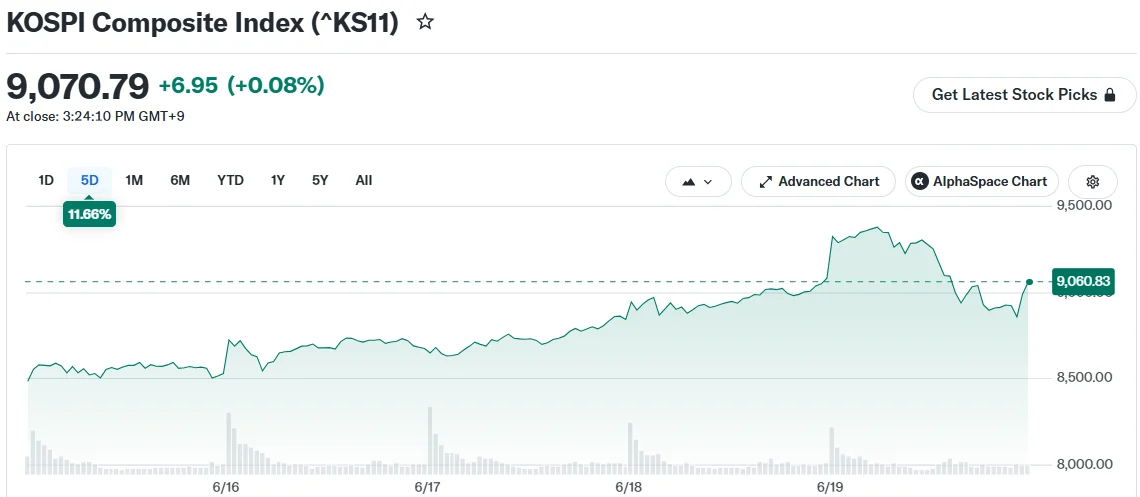
- Asian equity markets retreated on Friday, with South Korea’s KOSPI declining after touching all-time highs
- VP JD Vance scrapped plans to attend Iranian negotiation meetings in Switzerland
- Curve Finance founder warns cryptocurrency builders that altseason may not materialize for another three years
Bitcoin tumbled beneath the $63,000 threshold on Friday as widespread selling pressure across risk assets erased gains accumulated earlier in the week. The downturn materialized as market participants reevaluated their enthusiasm surrounding potential US-Iran diplomatic agreements.
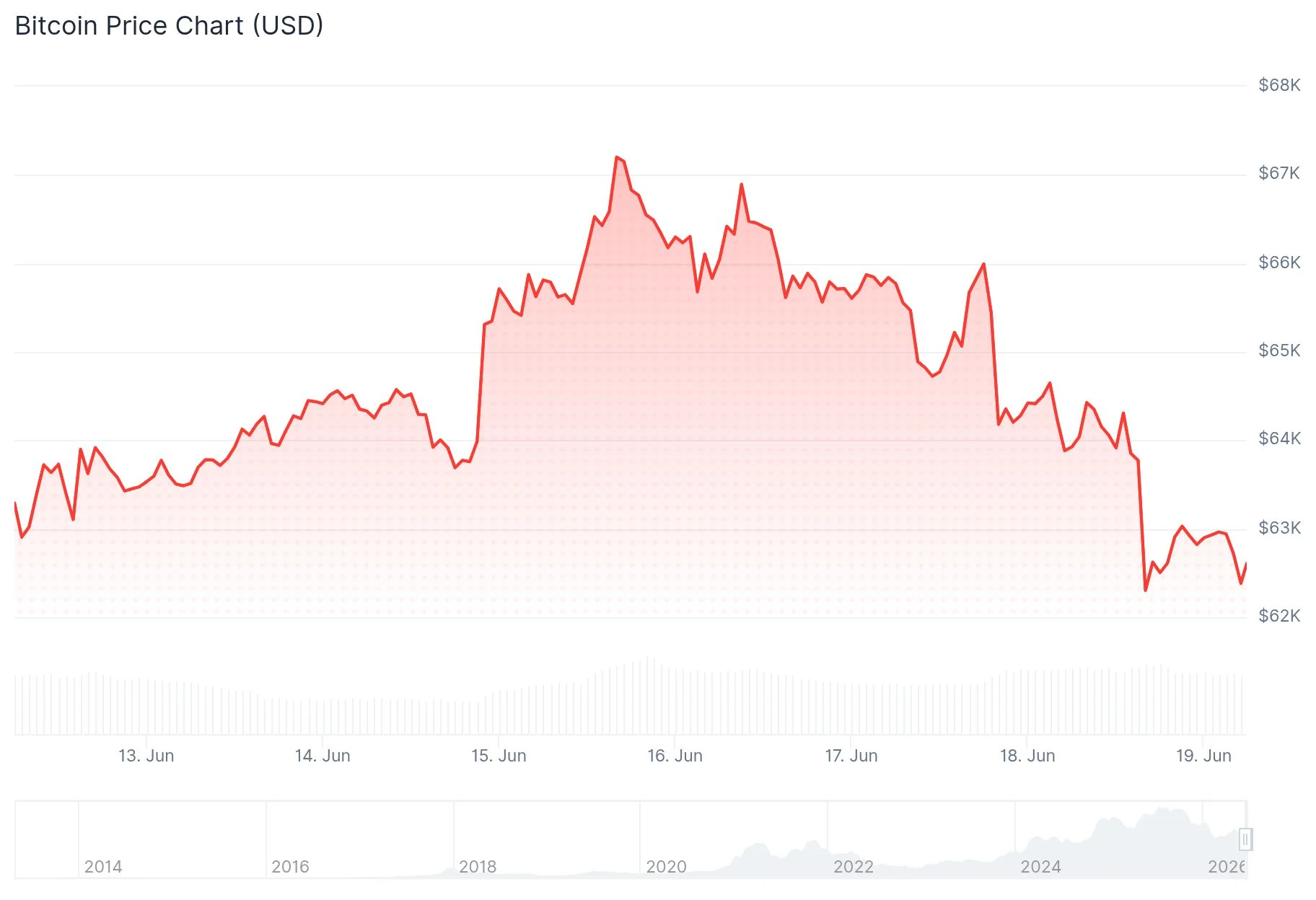
The world’s premier cryptocurrency changed hands near $62,700, reflecting a 1.9% decline across the previous 24-hour window. Weekly performance showed a 1.3% retreat, according to CoinDesk’s market data.
The liquidation wave swept through digital asset markets comprehensively. Ether surrendered 2.3% to reach $1,695, while XRP declined 3.2% to $1.13. Solana registered a 3.2% loss to $69, and BNB retreated 2.7%. Hyperliquid’s HYPE token bucked the trend partially, declining 3.7% daily but maintaining a 13.2% weekly advance.
Tron emerged as the sole major cryptocurrency maintaining stable pricing.

Bitcoin Approaches Critical Technical Threshold
Technical analysts are monitoring price action closely. Bitcoin currently hovers near the bottom boundary of its established two-week consolidation pattern.
Should the cryptocurrency fail to defend this level, market participants anticipate initial support between $59,000 and $60,000. A breach of that zone could expose $45,000 as the subsequent downside objective, according to some technical strategists.
The bearish momentum originated from broader international market weakness. Asian equity benchmarks declined 0.6% following five consecutive sessions of advances. Brent crude petroleum tumbled approximately 9% across the week to roughly $79 per barrel as the potential US-Iran agreement stabilized maritime traffic through the strategically vital Strait of Hormuz.
Asian Equity Markets Retreat as Iranian Diplomatic Progress Stalls
South Korea’s KOSPI benchmark achieved an intraday record of 9,385.59 points during early trading before reversing course to finish 0.6% lower. Semiconductor manufacturers spearheaded the decline, with Samsung Electronics shedding nearly 2%.
Japan’s Nikkei 225 similarly retreated from record territory but managed to secure a modest 0.2% gain. Australia’s ASX 200 fell 1.2%, pressured by BHP’s decline after the mining giant disclosed budget overruns at its Canadian potash development.
Uncertainty surrounding Iranian diplomatic efforts catalyzed much of the market weakness. Vice President JD Vance withdrew from scheduled meetings with Iranian representatives in Switzerland. Iranian state media indicated that Tehran requires additional evidence of agreement implementation before advancing negotiations.
The Federal Reserve contributed additional headwinds this week following communications that market participants interpreted as more restrictive than anticipated, amplifying anxiety regarding elevated US borrowing costs and pressuring technology sector valuations.
In Japan, consumer price index data for May remained subdued, continuing below the Bank of Japan’s 2% inflation objective. This development followed the central bank’s rate adjustment earlier in the week.
Altcoin Rally May Require Multi-Year Wait
Michael Egorov, who founded Curve Finance, shared with CoinDesk that Bitcoin exhibits distinct characteristics during this market cycle. He explained that spot ETF approvals immediately preceding the 2024 halving event attracted institutional capital that disrupted historical cyclical behavior.
Egorov observed that speculative capital formerly directed toward alternative cryptocurrencies migrated into “useless memecoins” instead. He cautioned developers against anticipating an altseason for a minimum of three additional years.
His recommendation: prioritize tokenomics frameworks connected to genuine project revenue generation rather than promotional momentum.
Dogecoin ETF products are presently attracting minimal capital inflows, while investment continues concentrating in Bitcoin relative to broader cryptocurrency markets.
