


TLDR
-
Natural gas prices across Europe experienced dramatic increases following Iran-linked disruptions to LNG transport routes via the Strait of Hormuz.
-
Qatar’s state energy company suspended operations following drone strikes, constraining worldwide LNG availability and sparking market turbulence.
-
Benchmark Dutch TTF contracts climbed up to 49% intraday as concerns over supply intensified.
-
European nations depend heavily on liquefied natural gas following their departure from Russian supplies post-2022.
-
Market experts caution that extended supply interruptions may drive European gas costs significantly higher while straining worldwide energy systems.
Natural gas costs in Europe shot upward dramatically as Middle Eastern hostilities interrupted vital energy transportation corridors. Financial markets responded swiftly to mounting concerns regarding liquefied natural gas deliveries.
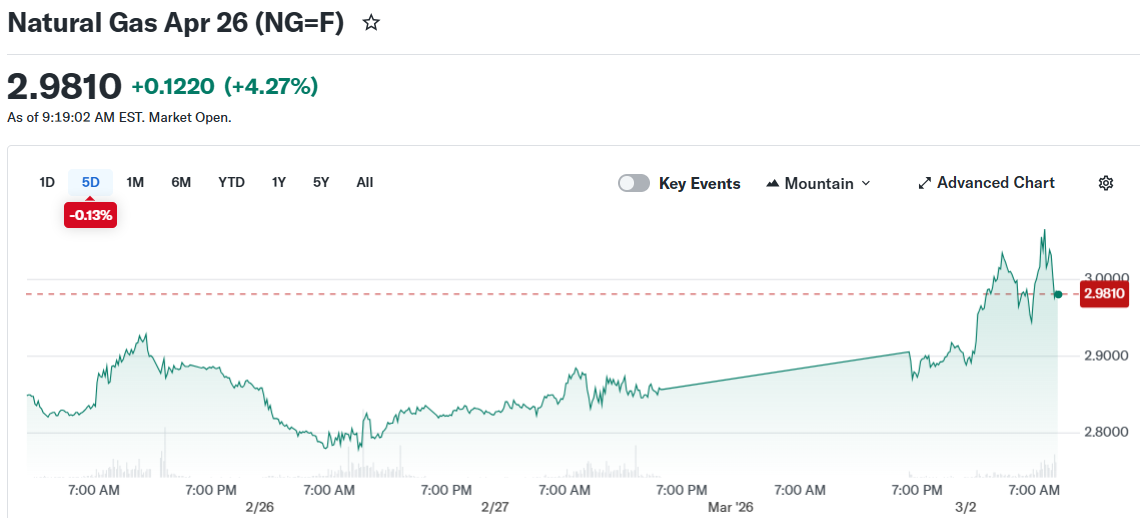
Gas valuations throughout Europe jumped approximately 25% during early trading hours. Dutch TTF benchmark contracts subsequently extended their advance, climbing as high as 49% during the session.
The price spike came after intensifying military operations across the region. Disruptions tied to Iran have impacted vessel movements through the Strait of Hormuz, a critical global energy chokepoint.
This strategic waterway facilitates a substantial portion of worldwide LNG transport. Tanker movements have declined significantly amid heightened security threats.

Qatar’s national energy company suspended natural gas operations following drone strikes on its infrastructure. This state-controlled supplier represents approximately 20% of worldwide LNG shipments.
Europe’s Vulnerability to Supply Shocks
European nations face considerable vulnerability to LNG supply interruptions. The continent pivoted away from Russian pipeline deliveries following the 2022 energy emergency.
A significant share of European LNG originates from Qatar. Numerous cargoes transit the Strait of Hormuz en route to European import facilities.
Natural gas stockpiles generally decline throughout winter heating seasons. This compels European nations to increase LNG purchases to replenish storage capacity.
Market analysts noted the present circumstances mirror dynamics observed during the 2022 emergency. That episode resulted in industrial closures and accelerating price inflation regionwide.
Goldman Sachs projected that a four-week suspension of LNG deliveries through the Strait might drive European gas valuations upward by over 100%. Costs could reach €74 per megawatt hour in such circumstances.
An interruption extending beyond eight weeks might propel prices past €100 per megawatt hour. Such elevated levels previously compelled substantial consumption cuts throughout Europe.
Worldwide Energy Market Response
Energy trading platforms reacted immediately to supply anxieties. Oil prices likewise advanced as market participants factored in regional disruption possibilities.
The Strait of Hormuz facilitates approximately 80 million tonnes of LNG annually. This volume constitutes roughly 19% of worldwide production.
Crude oil movements through the Strait remain essential to international energy distribution. Approximately 20% of global petroleum output transits this passage.
Three crude tankers sustained damage in the vicinity during the weekend. Transportation delays have amplified market uncertainty.
Shipping costs for oil tankers have escalated sharply in recent weeks. Certain routes connecting the Persian Gulf to Asian destinations have experienced threefold rate increases monthly.
Asian LNG valuations face potential upward pressure. International gas markets maintain tight interconnections, with supply changes rippling across multiple territories.
American natural gas prices have exhibited minimal fluctuation thus far. Export infrastructure operates near maximum capacity, restricting the potential for rapid shipment increases.
European trading desks remain concentrated on LNG supply reliability. Market participants are monitoring whether vessel traffic through the Strait of Hormuz normalizes within upcoming weeks.
