


TLDR
- Precious metal advanced more than 1% following the signing of a US-Iran interim diplomatic agreement
- Agreement ensures unrestricted passage through the Strait of Hormuz during a 60-day period
- Federal Reserve maintained rates at 3.50%-3.75% while signaling potential increase by October
- Newly appointed Fed Chair Kevin Warsh reaffirmed strong anti-inflation stance
- Rising dollar and elevated rate projections are constraining gold’s upward potential
Precious metals experienced a notable rebound on Thursday after Washington and Tehran finalized an interim diplomatic accord, providing traders with renewed incentive to re-enter the market following Wednesday’s challenging session.
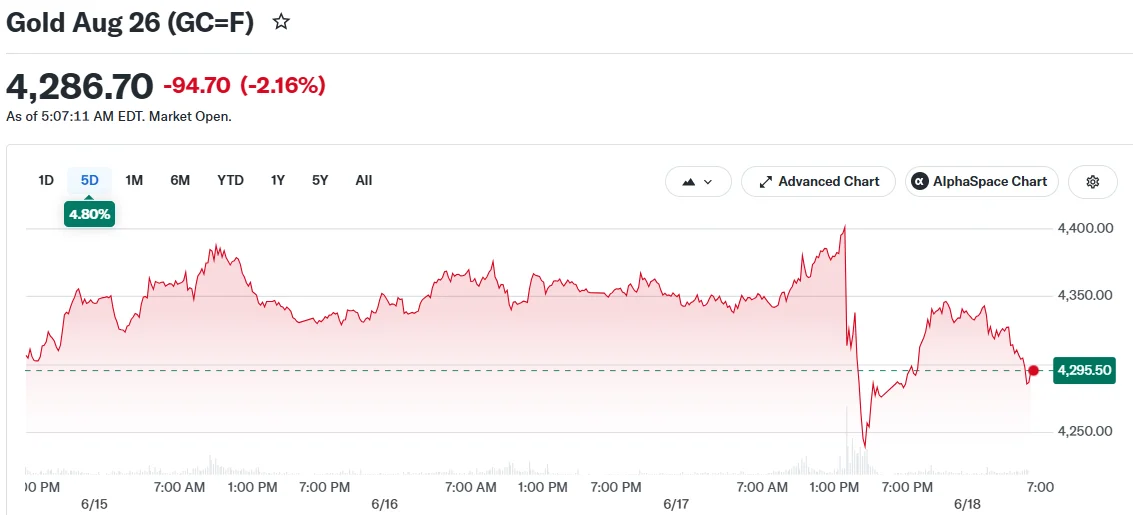
Spot gold advanced approximately 1.2% to reach $4,307 per ounce. This recovery followed a 1.7% decline the previous day, when an appreciating US dollar and climbing Treasury yields pressured valuations in the aftermath of the Federal Reserve’s most recent monetary policy announcement.
The diplomatic arrangement between the US and Iran was executed electronically Wednesday night. The 14-point memorandum establishes a 60-day framework for further negotiations.
Based on the terms, Iran has committed to permitting unrestricted passage through the Strait of Hormuz without toll charges. Complete traffic restoration through the critical waterway is anticipated within 30 days.

This strait represents a vital corridor for international petroleum shipments. Reopening this channel is projected to alleviate energy supply anxieties that have contributed to elevated inflation throughout recent months.
Oil prices declined following the announcement, as market participants factored in additional supply returning to circulation. Reduced energy expenditures could gradually diminish inflationary pressures.
Fed Maintains Hawkish Tone on Future Rate Path
The Federal Reserve preserved interest rates at their current 3.50% to 3.75% range during Wednesday’s meeting. However, the central bank eliminated previous language regarding future policy adjustments from its official statement, and revised projections revealed that nine among 19 policymakers anticipate at least one additional rate increase in 2026.
Market participants are now completely pricing in a rate elevation by October.
Newly appointed Fed Chair Kevin Warsh maintained an uncompromising position on inflation during his inaugural meeting leading the committee. The Fed simultaneously elevated its inflation projections, prompting investors to scale back expectations for rate reductions.
Elevated interest rates typically create headwinds for gold. Since the metal generates no yield, it becomes comparatively less appealing when borrowing costs increase.
Currency Appreciation Creates Additional Headwinds
The US Dollar Index edged upward on Thursday after surging 0.6% during the preceding session. A strengthening dollar increases gold’s cost for international purchasers utilizing alternative currencies, potentially dampening demand.
Christopher Wong, a strategist at Oversea-Chinese Banking Corp, noted that declining oil valuations provide marginal support for gold. However, he emphasized that the Fed’s hawkish positioning “complicates the story” and warrants near-term prudence.
Ryan Mckay, senior commodity strategist at TD Securities, indicated that rate increase expectations were already incorporated into valuations before Wednesday’s Fed announcement. He characterized the prevailing sentiment for gold as bearish.
Silver climbed 1.3% to $68.78 per ounce. Platinum and palladium also registered gains. Copper futures on the London Metal Exchange decreased 0.9%.
Uncertainty persists regarding whether the Strait of Hormuz has physically reopened following the agreement’s execution.
