



Key Takeaways
- Brent crude declined 2.2% to settle at $77.82 per barrel; WTI slumped 2.5% to $74.88 on Thursday
- President Trump and Iran finalized a memorandum of understanding to cease hostilities and restore access to the Strait of Hormuz
- Crude benchmarks have plummeted approximately 15% over six consecutive trading sessions
- International Energy Agency projects a massive global oil glut exceeding 5 million barrels daily by 2027
- Federal Reserve maintained current rates while hinting at potential tightening later this year, weighing on demand outlook
Crude oil futures experienced a dramatic selloff Thursday following the historic signing of a peace agreement between Washington and Tehran that promises to end their military conflict and restore commercial shipping through the Strait of Hormuz.
Brent crude futures declined 2.2% to close at $77.82 per barrel. West Texas Intermediate crude dropped 2.5% to finish at $74.88 per barrel.
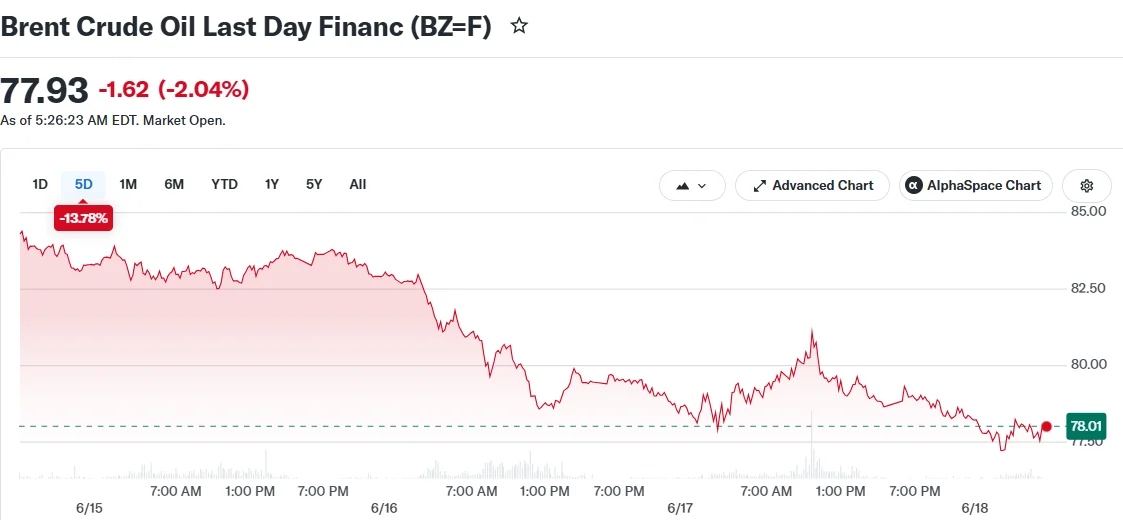
Both major oil benchmarks reached their weakest levels since early March. The decline represents approximately a 15% collapse across the trading week.
The historic agreement was formalized between President Trump and Iranian President Masoud Pezeshkian. The framework establishes a permanent cessation of military operations and outlines a phased removal of American sanctions targeting Iranian petroleum exports.

The Strait of Hormuz, a critical maritime chokepoint handling approximately one-fifth of global oil and liquefied natural gas transportation, has remained largely inaccessible throughout the three-month military engagement. The blockade had inflated oil prices substantially while fueling inflation anxieties.
Shipping traffic has begun resuming passage through the strategic waterway. Major exporters including Iraq are positioning to boost their shipment volumes.
Supply Implications of the Tehran Agreement
Energy markets had incorporated a substantial geopolitical risk premium throughout the duration of the conflict. The formalization of the peace deal has now largely eliminated that premium from pricing.
Energy economists at ING observed that Tehran anticipates rapid elimination of American petroleum sanctions. However, they cautioned that the actual timeline for restoring normal export flows remains ambiguous given operational complexities, logistical challenges, and residual sanctions considerations.
Worldwide petroleum inventories continue to show tightness. American crude reserves contracted by 8.3 million barrels in the previous week, providing some support against further price deterioration.
The International Energy Agency anticipates worldwide oil production capacity will expand by approximately 8 million barrels daily during the 2026-2027 period. This growth trajectory significantly exceeds projected consumption growth of roughly 2 million barrels per day.
The IEA’s analysis indicates a potential oversupply exceeding 5 million barrels daily by 2027. Energy strategists at ING characterized the agency’s assessment as decidedly “bearish.”
Market analysts at MUFG emphasized that the petroleum industry maintains a cautious stance regarding normalization timelines, despite emerging positive indicators.
Central Bank Policy Compounds Pressure
The Federal Reserve maintained its benchmark interest rate unchanged Wednesday, matching market consensus. Nevertheless, central bank officials indicated the possibility of monetary tightening before year-end.
Elevated interest rates typically constrain economic expansion and diminish petroleum consumption. This monetary policy outlook intensified the downward pressure on crude valuations Thursday.
Prior to the military conflict, the blockade of the Strait of Hormuz had provided significant upward momentum to energy prices. The imminent reopening is now unwinding those earlier advances.
The market dynamic continues to evolve. The speed at which Iranian crude volumes reenter international markets will hinge on sanctions removal pace and the rehabilitation of export infrastructure.
