



Key Highlights
- Aster revealed that 99% of all platform fees generated daily will fund ASTER token purchases from the market beginning June 17.
- Every token repurchased is paired with an equivalent burn from reserve supplies, generating a dual 198% buyback-and-burn mechanism.
- The initiative aims to reduce total ASTER circulation from 8 billion down to 3 billion tokens through systematic burns.
- Tokens acquired through buybacks are allocated to veASTER stakers through the platform’s Loyalty Rewards system.
- ASTER surged past the $0.65 resistance threshold and is now targeting the $0.81 price zone.
On June 17, 2026, Aster introduced a transformative tokenomics revision that propelled its ASTER token upward by more than 20% within 24 hours.
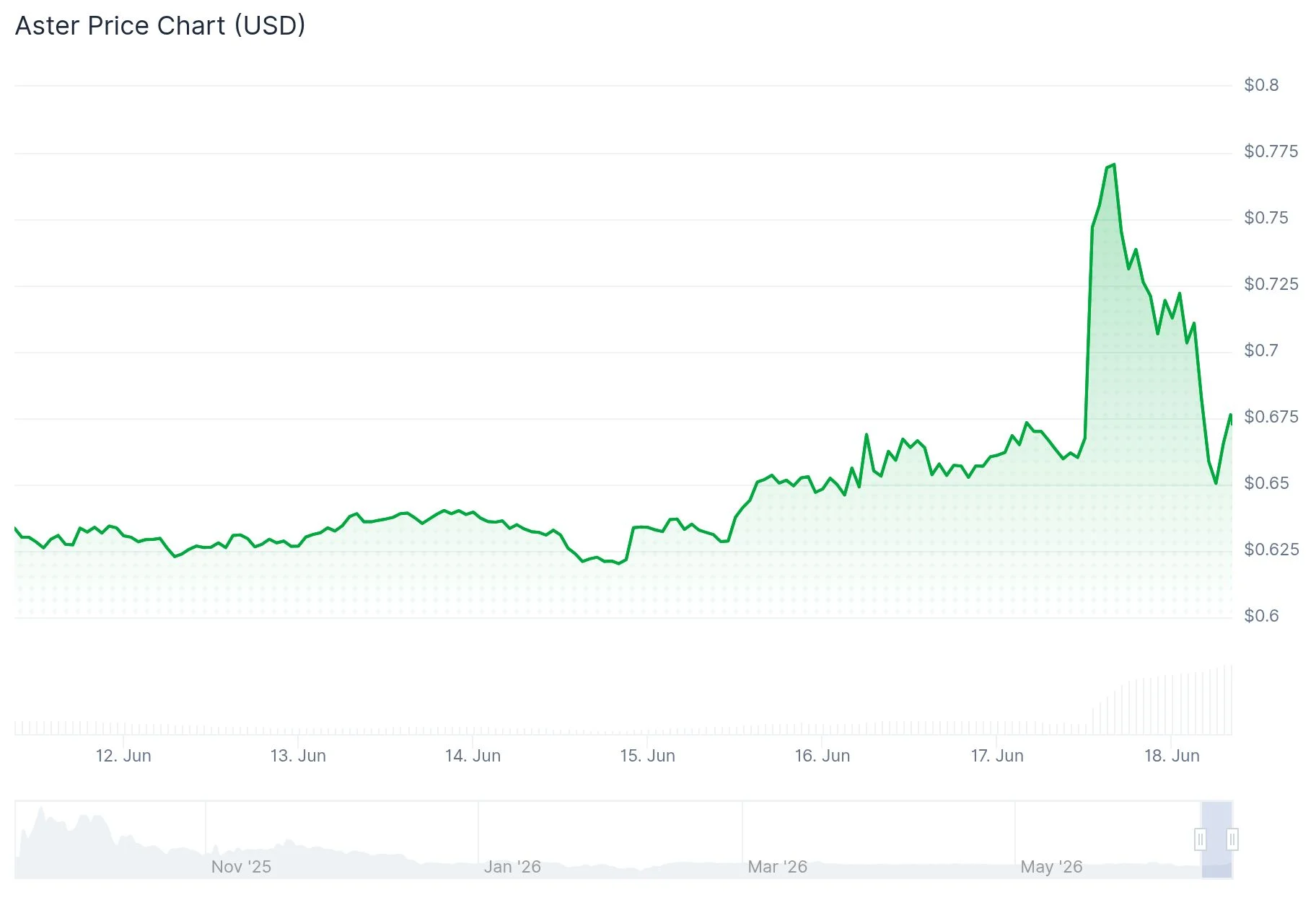
The centerpiece of this revision is clear: virtually all daily platform revenue—99% to be exact—will now fund direct market purchases of ASTER tokens.
These buyback operations run automatically through a time-weighted average price mechanism and are recorded transparently on-chain. The team has made the buyback wallet publicly accessible at address 0xa0edBaBcb48034e368de286b49F9603C7AfA1b60, enabling full community verification.
For each ASTER token acquired from the market, an identical quantity is removed permanently from the project’s reserve inventory, beginning with tokens allocated to the team.

This approach results in what the platform describes as a “198% dual-impact buyback-and-burn system,” effectively reducing circulating supply through simultaneous market purchases and reserve burns.
Token Supply Reduction Goals
The burning process operates on a bi-weekly cycle and will persist until the overall token count decreases from 8 billion to 3 billion ASTER.
As of the June 17 launch date, the total supply measured approximately 7.82 billion tokens, while circulating supply ranged between 2.68 and 2.70 billion.
Every token acquired via the buyback mechanism flows directly into the Loyalty Rewards distribution system. Each reward cycle features a baseline allocation of 300,000 ASTER, supplemented by all tokens collected through daily buyback activity, then distributed among veASTER holders proportional to their lock duration.
Aster Spot listings generate additional buying momentum. Every permissionless token listing on the platform carries a 50,000 USDT listing charge, with all revenue channeled into the identical buyback framework.
Market Reaction
ASTER climbed near $0.80 immediately following the announcement before experiencing some profit-taking that brought it down. The token most recently traded around $0.74, maintaining roughly 13% daily gains.
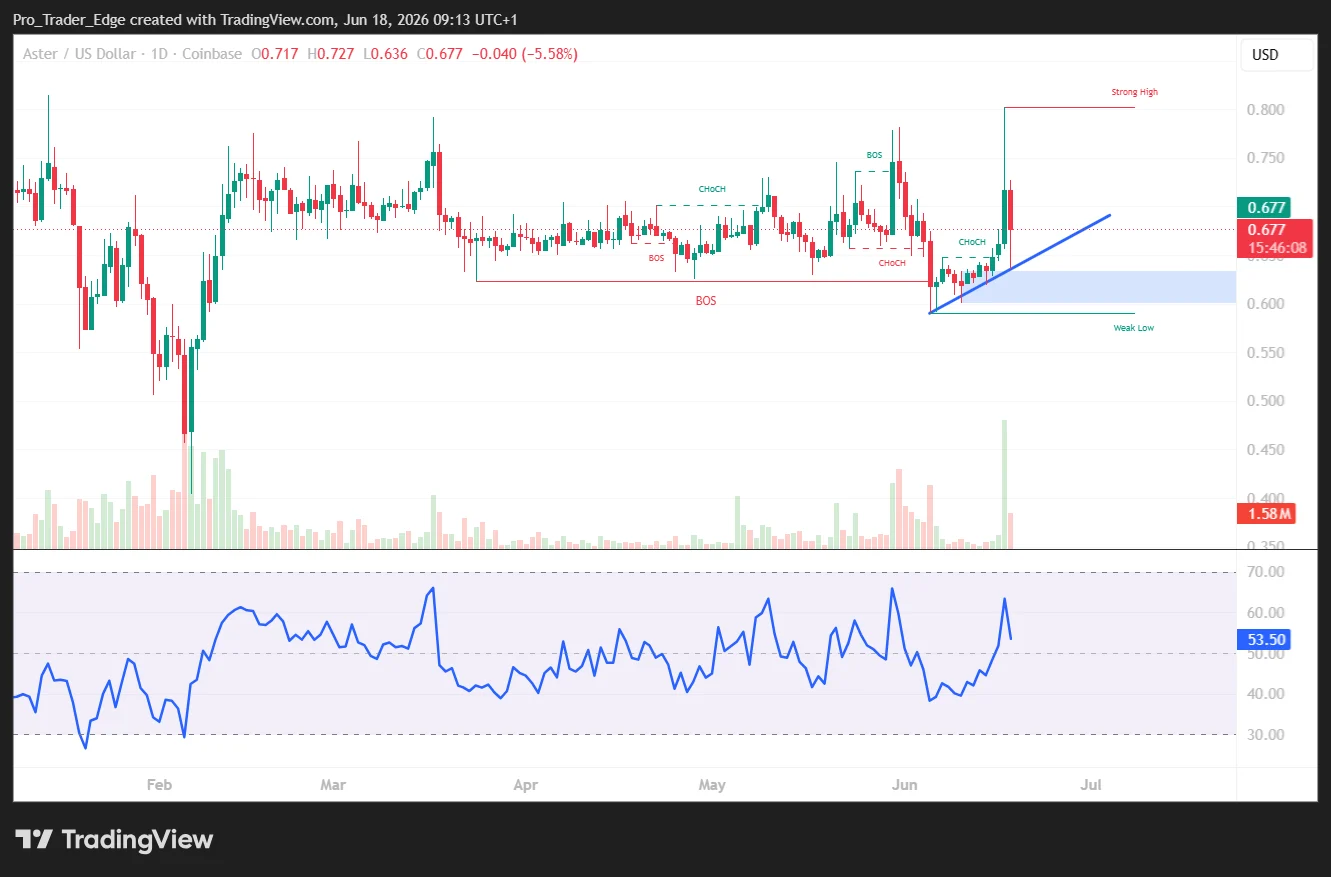
Analyzing the daily timeframe, ASTER successfully breached the $0.65 threshold that had served as a ceiling since April.
The Relative Strength Index climbed above 65, while the MACD indicator generated a bullish crossover accompanied by expanding positive histogram readings.
The immediate resistance target stands at $0.81, a level that has repeatedly rejected price advances on the daily chart. Successfully breaking through this barrier would push ASTER into price ranges last visited in late 2025.
The $0.65 zone has now transitioned into a potential support level should any retracement occur.
This tokenomics overhaul represents an evolution from previous iterations that allocated 70–80% of fee revenue toward buybacks, now escalating that commitment to nearly complete revenue deployment.
