


Key Highlights
- Shares of Rackspace Technology (RXT) climbed 21% to reach $7.15 during premarket hours Tuesday following confirmation of an AMD partnership
- AMD has been designated as the principal semiconductor provider for Rackspace’s artificial intelligence cloud operations
- Both organizations will launch 30 megawatts of AMD-powered computational infrastructure throughout Rackspace’s worldwide facilities
- Initial deployment commences late 2026, with complete implementation targeted for 2028
- The collaboration emphasizes heavily regulated sectors such as healthcare, concentrating on secure enterprise AI systems
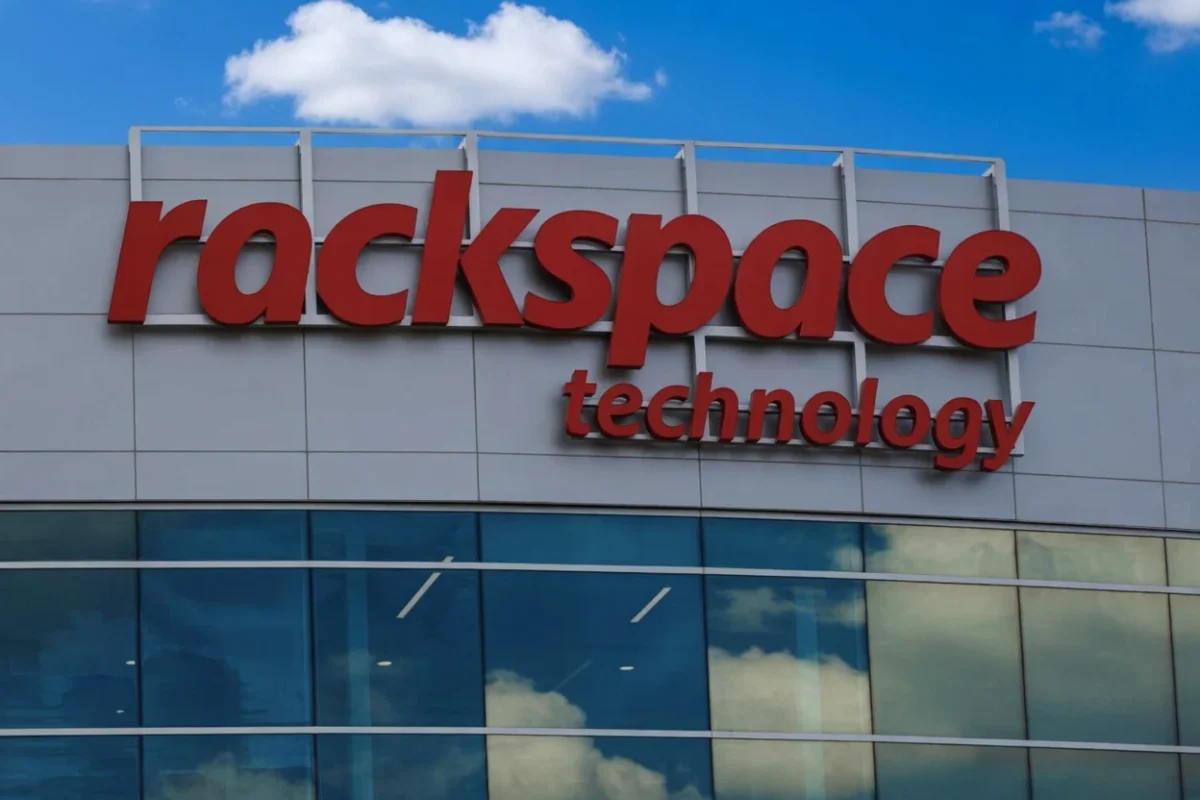
Rackspace Technology (RXT) stock experienced a significant 21% surge to $7.15 during Tuesday’s premarket session after announcing the completion of a strategic agreement with Advanced Micro Devices (AMD) to integrate AMD processors throughout its data center infrastructure.
Rackspace Technology, Inc., RXT
Shares of AMD also showed positive momentum, climbing 0.9% following the announcement, surpassing the Nasdaq futures benchmark which increased by 0.3%.
This agreement transforms a preliminary memorandum of understanding executed in May into a comprehensive binding contract. The deal officially positions AMD as Rackspace’s strategic semiconductor collaborator, forming the foundation of its AI technology infrastructure.

Both enterprises intend to establish 30 megawatts of AMD-driven processing power throughout Rackspace’s international data center portfolio. Implementation begins during the latter part of 2026, with total operational capacity anticipated by 2028.
The strategic alliance will leverage AMD Instinct GPUs, specifically the MI355X and MI350P variants, alongside AMD EPYC central processing units. These components will form the backbone of what both companies describe as an “Enterprise AI Cloud” framework.
Rackspace’s Chief Executive Officer Gajen Kandiah emphasized that this partnership provides a “governed AI stack with one accountable partner from silicon to outcomes.” The value proposition specifically targets businesses operating in highly regulated environments requiring enhanced oversight of their AI technology infrastructure.
The healthcare sector represents a primary initial target vertical. According to Rackspace, medical organizations have already demonstrated substantial interest in utilizing the platform for clinical artificial intelligence applications and inference processing.
Scope and Components of the Agreement
The partnership encompasses four distinct product categories: Enterprise AI Cloud, Enterprise Inference Engine, Inference as a Service, and Bare Metal AMD Instinct. Collectively, these offerings are designed to provide an end-to-end managed infrastructure spanning from fundamental computing resources through complete operational AI inference capabilities.
Both Rackspace and AMD have committed to allocating dedicated sales and marketing personnel to collaboratively pursue enterprise clients. The strategic emphasis centers on regulated sectors where data management oversight and operational accountability represent critical requirements.
According to both organizations, the transition from experimental AI implementations to autonomous workflow systems embedded within mission-critical enterprise platforms is creating substantial demand for this category of infrastructure.
Strategic Importance of Regulated Market Segments
The majority of current AI infrastructure deployments follow a bare-metal approach, requiring enterprises to assemble their technology stack using components from multiple providers. Rackspace and AMD are marketing this partnership as a differentiated solution, offering unified accountability through a single managed provider.
Dan McNamara, Senior Vice President of Compute and Enterprise AI at AMD, stated the partnership provides regulated organizations with “high-performance AI infrastructure with the openness, scalability and accountability needed to run AI at enterprise scale.”
Rackspace’s equity performance has demonstrated considerable volatility throughout the current year, and Tuesday’s premarket activity illustrates investor enthusiasm regarding the company’s long-term hardware supply commitment with a leading semiconductor manufacturer.
The initial 30-megawatt infrastructure footprint is scheduled to begin phased deployment during late 2026.
