


Key Highlights
- Amazon has launched nationwide access to its less-than-truckload freight operations for all U.S. businesses.
- Previously restricted since 2019, the service now accommodates external warehouses, distribution facilities, and retail partners regardless of company size.
- Traditional freight leaders suffered steep losses: Old Dominion down 7.3%, Saia plummeting 8.2%, FedEx Freight declining 5.2%, and Knight-Swift dropping 5.4%.
- The e-commerce titan supports this initiative with a vast logistics infrastructure featuring over 80,000 trailers and 24,000 intermodal containers.
- This expansion builds on Amazon’s May unveiling of its comprehensive Supply Chain Service, which previously disrupted logistics equities.
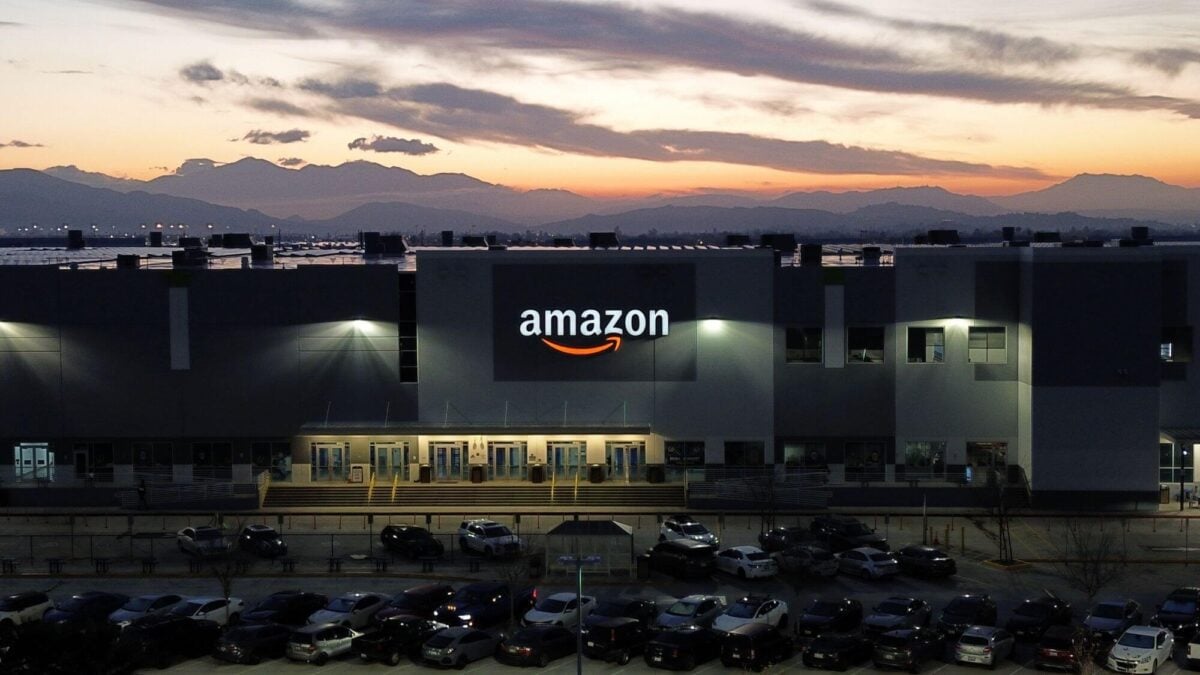
Amazon has rolled out nationwide access to its less-than-truckload freight operations, welcoming businesses of all scales and destinations throughout the United States, triggering immediate turbulence across the trucking industry.
The retail behemoth announced the LTL expansion Tuesday as a component of its Amazon Supply Chain Services platform. While operational since 2019, the service previously catered exclusively to merchants delivering inventory to Amazon fulfillment centers. The floodgates are now wide open.
Jim Ruiz, director of Amazon Freight, laid out the vision clearly: “Now Amazon LTL can move your freight wherever it needs to go, servicing destinations nationwide for businesses of all sizes.”
Market reaction materialized instantly. Old Dominion Freight Line (ODFL) tumbled 7.3%, Saia (SAIA) plummeted 8.2%, Knight-Swift (KNX) declined 5.4%, and FedEx Freight (FDXF) retreated approximately 5.2%. XPO (XPO) suffered losses in the 4% to 5% range. Amazon (AMZN) shares dipped roughly 1.2%.

LTL transportation serves companies with partial loads insufficient to justify full truckload capacity — generally between one and six pallets — transporting goods across shorter routes, predominantly to commercial and industrial locations. The segment represents a mature, fiercely competitive marketplace. Old Dominion, XPO, Saia, and FedEx Freight rank among the most prominent publicly listed operators.
Amazon’s enhanced service arrives packed with capabilities: next-business-day live pickup scheduling, same-day drop trailer collection, live GPS location tracking, and in-transit cargo camera surveillance. Supporting this infrastructure stands a formidable logistics fleet exceeding 80,000 trailers alongside 24,000 intermodal containers.
This marks the second time Amazon has disrupted the transportation sector recently. Last May, revelation of its comprehensive Amazon Supply Chain Service — encompassing distribution operations, warehousing solutions, and final-mile delivery — triggered a greater than 10% single-session plunge in UPS shares.
Industry Experts Counsel Against Overreaction
Financial analysts have challenged the narrative that Amazon’s strategic initiatives represent an existential crisis for established freight operators. The reasoning follows predictable patterns: Amazon has steadily developed logistics capabilities over many years, the sector possesses sufficient expansion capacity for multiple competitors, and historical precedent demonstrates incumbent resilience.
Experts additionally emphasize that Amazon entering freight transportation differs fundamentally from digital commerce displacing physical retail. Incumbent carriers maintain diverse industrial clientele that Amazon is just beginning to pursue.
Understanding Amazon’s Service Offering
The broadened LTL platform addresses companies transporting one to six pallets, a market niche that operators like Old Dominion and Saia have dominated for decades. Amazon transported millions of pallets through this channel last year alone, even before opening to external customers.
The introduction of coast-to-coast coverage, paired with the sophisticated tracking and dependability tools Amazon emphasizes, provides smaller shippers with competitive options previously unavailable.
This element drives investor anxiety — less about the immediate competitive impact, but rather the strategic trajectory.
For the moment, equity performance within the trucking sector delivers the most revealing insights. Saia’s 8.2% decline represented the most severe single-day response among LTL competitors on Tuesday.
