


Key Takeaways
- UBS projects the wafer fab equipment (WFE) sector is entering a supercycle phase, with revenues potentially reaching $250 billion by 2028
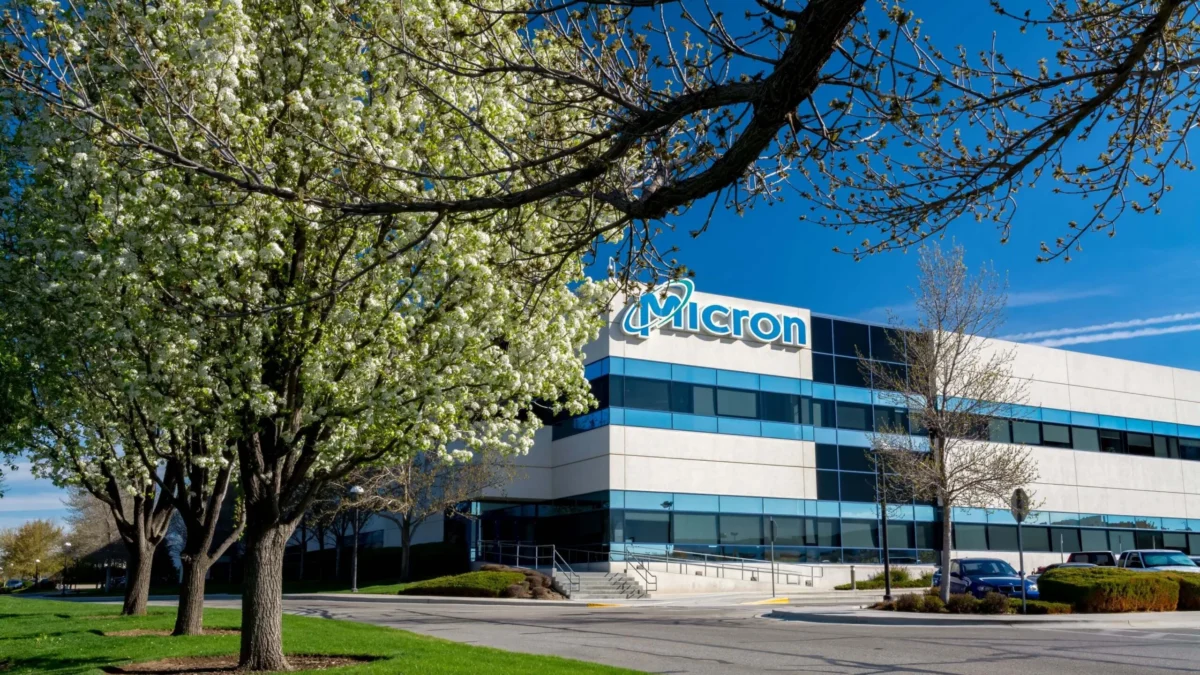
- Major chipmakers including Micron, Samsung, and SK Hynix are launching new fabrication facilities, alleviating cleanroom capacity constraints
- Mizuho upgraded Sandisk’s price target to $2,200, while also increasing projections for Seagate and Western Digital stocks
- DRAM consumption expected to surge 27% year-over-year in 2026, primarily fueled by artificial intelligence workloads
- Google’s TPU shipment volumes projected to surpass 35 million units by 2028, climbing from approximately 4.3 million in 2026
Memory semiconductor manufacturers are ramping up production capacity at an unprecedented rate, with leading investment bank analysts attributing this expansion to explosive AI-driven demand.
Timothy Arcuri, an analyst at UBS, indicated this week that the wafer fab equipment sector — which produces the sophisticated machinery required for chip manufacturing — may be entering the initial phase of a supercycle. His projections suggest total WFE revenues could climb to $250 billion by 2028.
Arcuri anticipates WFE revenues will expand by 27% this year, reaching $147 billion. Looking ahead, he forecasts an additional 35% increase in 2027, bringing the total to approximately $200 billion.
The catalyst behind this growth is substantial new fabrication capacity being activated. Micron, Samsung, and SK Hynix are all initiating operations at newly constructed manufacturing facilities. This expansion is addressing a critical shortage of cleanroom infrastructure necessary for chip production.

Industry customers are now providing equipment suppliers with demand forecasts extending up to eight quarters ahead. According to Arcuri, this unprecedented level of forward visibility is something he hasn’t witnessed in nearly three decades of industry coverage.
Equipment Investment in DRAM and NAND Accelerates
Revenues from machinery used to manufacture DRAM and NAND memory chips are anticipated to jump 50% this year. In contrast, equipment for logic chip production, manufactured by firms such as Taiwan Semiconductor and Intel, is expected to grow at a more modest 12% rate.
UBS has increased its memory WFE revenue projection for next year by $10.5 billion. A significant portion of the new capacity being commissioned focuses on DRAM production, supported by long-term supply contracts. NAND capacity investments are expected to capture a larger share of capital expenditures beginning in the latter half of 2028.
Among equipment manufacturers, Arcuri expressed preference for Lam Research and Applied Materials stocks. He considers KLA to be trading at a valuation premium that limits upside potential. Shares of Applied Materials and KLA both advanced on Tuesday despite broader semiconductor sector weakness.
ASML, the Netherlands-based producer of extreme ultraviolet lithography equipment, is forecast to generate over $46 billion in systems revenue next year — a figure Arcuri cites as supporting evidence for his overall WFE projections.
Mizuho Increases Price Targets Throughout Memory Industry
In a separate research note, Mizuho Securities elevated its price target for Sandisk stock to $2,200 from $1,825, while maintaining its Outperform rating. The firm simultaneously raised Seagate’s target to $1,090 from $875, and boosted Western Digital’s objective to $685 from $550.
Mizuho analyst Vijay Rakesh forecasts DRAM consumption will increase 27% year-over-year in 2026 and 24% in 2027. NAND consumption is projected to expand 18% in both years.
Shipments of Google’s Tensor Processing Units are anticipated to exceed 35 million units by 2028, climbing from roughly 4.3 million in 2026. Broadcom, serving as a critical design partner for both Google’s TPU and OpenAI’s forthcoming chip architecture, is expected to generate AI-related revenues of $122 billion in 2027 and $170 billion in 2028.
Sandisk stock opened Monday trading at $1,982 and appreciated approximately 5.69% following the analyst upgrade. The stock’s current price-to-earnings ratio stands at 58.32 times earnings, significantly elevated compared to its historical median of 29.61 times.
The PHLX Semiconductor Sector index has climbed 73% year-to-date despite Tuesday’s modest decline.
