


Key Takeaways
- Citigroup increased its S&P 500 year-end projection to 8,100 from 7,700
- Friday saw the S&P 500 decline 2.5%, marking its steepest loss since October
- The bank elevated its 2026 earnings-per-share projection to $350 from $320
- An initial 2027 EPS estimate of $400 has been established
- The firm cautions that AI investment momentum could decelerate post-2027, potentially creating market headwinds
Friday marked a difficult trading session for the S&P 500, which tumbled 2.5% in its worst performance since October, ending a nine-week rally. Yet that same evening, Citigroup equity strategist Scott Chronert upgraded his year-end forecast for the index from 7,700 to 8,100.
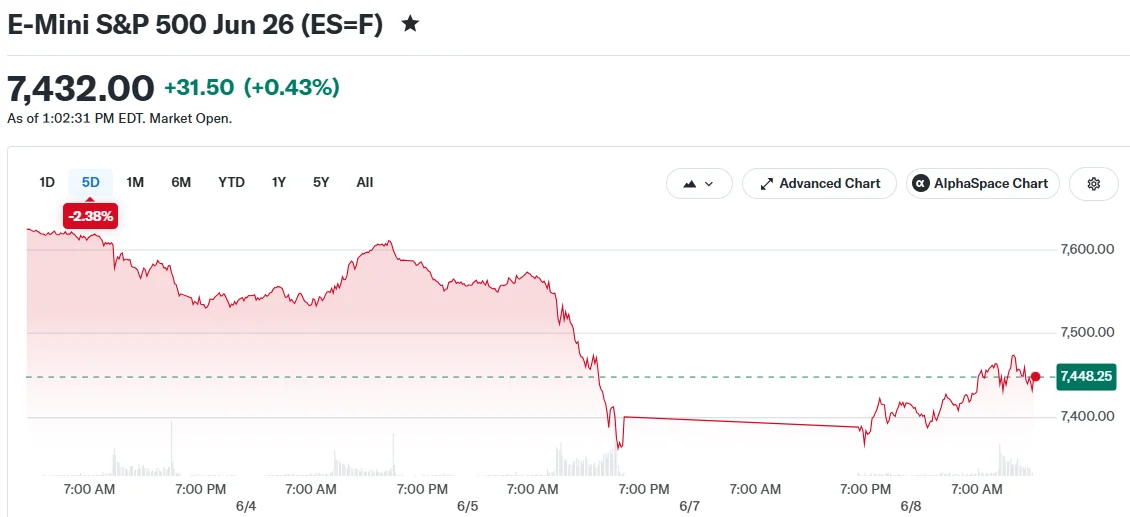
This revised projection suggests approximately 10% potential gains from the index’s most recent closing level.
The Nasdaq experienced its sharpest decline in over twelve months during Friday’s session. Market participants attributed the selloff primarily to apprehension surrounding artificial intelligence capital expenditures and Broadcom’s quarterly results.
Chronert indicated the recent downturn hasn’t altered his fundamental outlook. He maintains that profit expansion, rather than multiple expansion, will propel the index higher moving forward.

Profit Projections Receive Upward Revision
The financial institution raised its 2026 S&P 500 earnings-per-share forecast to $350, marking an increase from the $320 estimate established in December 2025. Additionally, the bank unveiled a tentative 2027 EPS projection of $400.
Chronert expressed substantial conviction regarding persistent earnings outperformance extending through the conclusion of 2026. The robust first-quarter reporting season reinforces this perspective.
He observed that artificial intelligence-linked expansion is no longer confined to technology enterprises. Additional sectors are beginning to capture benefits, which diversifies the profit narrative throughout the broader market.
Citigroup is among multiple Wall Street institutions that have elevated their S&P 500 projections above the 8,000 threshold in recent months.
Artificial Intelligence Investment: Primary Catalyst With Uncertainty Ahead
The bank characterizes the present AI capital deployment landscape as a “one-time capex supercycle” rather than a conventional economic cycle. This distinction carries significance because it increases emphasis on earnings performance to validate equity valuations in the future.
The institution noted that market focus will eventually transition toward whether corporations can demonstrate tangible productivity enhancements from AI technology. That validation point, according to Chronert, isn’t yet being required by investors.
Citi did provide a cautionary note regarding the period following 2027. The firm recognized that some deceleration in AI-related spending appears probable eventually, which could generate a “hangover effect” across equity markets.
However, Chronert emphasized that this potential risk is “not currently in the line of sight.”
Presently, macroeconomic concerns including Middle East tensions involving Iran, crude oil valuations, inflationary pressures, and monetary policy remain secondary considerations. Citi’s assessment is that core AI fundamentals dominate investor attention.
Even if artificial intelligence expenditures moderate at some juncture, wider implementation of the technology could establish an additional foundation supporting corporate profitability.
The S&P 500 maintains nearly 8% year-to-date gains, notwithstanding Friday’s steep retreat.
