



Quick Summary
- The S&P 500 declined 2.6% while the Nasdaq tumbled 4.7% last week amid growing rate hike expectations
- Wednesday brings May’s CPI report, with projections showing headline inflation climbing to 4.2% annually
- SpaceX prepares for Friday’s public offering at $135 per share, targeting a $1.78 trillion market cap
- Tech giants Oracle and Adobe deliver quarterly results, offering insights into AI infrastructure trends
- Bitcoin traded near $60,000, representing a decline of over 50% from peak levels
A critical stretch lies ahead for market participants as economic indicators, a landmark public offering, and major corporate reports converge. Wall Street sentiment remains defensive following Friday’s sharp downturn.
Last Week’s Market Decline
The S&P 500 concluded Friday with a 2.6% weekly loss, snapping a nine-week rally. The tech-heavy Nasdaq suffered a 4.7% decline, marking its steepest weekly drop in recent months. The Dow Jones Industrial Average shed 0.6%.
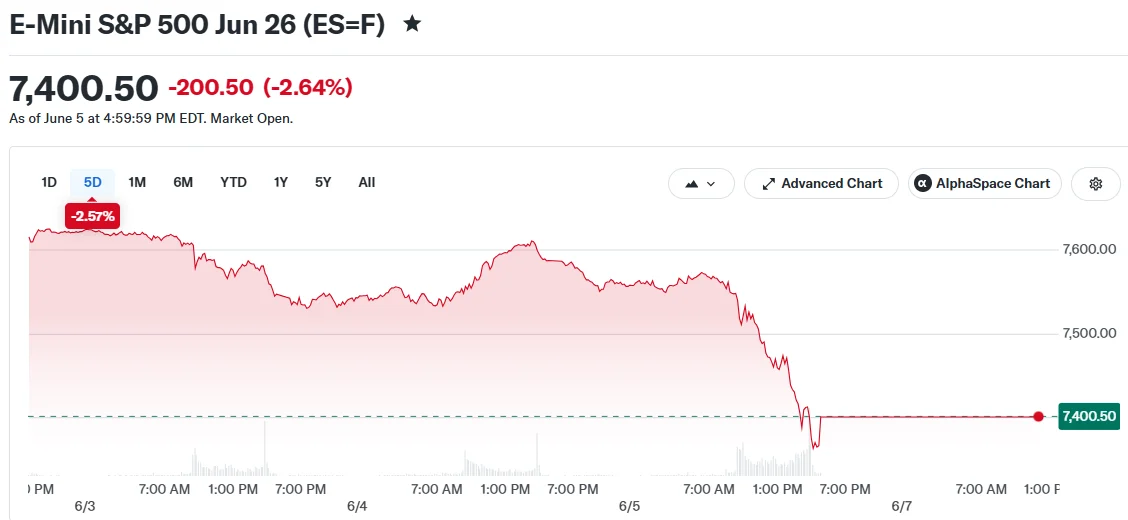
The downturn followed an unexpectedly robust employment report. May’s job creation totaled 172,000 positions, significantly exceeding the 88,000 consensus forecast. This development prompted traders to recalibrate expectations, now anticipating at least one rate increase by December.
Bitcoin experienced parallel weakness. The cryptocurrency settled near $60,000, representing a contraction exceeding 50% from previous record levels. Anticipation of tighter monetary policy pressured digital assets alongside equities.

The University of Michigan’s consumer sentiment gauge plummeted to an unprecedented 44.8 in May. Household concerns center on potential price pressures from Middle East tensions and economic deceleration.
Critical Inflation Report Approaches
Wednesday’s Consumer Price Index data for May represents the week’s most significant economic release.
April’s headline CPI registered a 3.8% annual increase. Forecasters now project acceleration to 4.2% for May. Escalating tensions with Iran have substantially disrupted shipping through the Strait of Hormuz, a conduit for approximately 20% of global petroleum. Gasoline costs already demonstrated a 28% year-over-year surge in April.
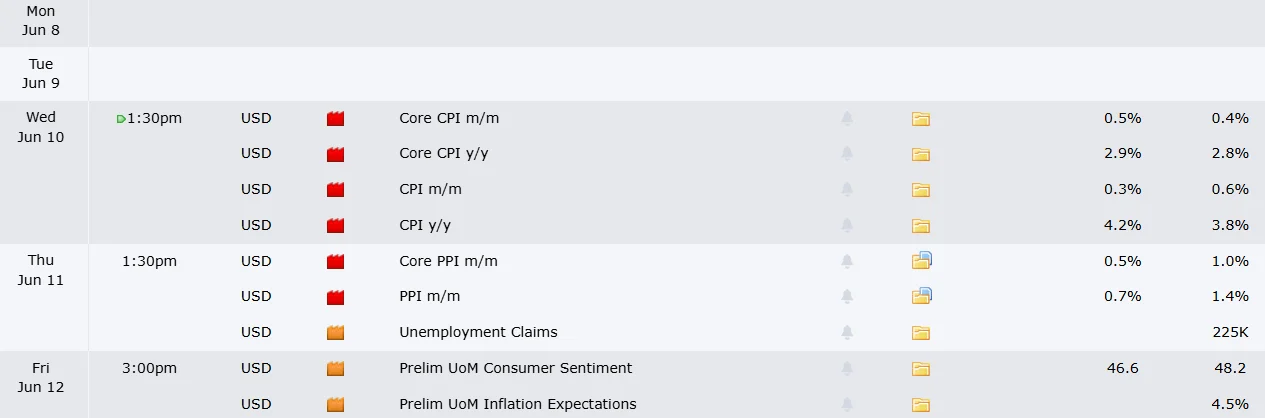
Core CPI, excluding volatile food and energy components, is anticipated at 2.9% for May, up from April’s 2.8%. This suggests energy-driven price pressures are broadening across the economy.
Thursday brings the Producer Price Index. April’s 6% annual increase indicates elevated input costs continue propagating through supply chains.
James Egelhof, BNP Paribas’s chief US economist, noted that robust economic expansion, tightening employment conditions, and persistent inflation collectively suggest potential Fed policy recalibration. Investors are scrutinizing communications for indications of imminent rate action.
Historic SpaceX Listing and Tech Earnings
Friday could mark the most significant initial public offering ever recorded. SpaceX intends to debut on the Nasdaq at $135 per share, establishing an approximate $1.78 trillion valuation.
Company forecasts identify a $28.5 trillion total addressable market, with over 90% attributed to its AI operations centered on orbital data facilities. LPL Financial analysts have cautioned that substantial dependence on nascent AI technologies may introduce volatility for early shareholders.
Recent Nasdaq regulatory modifications mean SpaceX could achieve Nasdaq 100 inclusion shortly after listing. Such inclusion would trigger mandatory purchases by passive index funds.
Wednesday features Oracle’s fiscal fourth quarter financial results. Shares have appreciated 12% year-to-date. Analysts anticipate sustained cloud revenue expansion driven by AI adoption. Oracle ranks among the sector’s most prolific debt issuers, with projections showing the five leading hyperscale providers raising $175 billion through bond markets in 2026.
Adobe follows with Thursday’s earnings announcement.
