



Key Takeaways
- Crude markets retreated Thursday with Brent declining approximately 1.3–1.5% and WTI falling more than 1%, ending a three-day winning streak
- A ceasefire agreement between Israel and Lebanon was reached, though its success hinges on Hezbollah compliance — the militant group did not participate in discussions
- The critical Strait of Hormuz waterway has remained blocked since February’s end, eliminating roughly 20% of worldwide petroleum supply
- American crude reserves decreased by 8 million barrels in the latest weekly data — significantly exceeding forecasts of a 3 million barrel reduction
- American crude shipments abroad reached close to record highs at 5.9 million barrels daily as international customers pursue alternate supply sources
Crude oil markets experienced downward pressure Thursday following the announcement of a ceasefire agreement between Israel and Lebanon, which temporarily reduced regional tensions that had supported higher prices throughout the week.
Brent crude futures declined approximately 1.3% to around $96.30 per barrel. Meanwhile, U.S. West Texas Intermediate crude decreased roughly 1.2% to settle at $94.84 per barrel.
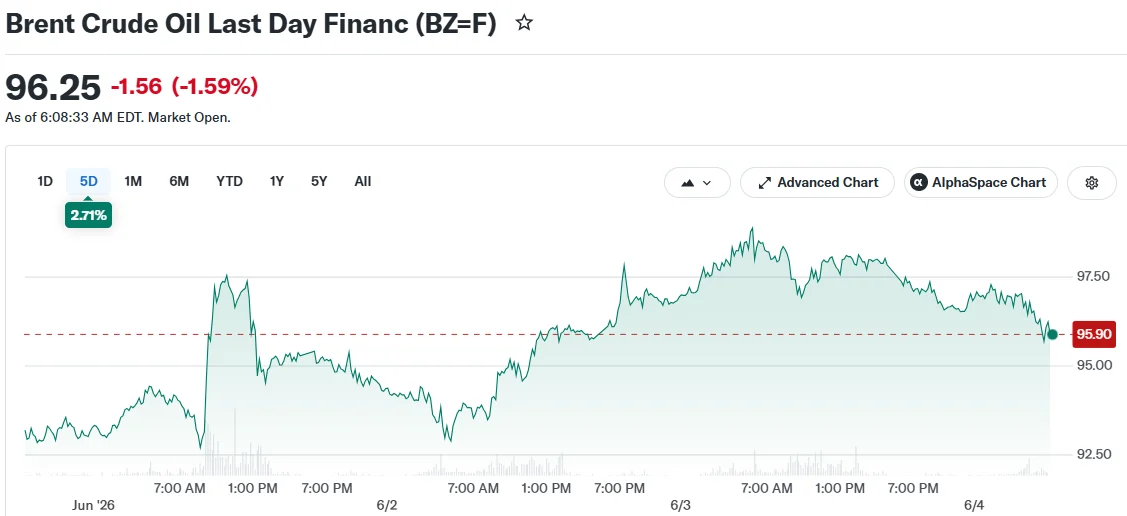
The pullback came after both benchmarks had climbed nearly 2% during Wednesday’s session, reaching their strongest levels in over a week.
The fragility of the ceasefire remains a concern as it requires Iran-aligned Hezbollah to cease hostile activities. Since Hezbollah was absent from the U.S.-mediated negotiations, market observers question the agreement’s durability.

Regional conflict has persisted since February’s final days. Recent escalations included reported Iranian missile attacks targeting Kuwait and Bahrain, followed by American military strikes on Iran’s Qeshm Island situated near the Strait of Hormuz.
Hormuz Blockage Continues to Threaten Supply
The strategically vital Strait of Hormuz — a maritime passage that typically transports approximately one-fifth of world’s oil — has been essentially impassable since hostilities erupted. This blockage has stripped substantial volumes of petroleum from international markets.
Diplomatic efforts between Washington and Tehran have yielded minimal results. Market participants remain vigilant for any indication of an agreement that might restore oil transit through the region.
President Donald Trump stated during a podcast appearance that Iran had committed to abandoning nuclear weapons development, offering modest optimism for a peaceful resolution. According to Wall Street Journal reports, Trump also informed advisers he would refrain from additional strikes against Iran unless American personnel are killed.
Domestically, the U.S. House of Representatives passed a resolution aimed at preventing Trump from pursuing further military action. The measure requires Senate passage and two-thirds majorities in both legislative chambers to survive a presidential veto.
ING analysts remarked that market conditions are deteriorating: “Every day that passes without a resumption of oil flows leaves the market increasingly vulnerable.”
Major Inventory Draw Provides Price Support
A substantial reduction in American crude reserves helped prevent steeper price declines Thursday.
Energy Information Administration figures revealed crude inventories dropped by 8 million barrels during the week concluded May 29. Market forecasters had anticipated a decline closer to 3 million barrels.
The significant drawdown resulted partly from an export surge. American crude shipments overseas hit 5.9 million barrels per day, approaching record territory, as European and Asian purchasers urgently sought replacement supplies.
The United States simultaneously withdrew another 8 million barrels from its Strategic Petroleum Reserve during the same period.
ING analysts observed that inventory depletion rates have exceeded typical seasonal patterns. With summer’s peak consumption season approaching, worldwide stockpiles could reach dangerously low thresholds if present trends persist.
The Energy Information Administration projects that global petroleum inventories are declining at an accelerated pace. Analysts maintain this dynamic preserves upward price pressure regardless of any reduction in geopolitical hostilities.
