



Key Takeaways
- BTC experienced a steep decline of nearly 5%, falling to approximately $63,000 following coordinated military operations by the U.S. and Israel against Iran
- The cryptocurrency reached its lowest valuation since February 5, when it temporarily dropped below $60,000
- Israel’s Defense Minister Israel Katz announced a nationwide state of emergency throughout Israeli territory
- BTC’s continuous 24/7 market operation positions it as a release mechanism for risk aversion when traditional markets remain closed
- Market participants sold bitcoin positions as it represented one of the limited highly liquid assets accessible during weekend hours
The world’s leading cryptocurrency by market capitalization experienced a significant downturn on Saturday, February 28, 2026, plummeting toward $63,000 following military strikes executed by United States and Israeli forces against Iran.
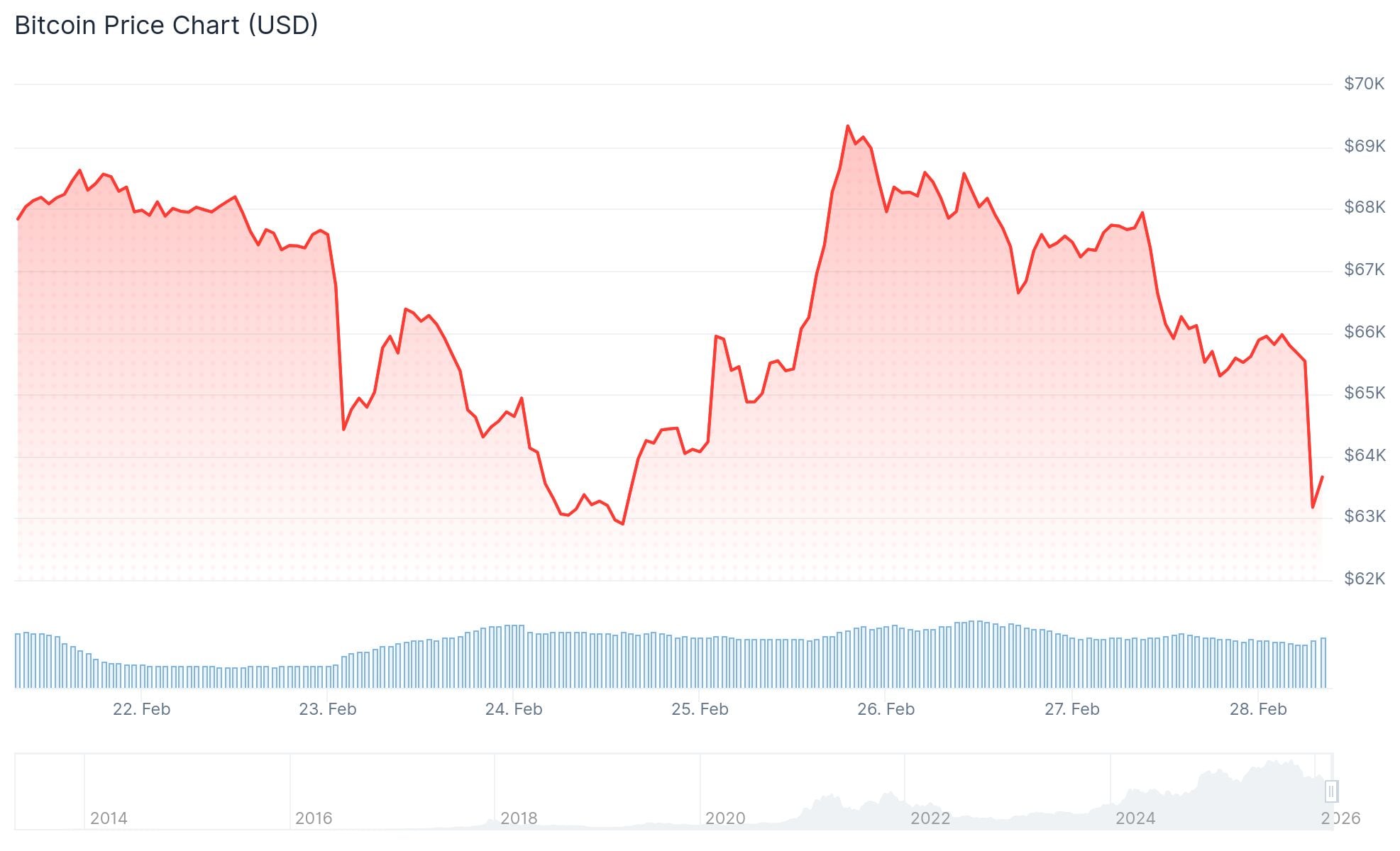
The digital asset shed nearly 5% of its value within mere minutes, representing a substantial loss for investors.
This marked BTC’s lowest valuation point since the market downturn on February 5, when the cryptocurrency momentarily traded beneath the $60,000 threshold.
Following the commencement of military operations, Israeli Defense Minister Israel Katz implemented a comprehensive state of emergency spanning the entire nation.

American involvement in the coordinated strikes received confirmation from a U.S. official, as documented in The Wall Street Journal’s reporting.
Israeli authorities characterized the military action as a “preemptive strike,” according to Reuters coverage citing official government statements.
The Cryptocurrency’s First-Mover Disadvantage
Unlike equity exchanges and fixed-income markets that close for weekend periods, Bitcoin maintains continuous trading operations throughout all hours of every day.
This characteristic positions the cryptocurrency as among the few substantial, highly liquid instruments available for traders seeking to reduce risk exposure during non-traditional trading periods.
Historical precedent supports this behavior pattern. Bitcoin typically experiences immediate selling pressure during geopolitical crises, frequently rebounding once conventional financial markets resume operations.
“Bitcoin just dropped off a cliff,” one market watcher posted to X, adding that “Monday will be a bloodbath in the market.”
The Broader Geopolitical Landscape
The military operations occur against a backdrop of extended U.S. military positioning and stagnated diplomatic efforts regarding nuclear programs with Iranian officials.
Market analysts had previously contemplated potential implications of Iranian conflict scenarios for bitcoin, precious metals, and equity markets.
The escalation heightens concerns regarding potential widespread regional instability in a geographically critical zone for global economic activity.
Bitcoin’s price trajectory has diverged from gold’s movement in recent months, challenging narratives positioning the cryptocurrency as a safe-haven instrument or genuine “digital gold” alternative.
As of Saturday morning trading hours, bitcoin hovered near the $63,000 price level, with additional volatility anticipated upon Monday’s opening of conventional financial markets.
