


Key Takeaways
- Precious metal prices retreated more than 1% Monday amid renewed U.S.-Iran hostilities and dollar strength
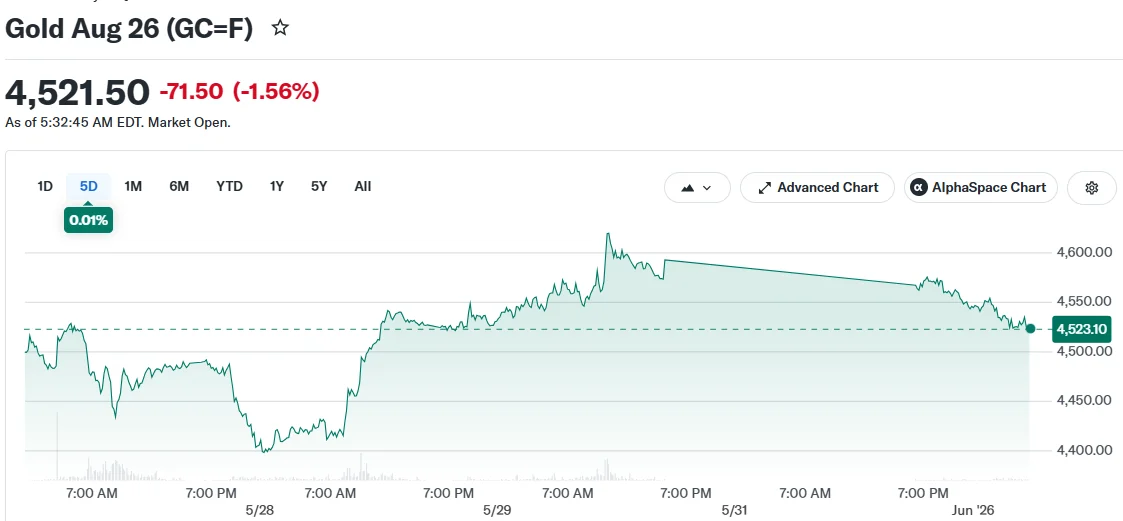
- Benchmark spot prices declined 0.8% to $4,501.54 per ounce; futures contracts fell 1.3% to $4,532.22
- Crude oil jumped over 3%, stoking inflation worries and expectations for tighter monetary policy
- Dollar index climbed 0.1%, increasing costs for international gold purchasers
- Market participants monitoring Federal Reserve commentary and employment figures for policy signals
Precious metal valuations tumbled significantly Monday following renewed military confrontations between the United States and Iran that emerged over the weekend, casting fresh uncertainty over diplomatic resolution prospects.
Benchmark spot prices retreated 0.8% to $4,501.54 per ounce during morning sessions. Futures contracts experienced a steeper decline of 1.3%, settling at $4,532.22.
Pentagon officials confirmed strikes targeting Iranian air-defense installations and unmanned aerial vehicle infrastructure following Tehran’s alleged downing of an American surveillance drone. Iran retaliated with attacks on a military installation hosting U.S. personnel. Regional defense systems successfully neutralized incoming missiles and drones throughout the exchanges.
Gold had concluded the previous week with modest appreciation after emerging reports indicated both nations were exploring extended ceasefire arrangements and potential reopening of critical maritime corridors through the Strait of Hormuz.

Optimism evaporated following the weekend confrontations. Critical negotiating points remain unaddressed, while any comprehensive settlement requires endorsement from President Donald Trump.
Energy Markets Surge, Complicating Federal Reserve Calculus
Oil prices advanced more than 3% Monday in response to escalating military activities. The surge intensified anxieties regarding sustained elevated energy expenses and their potential inflationary consequences.
Persistent inflation could compel the Federal Reserve to adopt restrictive monetary policies rather than accommodative rate reductions. Prior to the conflict intensification, financial markets had anticipated multiple rate cuts.
Elevated borrowing costs typically undermine the yellow metal’s attractiveness, given its non-yielding nature. When interest rates climb, capital frequently flows toward income-generating investment vehicles.
The greenback index registered a 0.1% advance during Asian market hours. A robust dollar elevates purchasing costs for international buyers utilizing alternative currencies, compounding downward momentum on valuations.
Saxo Bank strategists indicated markets face challenges reconciling inflationary dynamics stemming from energy sector volatility against traditional supportive factors including central bank accumulation, sovereign debt anxieties, and global currency diversification movements.
Alternative Precious Metals Display Varied Performance
Not every precious metal declined Monday. Silver registered a 0.5% gain, reaching $75.69 per ounce. Platinum advanced 1.1% to $1,940.95 per ounce.
Copper contracts on the London Metal Exchange appreciated 0.3% to $13,663.33 per ton. American copper futures similarly gained 0.3%, trading at $6.44 per pound.
Israeli military forces received orders for expanded operations into southern Lebanese territory as confrontations with Iranian-supported Hezbollah militants escalated, contributing additional regional instability.
Market participants are directing attention toward forthcoming remarks from Federal Reserve policymakers. Employment statistics scheduled for release could provide enhanced clarity regarding the monetary policy trajectory.
The precious metal reached a two-month nadir last week before experiencing partial recovery. Short-term price movements will likely hinge on diplomatic negotiation developments and subsequent Federal Reserve policy signals.
