



Key Highlights
- Monero employs ring signatures combined with stealth addresses to ensure all transactions remain private automatically
- Zcash leverages zk-SNARK technology to provide users with optional privacy features, making it attractive to diverse user groups
- Bittensor operates as a decentralized artificial intelligence platform, gaining recognition within the data sovereignty sphere
- Certain leading cryptocurrency exchanges have delisted Monero citing regulatory compliance and AML requirements
- Growing concerns about AI surveillance and government monitoring could drive increased demand for privacy-preserving technologies
Privacy-focused cryptocurrencies have emerged as a contentious yet compelling sector within the digital asset ecosystem. This analysis examines three prominent projects attracting long-term investor attention.
While Bitcoin is frequently mischaracterized as anonymous, the reality is that most Bitcoin transactions remain publicly visible and easily tracked through blockchain explorers. This transparency gap has fueled demand for cryptocurrencies specifically engineered to safeguard user anonymity, account balances, and transactional records.
Three distinct projects have gained prominence in this domain: Monero, Zcash, and Bittensor. Each employs unique methodologies for protecting privacy and ensuring data sovereignty.
Monero (XMR)
Monero emerged in 2014 with a core architecture designed specifically for transaction untraceability. The protocol integrates ring signatures alongside stealth addresses to obscure sender and receiver addresses, transaction values, and participant identities.

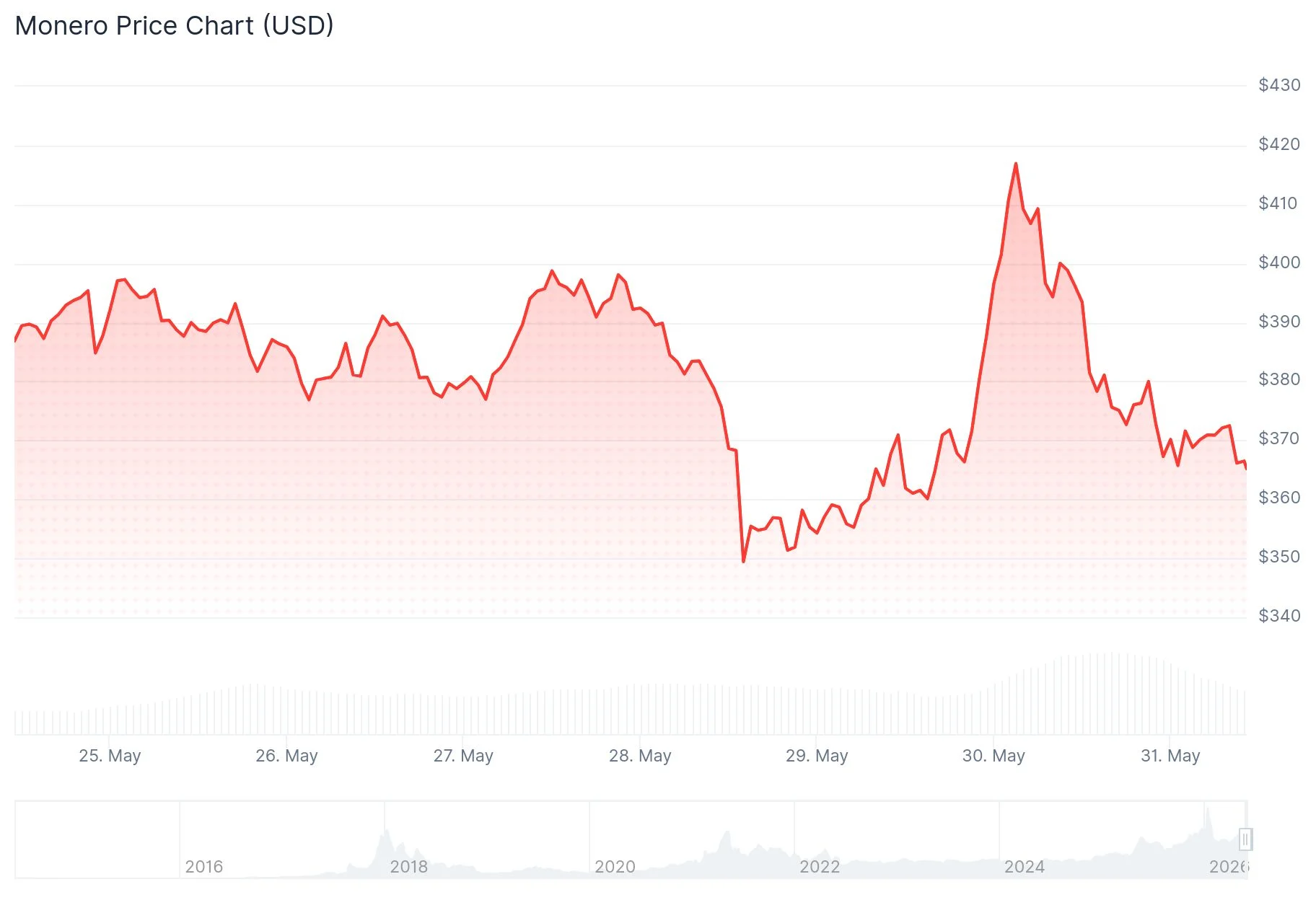
Unlike many competitors, Monero implements privacy as a mandatory feature. Each transaction automatically receives identical privacy protections, eliminating the possibility of distinguishing individual users through selective privacy usage patterns.
Over the past ten years, Monero has established a formidable reputation supported by an engaged community and sustained development efforts. Advocates argue it represents one of crypto’s most straightforward value propositions: genuinely private peer-to-peer financial transfers.
The project confronts significant challenges. Multiple prominent exchanges have delisted Monero following regulatory pressures associated with anti-money laundering enforcement. Ongoing governmental scrutiny of privacy coins may further restrict mainstream accessibility for retail investors.
Nevertheless, substantial portions of the cryptocurrency community anticipate expanding demand for financial privacy. Should this scenario materialize, Monero is positioned among the leading contenders in this category.
Zcash (ZEC)
Zcash debuted in 2016 utilizing an alternative privacy mechanism called zk-SNARKs, representing sophisticated zero-knowledge proof cryptography. Distinguishing it from Monero, Zcash implements privacy as an elective feature rather than a mandatory protocol element.
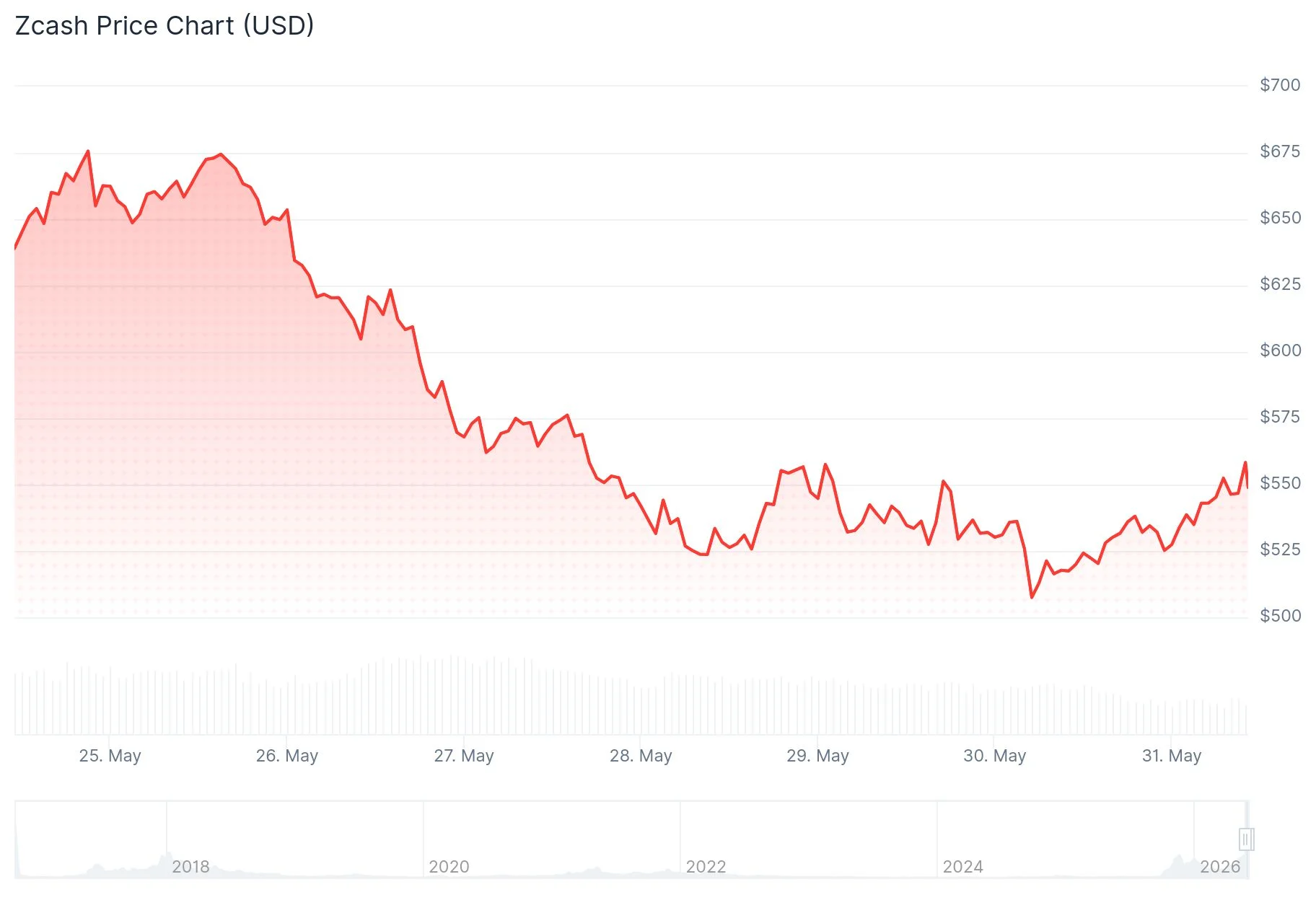
This optional framework presents certain strategic benefits. Individuals and organizations can elect to execute either private or transparent transactions, potentially simplifying regulatory compliance scenarios.
Zcash pioneered zero-knowledge technology implementation in cryptocurrency, which has subsequently evolved into a central topic within blockchain innovation. This technology now finds exploration across blockchain scalability solutions, digital identity frameworks, and Web3 infrastructure.
Despite these technological achievements, Zcash has encountered challenges with user adoption and community expansion. Price performance has similarly fallen short of investor expectations throughout recent cycles. Future prospects hinge substantially on broader zero-knowledge technology acceptance.
Bittensor (TAO)
Bittensor diverges from conventional privacy coins but increasingly appears alongside projects emphasizing data sovereignty and decentralized artificial intelligence. The platform establishes an open marketplace enabling machine learning models to contribute computational intelligence while earning compensation.
The initiative occupies the convergence of multiple emerging trends: artificial intelligence advancement, decentralization principles, open-source development, and data ownership rights. As dominant technology corporations accumulate unprecedented user data volumes, certain investors view decentralized AI networks as viable alternatives.
Bittensor additionally capitalizes on prevailing AI investment enthusiasm. This positioning provides greater market momentum compared to legacy privacy coins lacking AI narrative connections.
The tradeoff involves heightened speculation. The underlying technology remains complex, and sustained real-world adoption awaits validation.
Current Assessment
Monero maintains the most proven record as a dedicated privacy cryptocurrency. Zcash provides exposure to zero-knowledge cryptographic development. Bittensor offers positioning within decentralized AI and data ownership movements.
All three represent high-risk investment vehicles. However, for investors prioritizing digital privacy and data autonomy, these projects currently dominate conversations within this specialized sector.
