



TLDR
- Crude oil markets are experiencing their sharpest monthly contraction since 2020, with Brent falling 19% as diplomatic efforts between Washington and Tehran gain momentum.
- A preliminary accord between the US and Iran proposes extending the current truce by two months, though final authorization from President Trump remains pending.
- Maritime traffic through the Strait of Hormuz continues to face significant limitations, though normalization could occur if negotiators finalize their agreement.
- Diesel and heating oil inventories in the United States have plummeted to their most depleted state in more than twenty years as the supply disruption continues.
- Market experts caution that even with a confirmed agreement, restoring normal oil shipments could require several months due to damaged facilities and shipping complexities.
Crude oil markets are experiencing substantial declines throughout May as investors digest news of possible diplomatic breakthrough between Washington and Tehran. Brent crude tumbled toward the $92 per barrel mark on Friday, representing approximately 19% losses for the month. West Texas Intermediate similarly declined to the $87 vicinity. Both benchmarks are heading toward their most significant weekly retreats in recent memory.
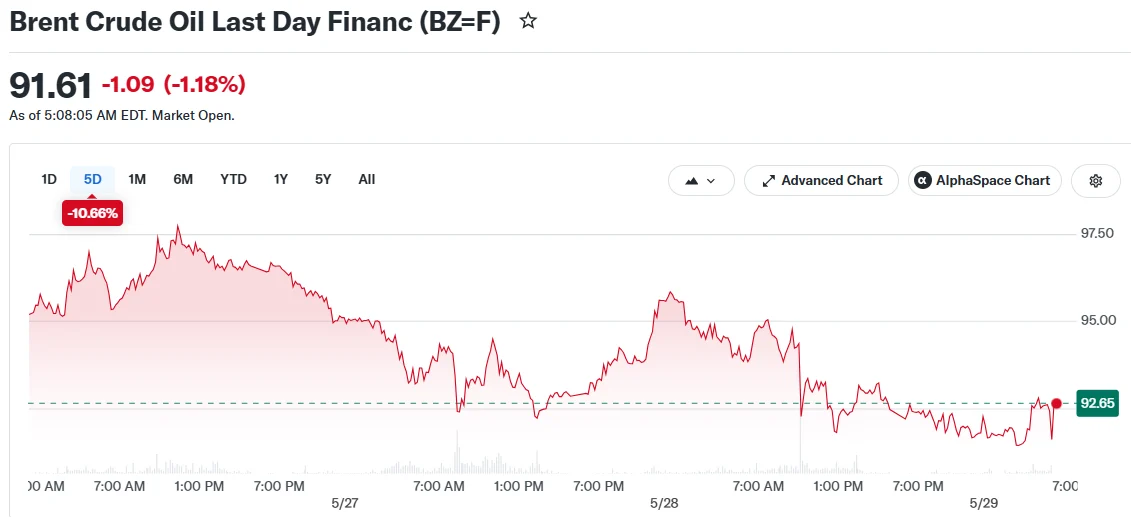
The downturn follows emerging information suggesting American and Iranian negotiators have prepared a framework to prolong their current cessation of hostilities for an additional 60-day period. Final approval from President Donald Trump remains necessary for implementation. White House officials have refrained from publicly validating the specific provisions.
Vice President JD Vance informed journalists that determining “when or if” an agreement materializes remains premature. Treasury Secretary Scott Bessent provided limited commentary, acknowledging only that “the teams have been going back and forth.”
What the Strait of Hormuz Has to Do With It
Central to the current energy market disruption is the Strait of Hormuz, a strategically vital passage responsible for transporting substantial volumes of worldwide petroleum exports. Following the outbreak of hostilities, reciprocal restrictions implemented by American and Iranian forces have eliminated millions of barrels from daily global supply, precipitating an international energy emergency.

Vessel movement through this critical waterway continues operating significantly beneath pre-conflict capacity. Despite an Axios publication suggesting maritime transit would become “unrestricted” following implementation of the anticipated agreement, market participants maintain considerable skepticism.
Crude valuations temporarily declined Thursday following accounts of renewed armed confrontations between American and Iranian military units, before rebounding as diplomatic communications resumed.
Why a Deal Won’t Fix Supply Instantly
Energy market specialists emphasize that any extension of the current truce would fail to immediately reestablish petroleum flows. Multiple logistical challenges persist.
Explosive devices throughout the Hormuz shipping channel require removal. Oil fields previously deactivated may demand months for operational restoration. Critical infrastructure compromised by unmanned aerial vehicle and rocket attacks necessitates extensive repairs. Additionally, tanker vessels would still require substantial time reaching destination markets.
“I would expect flows to remain heavily constrained due to the time lag of tanker travel and time to get production back online,” said Ryan McKay, senior commodity strategist at TD Securities. “We can end up losing another 1 billion barrels of supply during a recovery period.”
ING analysts noted that markets have already priced in much of the resolution. “Any confirmation of a deal that reopens the strait means that further downside is likely limited,” they wrote, but added that inventories are more depleted now than before the conflict began.
Government statistics published this week revealed petroleum reserves at the Cushing, Oklahoma storage facility decreased for a fifth straight week to 23 million barrels, nearing the approximately 20-million-barrel threshold necessary for operational viability. Diesel and heating oil stockpiles reached their most depleted levels in over twenty years.
Significant disagreements in diplomatic discussions persist. These encompass Iran’s atomic energy program, authority over the strategic waterway, and matters concerning economic penalty relief. Trump had previously stated that reopening maritime access and Iran surrendering weapons-grade nuclear material constituted his prerequisites for any settlement.
Wider macroeconomic factors are additionally pressuring demand forecasts. US personal consumption expenditure inflation registered above anticipated levels, strengthening expectations that the Federal Reserve may maintain elevated interest rates for an extended duration. Updated first-quarter GDP figures similarly indicated decelerating economic expansion.
