


Key Highlights
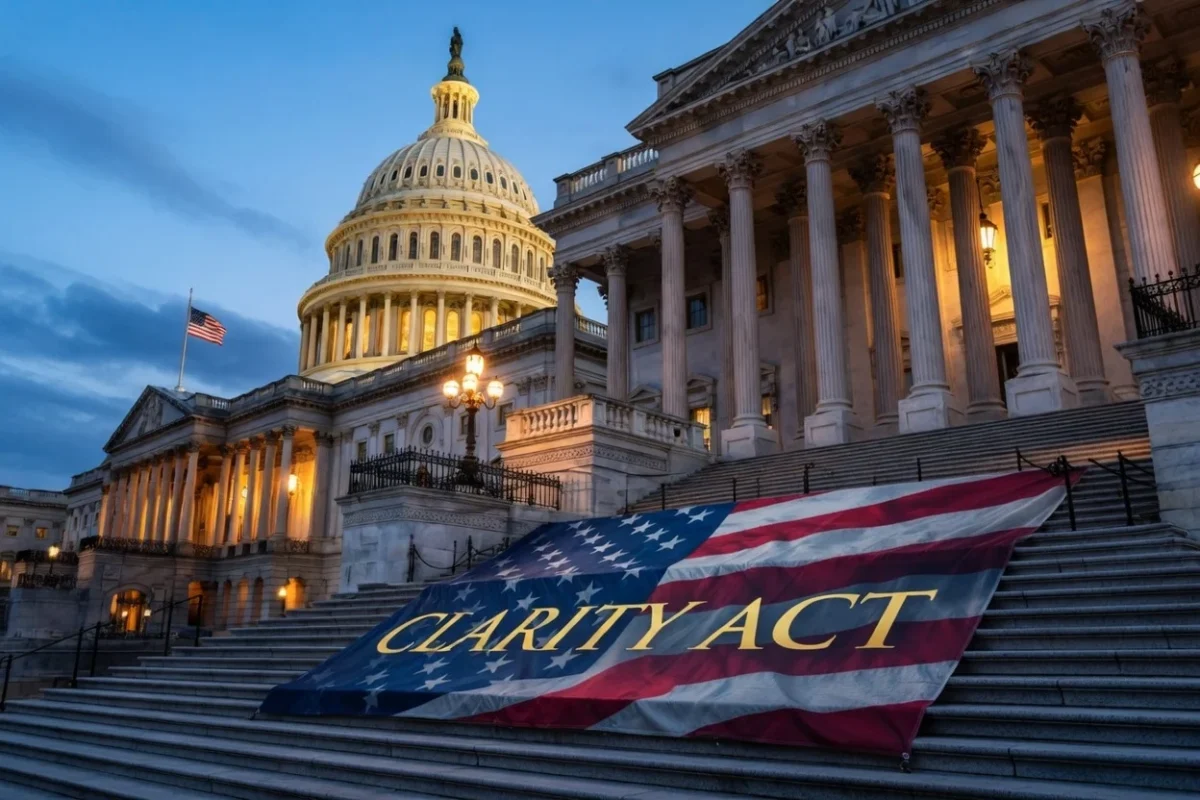
- President Trump announced via Truth Social that the CLARITY Act would establish permanent digital asset regulations, preventing subsequent administrations from dismantling the framework.
- Treasury Secretary Scott Bessent is pressing both chambers of Congress to move forward with the legislation, emphasizing the need to establish domestic crypto oversight.
- Senator Cynthia Lummis highlighted consumer vulnerability, noting that without this legislation, users have no protected rights to their holdings when cryptocurrency platforms declare bankruptcy.
- According to Polymarket data, the CLARITY Act currently has a 57% probability of enactment in 2026, recovering from a previous low of 49%.
- The legislation confronts a critical June 2026 Senate floor vote cutoff and requires support from Democratic lawmakers to succeed.
The Trump administration and senior officials are amplifying their efforts to secure congressional approval for the Digital Asset Market Clarity Act. Here’s a breakdown of current developments and their implications.
Administration Officials Rally Behind Legislation
President Donald Trump utilized his Truth Social account this week to announce his intention to establish permanent digital asset oversight through the CLARITY Act. He emphasized that this framework would shield cryptocurrency regulations from being reversed by hostile future administrations he referred to as “crypto haters.”
Treasury Secretary Scott Bessent reinforced this position during congressional testimony. He stressed the importance of establishing clear definitions for digital assets and establishing comprehensive domestic regulatory oversight.
“When you look at digital assets, all the nonsense that happens, that’s because it’s the wild, wild west offshore,” Bessent stated. He emphasized the necessity of bringing these activities under U.S. jurisdiction.
Bessent additionally confirmed the administration’s opposition to implementing a central bank digital currency. He characterized such a digital dollar as “the first step toward tracking.”
The Treasury Secretary noted that the CLARITY Act has garnered support from both political parties and called on both legislative chambers to expedite its passage.

Legislative Status and Challenges
The CLARITY Act secured House approval in July 2025. Since then, the bill has encountered obstacles in the Senate stemming from federal shutdowns, industry objections, and questions surrounding potential conflicts of interest involving the Trump family’s business ventures.
The President, his family members, and business partners maintain ties to various cryptocurrency ventures including memecoin initiatives, the World Liberty Financial platform, its USD1 stablecoin project, and a Bitcoin mining operation.
Both the Senate Agriculture Committee and Senate Banking Committee have approved the bill following separate markup sessions in January and May. However, a comprehensive Senate floor vote remains pending, and Republicans’ narrow majority necessitates Democratic cooperation for passage.
Several Democratic senators have indicated they will refuse support unless the legislation includes more robust ethics safeguards.
Senator Cynthia Lummis from Wyoming has been a vocal advocate for the bill throughout the week. She positioned it primarily as consumer protection legislation.
“Without the Clarity Act, if a digital asset exchange goes bankrupt, customers have no guaranteed right to their own assets,” Lummis explained. She further cautioned that software developers could once again face criminal charges simply for publishing code if the legislation doesn’t pass.
The legislation must reach a Senate floor vote by June 2026.
Cryptocurrency Market Response
Bitcoin experienced a decline from above $74,000 to under $73,000 following Trump’s social media announcement. Current trading data shows Bitcoin at $73,467.
Polymarket participants currently assess the likelihood of the CLARITY Act becoming law in 2026 at 57%. This represents an increase from the 49% low following an earlier Senate recess-induced delay, though it remains below the 75% peak.
In additional commentary, Trump addressed ongoing legal disputes concerning prediction market platforms including Kalshi and Polymarket, supporting the Commodity Futures Trading Commission’s assertion of exclusive regulatory authority over these services. His son, Donald Trump Jr., serves in an advisory capacity for both platforms.
