



Key Highlights
- Both the S&P 500 and Nasdaq Composite achieved unprecedented all-time peaks following news of potential U.S.-Iran diplomatic agreement
- Market volatility indicator VIX plummeted to levels not seen since late January, dipping under the 16 threshold
- Cloud computing company Snowflake experienced a dramatic 35% stock price increase following exceptional quarterly results
- April’s Personal Consumption Expenditures inflation data showed 3.8% year-over-year growth with a monthly increase of 0.4%
- Final authorization from President Trump for the proposed 60-day diplomatic framework remains pending
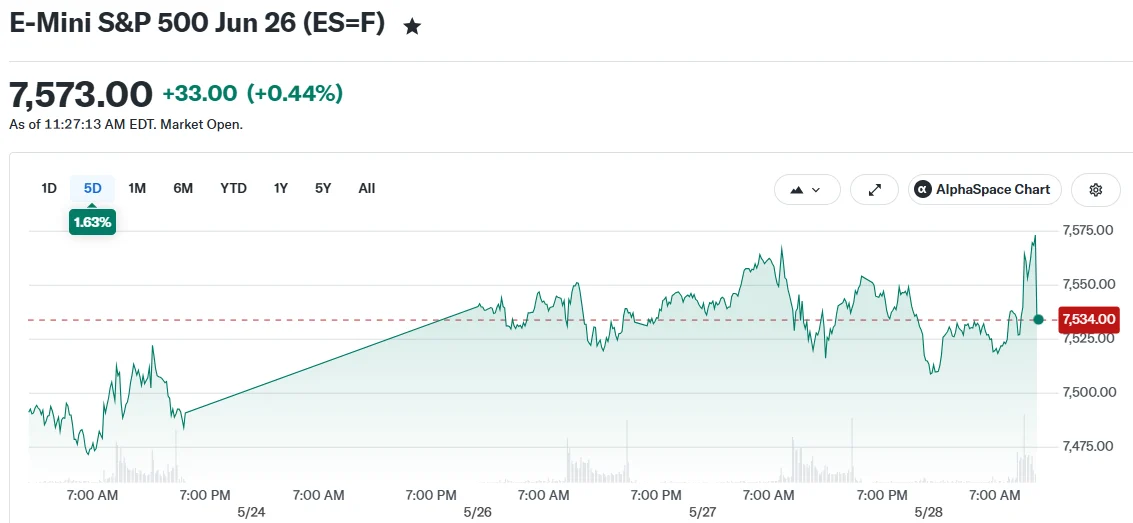
Wall Street experienced a notable rally on Thursday as the S&P 500 climbed to unprecedented territory following revelations that American and Iranian representatives reached consensus on a 60-day diplomatic framework designed to prolong the current ceasefire arrangement.
The benchmark index advanced between 0.4% and 0.5% throughout trading hours, breaking through the 7,500 threshold and touching an intraday high of 7,556.52. Meanwhile, the Nasdaq Composite posted a 0.6% gain, with both major indices establishing new historic peaks. The Dow Jones Industrial Average remained relatively flat, registering a modest increase of approximately 17 points.
According to information from Axios, which received confirmation from two American government officials and a regional intelligence source, the preliminary agreement includes provisions for subsequent discussions regarding Iran’s nuclear capabilities. Nevertheless, President Donald Trump has yet to provide his conclusive authorization for the arrangement.
Subsequently, the White House dismissed an alternative account describing a memorandum of understanding as “a complete fabrication,” prompting market participants to maintain a degree of caution.

Market Volatility Indicator Reaches Four-Month Nadir
Investor anxiety levels decreased substantially during Thursday’s trading session. The CBOE Volatility Index declined beneath the psychologically significant 16 mark, reaching an intraday bottom of 15.73. This represents the indicator’s lowest measurement since January 23.
The VIX’s downward movement signaled enhanced market confidence regarding the geopolitical landscape. Investment professionals shifted capital toward riskier asset classes as apprehension surrounding U.S.-Iran tensions diminished.
David Wagner, who oversees equity strategies at Aptus Capital Advisors, noted that market participants had been anticipating some form of diplomatic understanding. He observed that consumer discretionary equities typically experience immediate upward momentum when such developments materialize.
Oil prices retreated from elevated levels following the diplomatic news. West Texas Intermediate crude contracts traded above the $89 per barrel mark, while Brent futures hovered near $95 per barrel. Both benchmarks had previously climbed after Iran’s Revolutionary Guard announced it had struck a U.S. military installation.
Cloud Platform Snowflake Stock Rockets 35% Following Quarterly Results
Snowflake emerged as Thursday’s most impressive performer. The company’s stock price skyrocketed approximately 35% after its cloud data infrastructure division exceeded first-quarter profit and sales projections, subsequently providing second-quarter forecasts that surpassed analyst expectations.
The enterprise additionally revealed plans to allocate $6 billion toward Amazon Web Services infrastructure during the upcoming five-year period, further energizing investor enthusiasm.
Regarding inflation metrics, the April Personal Consumption Expenditures price gauge increased 0.4% on a monthly basis. The annual comparison registered 3.8%. The monthly figure arrived below the 0.5% consensus forecast from economic analysts.
While the yearly rate continues exceeding the Federal Reserve’s 2% objective, the moderated monthly measurement provided market participants with cautious optimism that inflationary pressures might be beginning to subside.
Secretary of State Marco Rubio indicated earlier in the week that negotiations with Iran had achieved meaningful advancement and that the current administration favors pursuing a negotiated diplomatic resolution.
