


TLDR
- Brent crude declined 3.2% to reach $96.41 while WTI tumbled 4.2% to $89.88 during Wednesday’s trading
- Diplomatic efforts between Washington and Tehran persist even after recent military confrontations
- An agreement to lift restrictions on the Strait of Hormuz would potentially restore approximately 20% of worldwide oil shipments
- Tehran launched defensive measures against U.S. military assets following American strikes targeting Iranian infrastructure
- Financial analysts at Deutsche Bank indicate diplomatic discussions appear to be progressing despite limited concrete developments
Crude oil markets experienced significant downward pressure Wednesday as market participants evaluated the balance between continued diplomatic engagement between the United States and Iran against the backdrop of recent military confrontations in the Persian Gulf region.
Brent crude contracts for July delivery declined 3.2% to settle at $96.41 per barrel. Meanwhile, U.S. West Texas Intermediate crude retreated 4.2% to close at $89.88 per barrel.
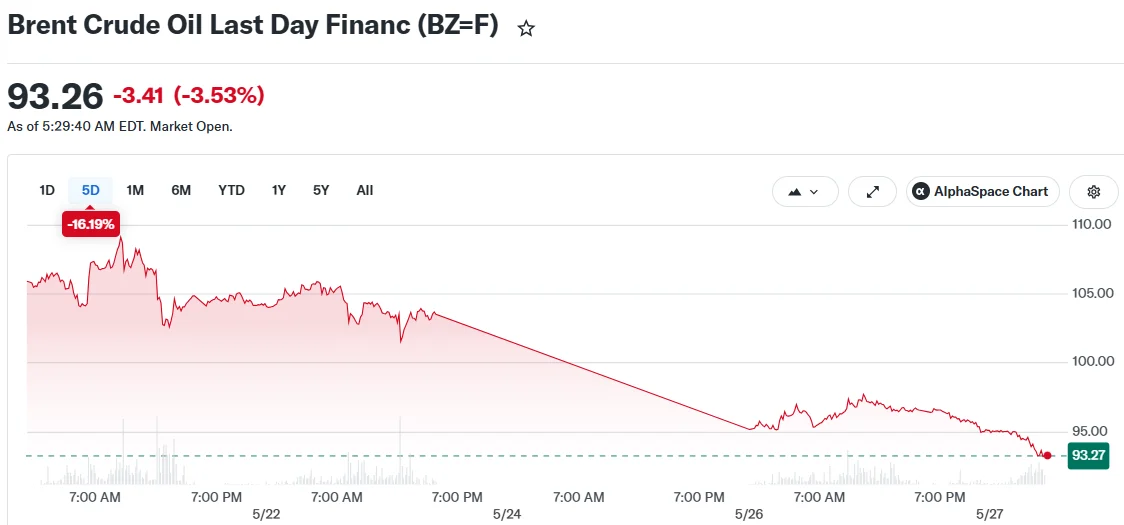
The substantial decline followed a previous session where both benchmark crude contracts had rallied more than 3.5%. That rally was triggered by reports confirming U.S. military operations against Iranian installations.
Regional Military Engagements Shake Energy Markets
U.S. defense officials confirmed their forces executed precision strikes targeting Iranian missile infrastructure and vessels used for maritime mine deployment in Iran’s southern region. Military spokespeople characterized these operations as defensive measures.

Iranian state media outlets reported that Tehran’s military responded by engaging an American unmanned aerial vehicle and a manned fighter aircraft. Iranian authorities issued warnings of additional countermeasures should Washington breach existing ceasefire arrangements.
Despite these military exchanges, U.S. defense officials maintained that the ceasefire framework with Iran continues to hold. Both nations appear committed to maintaining diplomatic channels despite elevated regional tensions.
Al Jazeera’s coverage indicated that indirect negotiations between the two capitals were proceeding. Nevertheless, the news outlet suggested that achieving a comprehensive peace agreement remains challenging in the aftermath of this week’s military incidents.
American diplomatic sources indicated Tuesday that a potential agreement could materialize within days. The proposed diplomatic framework encompasses an extended ceasefire and the restoration of commercial traffic through the Strait of Hormuz.
The proposed arrangement would additionally incorporate Iran into multilateral discussions regarding its nuclear enrichment activities. However, Tehran has thus far declined American stipulations requiring the abandonment of its enriched uranium reserves.
Hormuz Blockade Constrains Worldwide Petroleum Distribution
The Strait of Hormuz has experienced severe disruptions to commercial shipping since hostilities commenced between Iran and the U.S.-Israeli coalition. This disruption has eliminated approximately one-fifth of global petroleum supplies from international markets.
Petroleum transit through this critical waterway continues to operate at significantly diminished capacity compared to pre-conflict levels. The ongoing restrictions have maintained upward pressure on international energy commodity markets.
Some cautious optimism emerged during the current week following confirmation that a limited number of commercial tankers successfully navigated the strait. Energy traders interpreted this development as a potential indicator that full reopening might be approaching.
ING commodity analysts noted oil prices faced “downward pressure stemming from evolving market sentiment regarding a prospective U.S.-Iran agreement, though risk factors remain substantially elevated given persistent tensions surrounding the Strait of Hormuz.”
Deutsche Bank energy sector analysts observed there had been “minimal concrete information emerging this week,” while noting that “diplomatic discussions appear to be maintaining forward momentum.”
Energy markets are maintaining intense focus on the negotiation process. Any confirmed diplomatic breakthrough or collapse would likely trigger substantial price volatility in either direction.
Petroleum shipments through the Hormuz strait continue operating under severe constraints, and the ultimate resolution of diplomatic talks remains undetermined.
