


Key Highlights
- Gold advanced more than 1% Monday amid growing optimism around US-Iran diplomatic breakthrough
- Trump administration announced a peace deal framework was “largely negotiated”
- Agreement could reopen critical Strait of Hormuz shipping lane and reduce energy-related inflation pressures
- Treasury yields and the US dollar declined, providing tailwinds for gold
- Despite Monday’s gain, gold remains approximately 13% below levels before the Iran crisis escalated in late February
Precious metals rallied Monday as diplomatic progress between Washington and Tehran boosted market sentiment and weakened the US dollar.
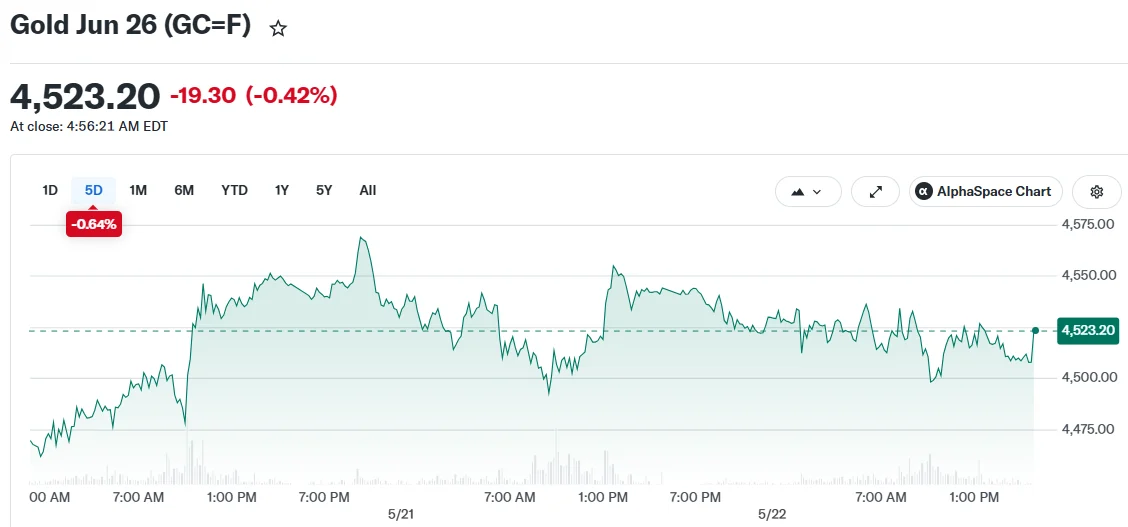
Spot gold advanced 1.2% to reach $4,561.41 per ounce during London trading hours. Gold futures for June delivery increased 0.8% to settle at $4,593.34 per ounce. Silver surged 3.1% to $77.86, with platinum and palladium posting gains as well.
The precious metals rally followed weekend comments from President Donald Trump, who stated that negotiators had “largely negotiated” a framework for a peace agreement with Iran. Trump emphasized he would not “rush” into finalizing any deal.
Secretary of State Marco Rubio told reporters the United States and Iran had reached a “pretty solid” framework agreement to reopen the strategically vital Strait of Hormuz. Rubio indicated officials were awaiting Tehran’s formal response.

Rubio cautioned that renewed military intervention remained possible should Iran refuse the proposed terms. The US maintains a naval blockade around Iran pending a finalized agreement.
Reporting suggests significant disagreements persist regarding Iran’s nuclear enrichment activities. Iranian representatives have broadly dismissed American demands for surrender of enriched uranium reserves.
The Strategic Importance of the Hormuz Strait Agreement
The Strait of Hormuz represents a critical chokepoint for international petroleum shipments. Successfully reopening this waterway could substantially reduce energy costs, which have driven much of the inflationary pressure since hostilities commenced in late February.
Rising inflation expectations have prompted traders to anticipate Federal Reserve rate increases. Futures markets currently reflect near-certainty of a Fed rate hike by year’s end.
Since gold generates no yield, rising interest rates typically create headwinds for the metal. Gold has shed roughly 13% of its value since the Iran conflict intensified, largely attributable to these rate increase expectations.
Monday witnessed both the dollar and Treasury yields pull back on diplomatic optimism, creating favorable conditions for gold to gain ground.
Investor Sentiment Stays Measured
Market experts observed that the gold recovery remained “relatively muted” considering the headlines. Justin Lin from Global X ETFs in Sydney explained that markets have witnessed previous Trump administration announcements fail to produce results, making investors demand tangible proof before significantly bidding up prices.
Christopher Wong at Oversea-Chinese Banking Corp suggested hesitation to aggressively pursue the rally persists while critical issues surrounding Iran’s nuclear program remain unaddressed.
Wong additionally pointed out that major markets including the United States, United Kingdom, Hong Kong, and South Korea observed public holidays Monday, resulting in reduced trading activity.
Newly appointed Federal Reserve Chair Kevin Warsh recently assumed leadership. Market participants are closely monitoring his statements regarding economic conditions and monetary policy direction.
The Bloomberg Dollar Spot Index declined 0.2% Monday. Spot silver climbed 2.9%, while spot platinum advanced 2% to $1,968.12 per ounce.
Gold continues trading significantly below its recent peak levels. Future price direction depends substantially on whether negotiators finalize an Iran agreement and its ultimate impact on energy markets and inflationary trends.
