



TLDR
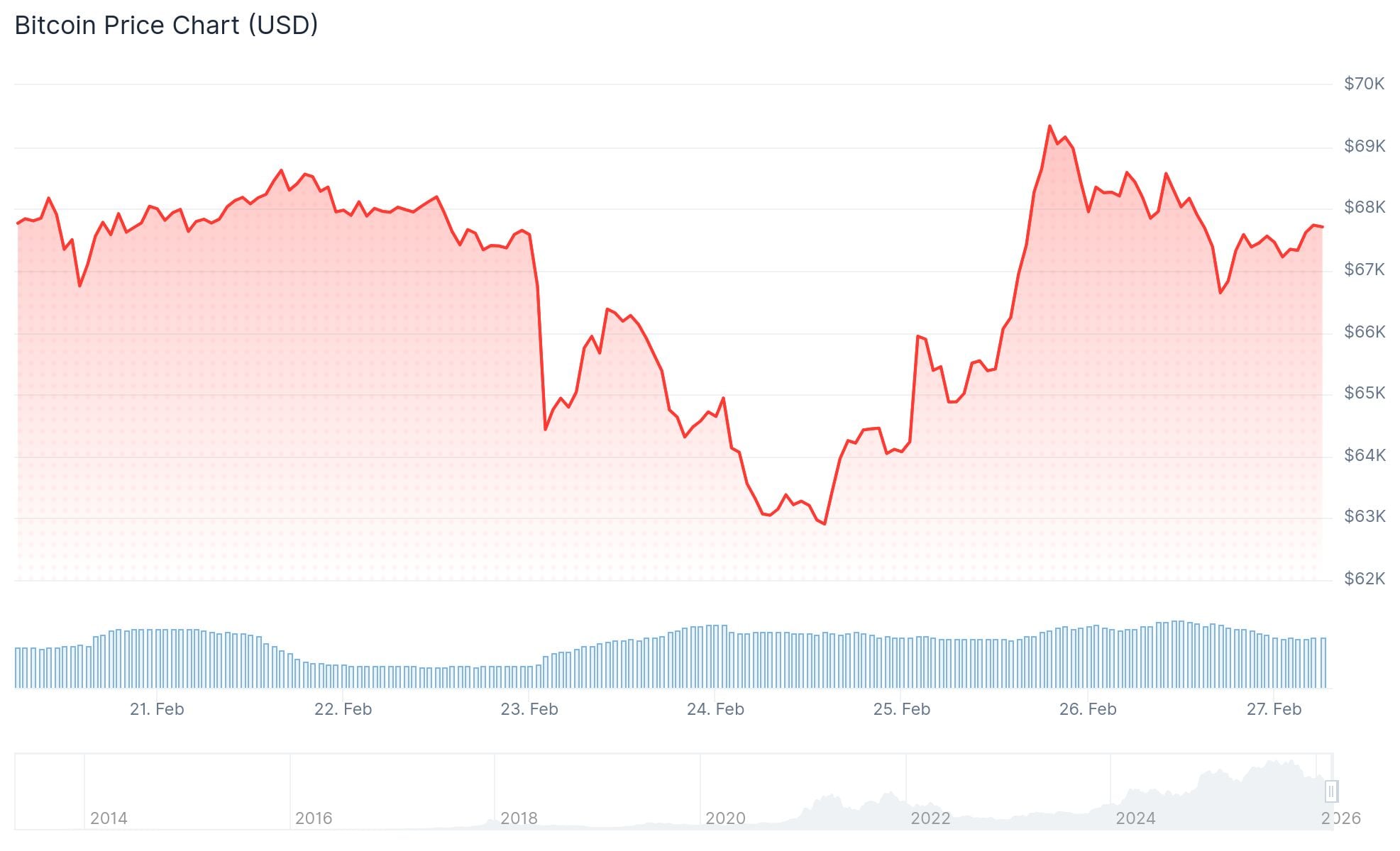
- BTC retreated beneath the $67,000 mark on Thursday amid broader market risk aversion
- Spot Bitcoin ETFs in the United States saw $506 million in net inflows, marking a two-week peak
- BlackRock acquired approximately 4,309 BTC valued at $289.6 million in a one-hour timeframe
- Wallets containing 100+ BTC have grown to nearly 20,000, which Santiment interprets as optimistic
- Strong institutional purchases haven’t prevented profit-taking that keeps BTC capped under $70,000
Bitcoin fell back under the $67,000 threshold on Thursday following a robust Wednesday trading session where the digital asset surged over 6%.
The decline aligned with broader weakness across Wall Street, as even positive earnings from Nvidia couldn’t prop up technology equities. A risk-averse atmosphere extended into speculative markets, cryptocurrencies included.
At press time, Bitcoin was changing hands around $66,900, representing a roughly 1.6% decline over 24 hours based on TradingView data.
The previous day’s rally was primarily fueled by dip-buying activity after Bitcoin had plunged nearly 50% from its October record high. The upward movement also caught short sellers unprepared, resulting in a notable short squeeze.

Coinglass data revealed that $468.7 million worth of short positions were liquidated during a 24-hour period.
Despite Thursday’s price softness, institutional accumulation intensified dramatically. According to SoSoValue, U.S. spot Bitcoin ETFs registered $506.51 million in net inflows on February 25, representing the strongest single-day performance in a fortnight.
ETF Inflows Surge
BlackRock’s IBIT dominated with $297.37 million in net inflows. Fidelity’s FBTC contributed $30.09 million, while Grayscale’s GBTC secured $102.49 million. Bitwise’s BITB recorded $39.37 million in additions.
BlackRock executed a substantial direct acquisition on February 26, purchasing roughly 4,309 BTC valued at approximately $289.6 million in just one hour. These transactions involved transfers from Coinbase Prime hot wallets into IBIT wallets.
Eric Balchunas, Bloomberg’s ETF analyst, observed that this demand arrived at an opportune moment following weeks of persistent outflows, though he emphasized uncertainty about whether this signals a sustained trend reversal or merely a temporary bounce.
CryptoQuant’s Julio Moreno posted on X: “Bitcoin spot demand is growing for the first time since late November.”
Wallet Data Offers a Bullish Signal
Cryptocurrency analytics provider Santiment highlighted that 19,993 distinct wallets held 100 BTC or more as of Thursday, falling just seven addresses short of the 20,000 threshold.
Santiment characterized this pattern as evidence of “less extreme consolidation,” indicating Bitcoin is spreading across additional whale-tier holders instead of concentrating among fewer entities.
Nevertheless, Santiment observed that the aggregate supply percentage controlled by this cohort remains stable, suggesting certain long-term holders continue distributing their positions. “This is why prices have stayed suppressed,” the analytics firm explained.
On-chain analysis provider Glassnode indicated that profit-taking activity has disrupted every rally attempt beneath $70,000 throughout February.
The Coinmarketcap fear and greed index stayed at “extreme fear” levels on Thursday, showing no change from earlier in the week.
Bitcoin has declined approximately 24.59% during the past 30 days and sits roughly 47% below its October all-time high.
