


TLDR
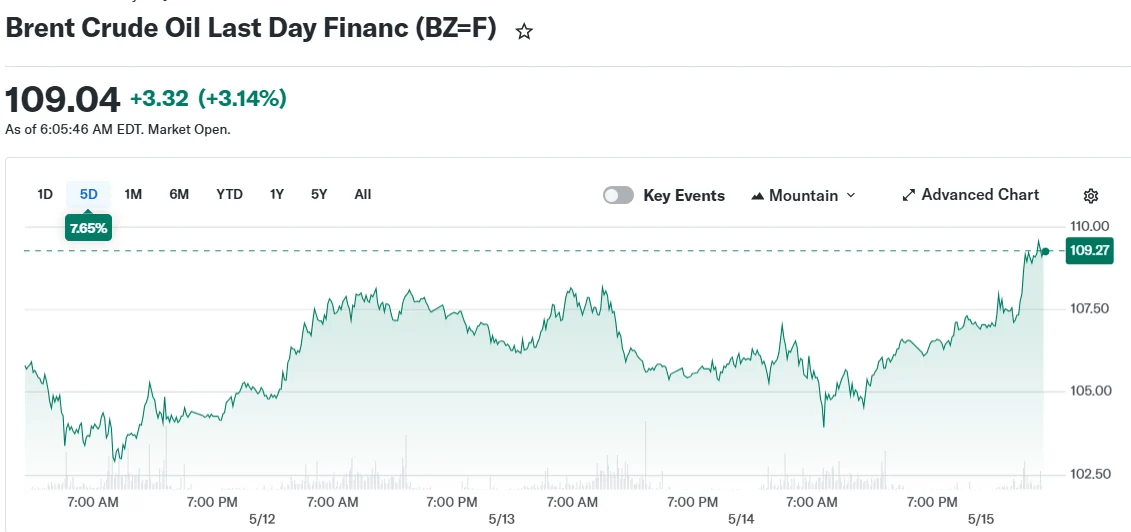
- Brent crude surged past $109 per barrel, marking a nearly 8% weekly increase
- Critical Strait of Hormuz shipping lane continues operating far below capacity
- President Trump warned he’s running out of patience with Iran, suggesting possible military escalation
- International Energy Agency projects severe supply shortages could persist until October
- Beijing summit between Trump and Xi concluded without substantial agreements on trade or energy
Global crude oil markets experienced significant upward momentum this week as the vital Strait of Hormuz remained substantially restricted and diplomatic initiatives to resolve the Iranian crisis showed minimal progress.
By Friday’s close, Brent crude had surged beyond $109 per barrel, representing approximately 8% growth over the week. West Texas Intermediate hovered around $105. The benchmarks registered their most substantial weekly advances in several months.
The Strait of Hormuz serves as the planet’s most crucial oil transportation corridor. Approximately 20% of worldwide petroleum supplies typically pass through this strategic waterway.
Following the outbreak of tensions in late February, vessel movement through the strait has experienced dramatic reductions. According to U.S. Energy Information Administration data, crude oil and refined product flows decreased by roughly 6 million barrels daily during the initial quarter.

Iranian official channels indicated approximately 30 ships navigated the passage this week. Nevertheless, maritime activity remains significantly suppressed compared to typical levels, with tanker companies continuing to exercise caution about resuming standard operations amid ongoing security concerns.
Global trading entity Vitol Group has begun marketing Iraqi crude sourced from regions outside Hormuz to potential purchasers. This development indicates certain shipments have successfully utilized alternative export pathways from the area.
Presidential Patience Wearing Thin With Tehran
President Trump adopted an increasingly confrontational stance toward Iran on Friday, declaring on Truth Social regarding the “military decimation of Iran (to be continued!).” During a Fox News appearance, he stated: “I am not going to be much more patient. They should make a deal.”
While a cessation of hostilities has been operational since early April, numerous incidents have disrupted the fragile peace. Washington and Tehran remain considerably divided regarding any permanent settlement.
Trump recently characterized the temporary truce as hanging by a thread on “massive life support.” Market observers suggest the substantial distance separating both parties makes renewed conflict more probable than diplomatic breakthrough in the immediate future.
“The path of least resistance very near term for prices remains more to the bullish side as we continue to see crude oil and fuel inventories contract,” said Dennis Kissler, senior vice president at BOK Financial Securities.
The ongoing conflict has depleted worldwide petroleum reserves at unprecedented rates. The International Energy Agency announced this week that global markets may continue experiencing “severely undersupplied” conditions through October, regardless of whether hostilities cease next month.
Beijing Summit Produces Limited Concrete Results
President Trump conducted a two-day diplomatic engagement with Chinese President Xi Jinping in Beijing. Discussions encompassed the Iranian situation, energy stability, and bilateral commercial relationships.
Both leaders acknowledged the necessity of maintaining Strait of Hormuz accessibility for worldwide energy distribution. Xi additionally indicated China’s willingness to increase purchases of American crude oil to diminish reliance on Persian Gulf sources.
Xi reported that China and the United States committed to stabilizing commercial relations and enhancing dialogue on regional matters. Chinese official media characterized the discussions as achieving “important consensus.”
Despite positive rhetoric, the summit failed to yield significant tangible commitments. Trump mentioned Xi’s receptiveness to expanded American oil purchases, yet China’s official statement omitted energy from the list of discussed topics.
Friday also witnessed substantial selling pressure across bond markets. Market participants expressed concerns that petroleum supply chains won’t normalize rapidly, potentially fueling inflationary pressures.
Physical crude oil markets have experienced renewed tightening in recent trading sessions, reflecting broader pressure on the international petroleum sector resulting from the continued conflict.
