


TLDR
- Bitcoin has declined approximately 26% year-over-year despite favorable U.S. regulatory shifts and the introduction of spot ETF products
- Adam Back, referenced in the original Bitcoin white paper from 2008, believes the decline matches historical four-year patterns
- Precious metals like gold and silver have surged while Bitcoin languished, attracting traditional safe-haven capital flows
- ETF investors demonstrate greater holding stability compared to retail traders who typically exhaust buying power during market corrections
- Blockstream may purchase as many as 21,000 BTC (approximately $800M), with industry sources suggesting a 13,000 BTC acquisition
Adam Back, a pioneering figure in Bitcoin’s development and current CEO of Blockstream, believes the present downturn represents typical market behavior. He shared these perspectives during Tuesday’s iConnections conference held in Miami Beach.
Back’s work received recognition in Satoshi Nakamoto’s seminal 2008 Bitcoin white paper. Today, he leads both Blockstream and the Bitcoin Standard Treasury Company, which trades under the ticker BSTR.
Bitcoin’s value has decreased by approximately 26% throughout the previous twelve months. This decline occurred despite increasingly favorable U.S. governmental attitudes toward cryptocurrency and the debut of spot Bitcoin ETF investment vehicles.
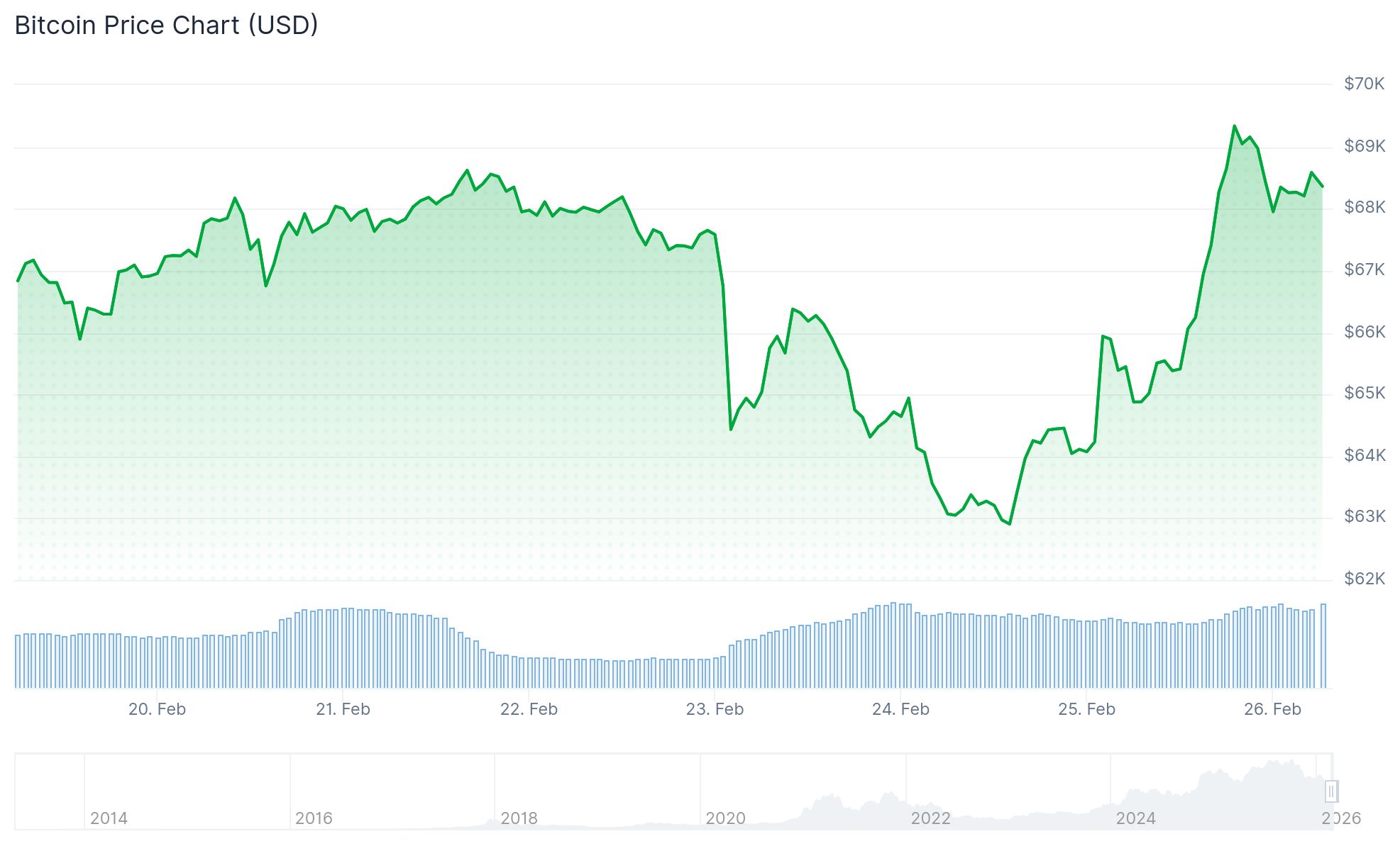
According to Back, this performance aligns with established four-year market patterns. He noted that similar price corrections at comparable cycle stages have occurred historically.

“Bitcoin is generally volatile,” Back explained. “In the previous four-year market cycles, this has been about a time in a cycle where price runs lower.”
He indicated that certain market participants may be trading based on these historical patterns rather than responding to current events or underlying fundamentals.
Concurrently, gold has achieved unprecedented highs while silver reached levels unseen in years. Capital seeking protection from inflationary pressures and geopolitical uncertainty has gravitated toward traditional precious metals rather than cryptocurrency assets.
Bitcoin was anticipated to thrive under identical macroeconomic circumstances. The cryptocurrency’s fundamental value proposition centers on limited supply and serving as protection against fiat currency debasement. Yet during this market cycle, price performance hasn’t validated that thesis.
Institutional ETF Investors vs. Retail Market Participants
Back distinguished between retail and institutional Bitcoin ownership patterns. He observed that retail participants typically deploy most available capital during price surges, leaving minimal resources for accumulation during corrections.
Conversely, ETF investors demonstrate greater persistence. “The ETF holders are more sticky investors than the retail bitcoin exchange traders,” he explained. Institutional portfolios can strategically rebalance across multiple asset classes.
However, Back acknowledged that institutional participation remains nascent. “I think there isn’t that much institutional capital yet,” he stated.
Drawing Parallels to Early Amazon Equity
Back drew comparisons between Bitcoin’s present trajectory and early Amazon shares, which experienced substantial volatility before achieving stability. He characterized such price fluctuations as natural consequences of accelerated adoption.
He anticipates that expanding participation from institutions, corporations, and sovereign entities will gradually reduce volatility. Eventually, he expects Bitcoin’s trading characteristics may resemble gold’s behavior.
Back further noted that Bitcoin’s current market capitalization stands roughly 10 to 15 times below gold’s valuation. He views this differential as significant appreciation potential if Bitcoin’s store-of-value use case continues gaining acceptance.
Regarding corporate treasury strategy, Back’s company Blockstream has signaled intentions for substantial Bitcoin accumulation. Industry reports indicate Blockstream could acquire up to 21,000 BTC, with sources speculating about a 13,000 BTC purchase valued near $800 million.
