


Key Takeaways
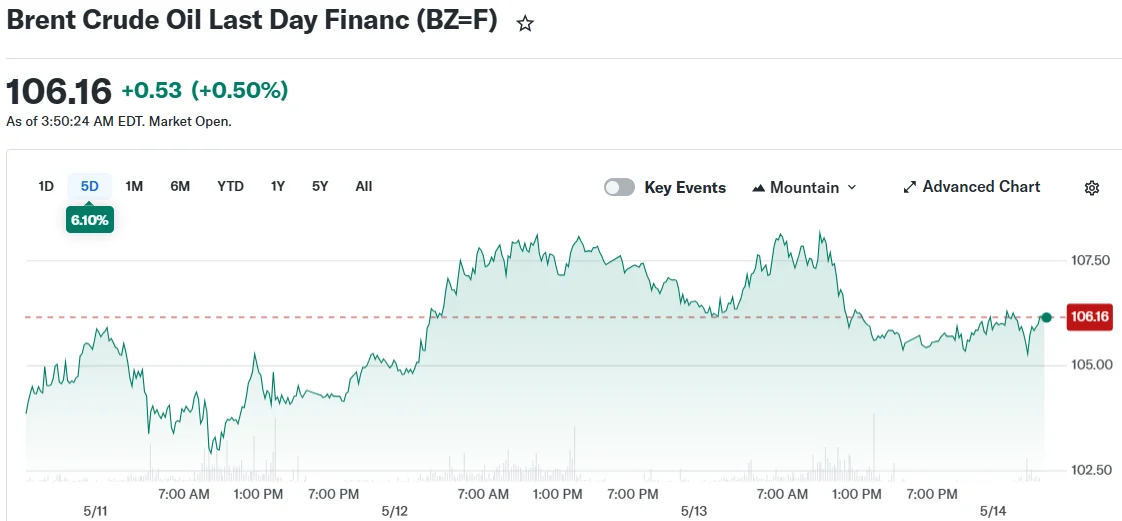
- Brent crude maintained trading levels between $105 and $106 per barrel following a decline exceeding 1% in the prior trading session
- A meeting exceeding two hours between Trump and Xi in Beijing featured optimistic rhetoric regarding bilateral relations
- Ongoing conflict with Iran has essentially blocked the Strait of Hormuz, eliminating approximately 6 million barrels daily from global markets
- International Energy Agency projections indicate persistent supply deficits lasting well into 2026 regardless of swift conflict resolution
- Weekly US petroleum reserves decreased by 4.3 million barrels, surpassing market forecasts
Crude oil valuations remained firmly positioned above the $100 threshold on Thursday as energy traders monitored the inaugural session of diplomatic talks between US President Donald Trump and Chinese President Xi Jinping in Beijing, scheduled across two days.
Brent crude prices fluctuated within a $105 to $106 range per barrel, with West Texas Intermediate positioning itself near $100 to $102. While both benchmark contracts experienced decreases surpassing 1% during the prior session, they continued tracking toward substantial weekly appreciation.
The Thursday meeting between the two leaders extended beyond two hours. Trump characterized the bilateral relationship as poised to become “better than ever before,” suggesting they could achieve a “fantastic future together.” According to Chinese official media outlets, Xi emphasized to Trump that maintaining stable US-China relations represents a crucial element for worldwide stability.
The upbeat diplomatic messaging notwithstanding, energy markets maintained a guarded stance. Market participants continued scrutinizing developments for indicators regarding the Iran situation, which has served as the primary catalyst behind elevated oil prices since military operations commenced in late February.
Iranian Conflict Maintains Supply Constraints
The ongoing hostilities have dramatically curtailed petroleum transit through the Strait of Hormuz, a strategic passage facilitating approximately one-fifth of worldwide oil distribution. According to Energy Information Administration data, crude oil and refined product movements through this waterway declined by nearly 6 million barrels daily during the initial quarter.

While a ceasefire arrangement has remained operative since early April, sporadic confrontations have persisted and no comprehensive peace accord has materialized. Washington and Tehran have achieved minimal advancement toward bridging their disputes.
Satellite monitoring has detected zero tanker operations at Iran’s primary export facility on Kharg Island across four successive observation cycles, as reported by Bloomberg News. A US naval enforcement operation targeting Iranian shipping facilities has additionally reduced the nation’s crude exports.
The International Energy Agency issued an advisory this week projecting that worldwide petroleum markets will experience “severely undersupplied” conditions throughout a substantial portion of 2026, even assuming hostilities conclude as soon as next month.
OPEC revised downward its 2026 worldwide oil consumption growth projections, citing economic ramifications from the conflict and elevated fuel costs, while maintaining its broader economic expansion estimates.
American Inventory Declines and Trade Restrictions Intensify Market Conditions
US petroleum reserves contracted by 4.3 million barrels during the previous week, exceeding the 2 million barrel reduction anticipated by market analysts. Gasoline inventories similarly declined by 4.1 million barrels, signaling persistent fuel consumption despite premium pricing.
Prior to the Beijing diplomatic engagement, Washington imposed additional trade restrictions targeting entities involved in Iranian petroleum transactions with China, Tehran’s principal crude purchaser. According to Trump, trade negotiations were anticipated to receive greater priority than Middle Eastern policy discussions.
A sanctions exemption permitting Russian oil acquisitions approaches expiration this weekend. This development places Indian refineries, representing major consumers of Russian crude, in a precarious situation. India has secured substantial volumes of Russian petroleum throughout the current month.
ING market analysts noted that the Trump-Xi summit commanded close attention from traders seeking indicators of advancement regarding the Iran conflict. Rebecca Babin, a trader with CIBC Private Wealth Group, observed that markets remain fixated on petroleum flow restoration timelines, despite continual delays.
Trump characterized the ceasefire arrangement earlier this week as existing on “massive life support,” diminishing expectations for rapid conflict resolution.
