



Key Takeaways
- The 21 million BTC hard cap, paired with the 2024 halving event, continues restricting new token creation
- Market experts project a baseline target of $180,000 for BTC by 2029, with optimistic forecasts approaching $350,000
- The approval of spot Bitcoin ETFs has created accessible pathways for traditional finance participants
- Conservative projections still estimate BTC at approximately $90,000 by 2029, anchored by market leadership and institutional acceptance
- When weighting all scenarios by probability, the average forecast converges around $200,000 by 2029
The world’s leading cryptocurrency has evolved from a fringe digital experiment into a major global financial asset. The conversation has transformed. Questions of viability have given way to discussions of magnitude.
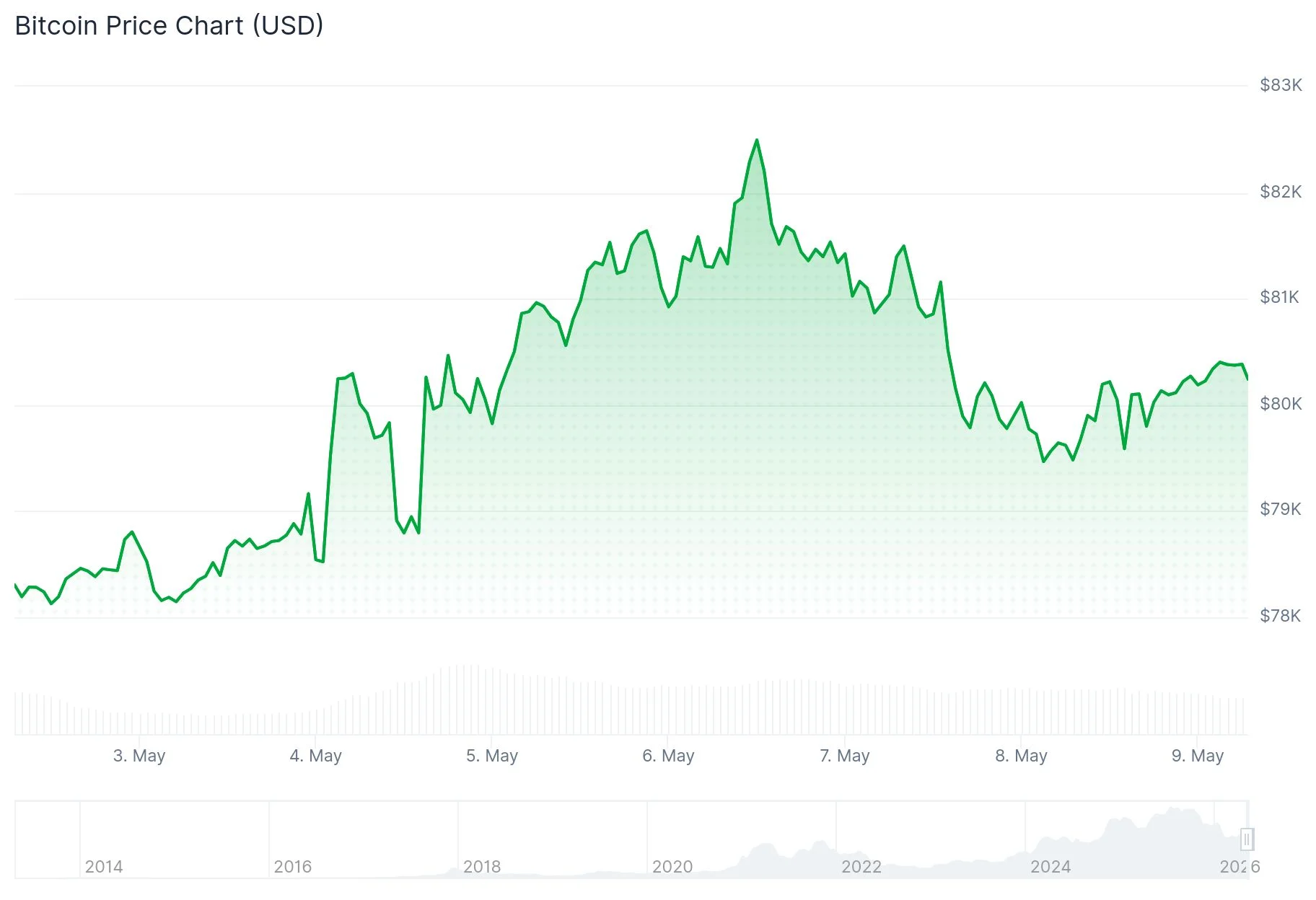
Market researchers are developing detailed forecasts for BTC’s potential valuation by 2029, revealing a substantial spectrum of outcomes.
The cryptocurrency’s supply architecture continues generating significant discussion. A maximum of 21 million BTC will ever be minted. Approximately 20 million tokens already exist in the marketplace. The 2024 halving event reduced block rewards from 6.25 BTC to 3.125 BTC, with another reduction scheduled for 2028.
Throughout Bitcoin’s history, diminishing supply expansion coupled with increasing demand has consistently catalyzed price appreciation.

Three Distinct Valuation Paths
The baseline projection positions Bitcoin around $180,000 by 2029. This would establish a network valuation between $3.5 and $4 trillion. As a reference point, the global gold market exceeds $20 trillion in total value. Bitcoin need not supplant gold entirely to validate elevated valuations. Capturing even a modest portion of that market substantiates the baseline scenario.
This projection incorporates consistent ETF capital flows, broadening institutional participation, and Bitcoin maintaining 45% to 55% cryptocurrency market leadership.
The optimistic projection extends toward $300,000 to $350,000. Reaching these levels demands significantly deeper integration — including pension fund allocations, sovereign nation holdings, and substantial corporate treasury positions in BTC. A market capitalization exceeding $7 trillion would be necessary to underpin these valuations.
The conservative projection anticipates Bitcoin trading around $90,000 by 2029. This outcome would follow scenarios involving heightened regulatory constraints, subdued ETF appetite, or competing blockchain networks capturing more market share than anticipated. Nevertheless, Bitcoin’s established reputation, network security, and institutional footprint would likely preserve its position as the dominant cryptocurrency.
The ETF Revolution and Market Access
The approval of spot Bitcoin ETFs represented a fundamental market transformation. Prior to these products, institutional participants faced the challenge of managing private keys or engaging with cryptocurrency-specific platforms. These exchange-traded funds enable BTC exposure through conventional financial instruments.
This development eliminated a critical friction point. Capital allocation from traditional financial institutions has increased progressively since regulatory approval, with analysts identifying this as among the most significant long-term demand catalysts.
Applying probability weights across all three forecasting scenarios yields a Bitcoin price near $200,000 by 2029.
Current market data demonstrates ongoing expansion in institutional holdings, with ETF inflows maintaining momentum throughout 2025.
