


Quick Overview
- Ethereum maintains approximately $281 billion market cap compared to Solana’s $54 billion
- Onchain stablecoin value favors Ethereum at $164.1 billion versus Solana’s $15.45 billion
- Solana demonstrates stronger user engagement with 1.67M active addresses and temporarily dominated DEX trading in early 2026
- The Solana Foundation introduced a developer platform featuring Mastercard, Worldpay, and Western Union as initial participants
- Citigroup reduced Ethereum’s 12-month forecast due to concerns over declining user engagement
The debate between Ethereum and Solana continues to dominate discussions among cryptocurrency investors seeking the optimal smart-contract platform outside Bitcoin’s ecosystem. The decision ultimately hinges on individual investment preferences and risk tolerance.
According to CoinGecko data, Ethereum commands a market valuation near $281 billion, while Solana registers approximately $54 billion. This substantial valuation differential reflects market confidence in each platform’s future trajectory.
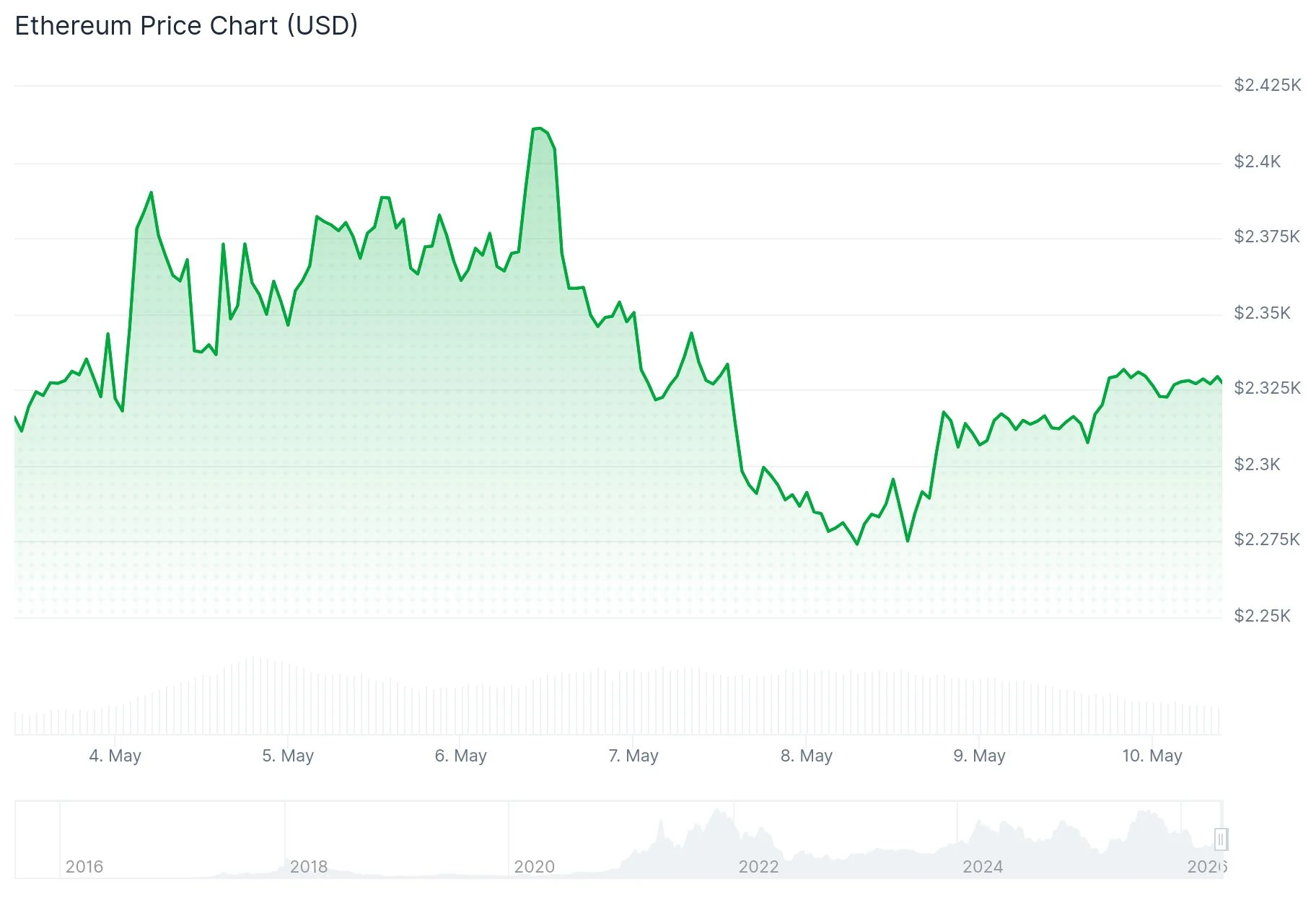
DefiLlama reports Ethereum hosts $164.1 billion worth of stablecoins across its network. The platform records more than 565,000 active addresses alongside $1.343 billion in daily derivatives trading. These metrics demonstrate substantial, high-value financial operations occurring within the ecosystem.
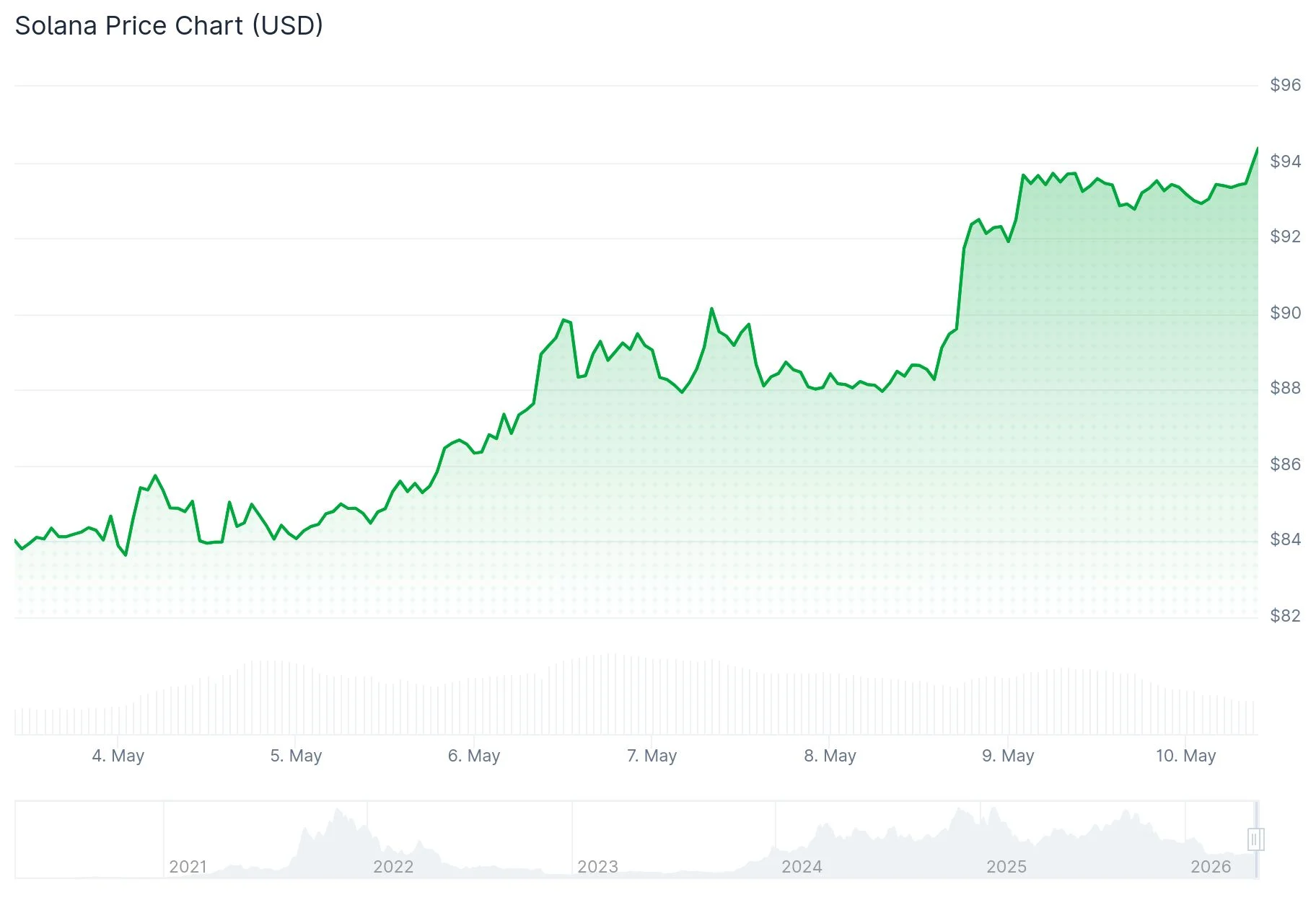
Solana presents contrasting data points. The network boasts 1.67 million active addresses with $1.392 billion flowing through decentralized exchanges daily. While user engagement exceeds Ethereum’s, the underlying capital base remains considerably smaller.

Ethereum Continues Infrastructure Development
Ethereum’s development trajectory remains aggressive. The Ethereum Foundation announced its Pectra upgrade successfully doubled blob capacity, increased maximum validator stakes, and accelerated validator onboarding processes. Fusaka has entered production phase, with Glamsterdam and Hegotá upgrades scheduled throughout 2026.
These technical improvements enhance transaction processing capabilities, staking functionality, and network scalability. The upgrades reinforce Ethereum’s position as the infrastructure leader among smart contract platforms.
Ethereum’s technical roadmap signals commitment to sustained network optimization. This approach resonates with institutional investors and major capital allocators requiring dependable infrastructure.
Solana Targets Enterprise Adoption
Solana has evolved beyond its identity as simply a rapid, cost-effective retail blockchain. The Solana Foundation unveiled its Developer Platform in March, offering API-driven solutions designed specifically for enterprise clients and financial sector organizations.
Initial platform adopters include major players like Mastercard, Worldpay, and Western Union. The infrastructure supports tokenized deposits, stablecoin operations, real-world asset integration, payment processing, and trading applications.
This partnership roster demonstrates Solana‘s ambition to capture enterprise-level financial infrastructure contracts rather than focusing exclusively on retail transaction volume.
CoinGecko data shows Solana dominated spot DEX trading during Q1 2026, capturing 30.6% market share. Ethereum regained leadership in March, securing 27% versus Solana’s 26%.
Solana excels at capturing sudden user momentum surges. Ethereum consistently attracts capital when infrastructure reliability becomes the priority.
Understanding the Risk Profile
Citigroup lowered its Ethereum price forecast for the coming 12 months in March. The financial institution cited declining user activity as the primary concern, though acknowledged stablecoin adoption and tokenization trends as positive factors.
Solana presents a distinct risk profile. The platform exhibits greater price volatility, continues operating under a deflationary tokenomics model, and requires sustained momentum to maintain growth.
Ethereum faces potential underperformance during robust altcoin market cycles. Solana confronts steeper drawdowns when market sentiment shifts negatively.
Final Thoughts
Investors seeking elevated return potential who accept increased volatility will find Solana the more aggressive position. Those prioritizing substantial liquidity, extensive institutional support, and proven operational history should favor Ethereum. Both cryptocurrencies present genuine investment risks, and neither guarantees positive returns.
