


Key Highlights
- Precious metal spot prices advanced 2.3% to $4,662.70 per ounce on Wednesday following positive ceasefire developments between Washington and Tehran.
- Trump suspended U.S. naval escort operations in the Strait of Hormuz, referencing significant diplomatic advancement with Iran.
- The dollar index declined 0.5%, enhancing gold’s appeal to international purchasers and supporting price momentum.
- Market participants are shifting expectations toward potential Fed rate increases instead of cuts amid persistent inflation worries.
- Since the conflict escalation in late February, gold has retreated over 12% from peak levels.
Precious metals posted substantial gains during Wednesday’s session, with spot gold advancing 2.3% to reach $4,662.70 per ounce in New York markets, while futures contracts climbed 2.2% to settle at $4,668.80 per troy ounce. Silver outperformed with a 4.2% surge to $75.91, as platinum and palladium also registered positive momentum.
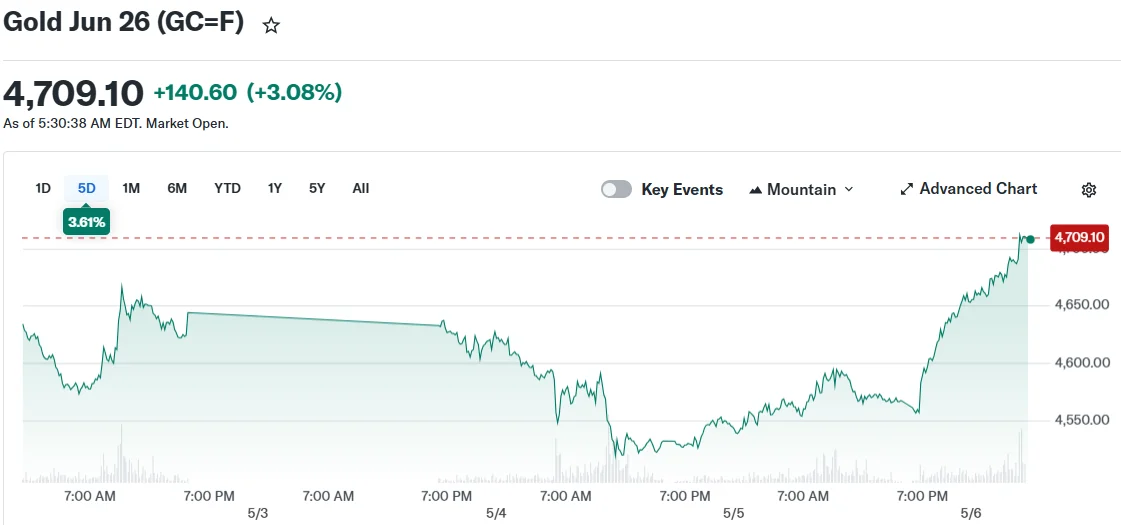
The rally materialized following President Donald Trump’s announcement via social media indicating substantial advancement in diplomatic negotiations with Iran, prompting his decision to suspend the U.S. naval operation designed to escort commercial vessels through the strategically vital Strait of Hormuz pending finalization of an agreement.
Defense Secretary Pete Hegseth verified that the ceasefire arrangement, initiated approximately one month prior, continues to hold. Marco Rubio, serving as Secretary of State, clarified that aggressive military actions have concluded, with American focus shifting toward safeguarding maritime commerce traversing the strait. Iran’s top diplomat, Foreign Minister Abbas Araghchi, characterized the negotiations as “making progress.”
However, despite optimistic statements from government representatives, reports emerged of a commercial vessel sustaining damage from an unidentified projectile one day following confrontations near the Strait of Hormuz — underscoring that regional volatility persists.

Currency Weakness Provides Additional Support
A half-percent decline in the U.S. dollar index contributed to gold‘s upward trajectory, as dollar depreciation enhances purchasing power for international buyers conducting transactions in alternative currencies. Analysts Warren Patterson and Ewa Manthey from ING observed that ongoing concerns about potential conflict escalation continue to sustain gold’s traditional safe-haven characteristics.
They emphasized that establishing a durable ceasefire arrangement could diminish inflationary pressures and reduce the probability of Federal Reserve monetary tightening — factors that would fundamentally support precious metal valuations. Assets like gold that generate no yield typically appreciate when market expectations for higher interest rates moderate.
Federal Reserve Policy Uncertainty Caps Upside
The trajectory for gold remains murky. Fixed-income market participants are progressively incorporating expectations that the Federal Reserve’s subsequent policy adjustment will involve raising rates rather than reducing them. This evolving sentiment is constraining gold’s near-term rally potential.
Market observers are focusing intensely on forthcoming U.S. employment data, which may demonstrate labor market stabilization — potentially reinforcing inflation considerations within the Fed’s policy deliberations.
Since hostilities with Iran intensified in late February, gold has surrendered more than 12% of its value, and market strategists indicate that positioning in the metal remains complex. Nicky Shiels, serving as head of research and metals strategy at MKS PAMP SA, characterized precious metals as entering the summer period in a “structural positioning paradox.”
Although total dollar-denominated investment in gold remains elevated, actual contract volumes and physical ounce holdings are comparatively modest. “The medium-term bull case on debasement, supply chain fragmentation, and monetary order breakdown remains intact,” Shiels explained, “but the near-term path to new highs requires generalist institutional capital to step in.”
She emphasized that seasonal trading dynamics and what she termed “exhausted retail” participation are insufficient to independently propel the next significant advance.
According to ING’s assessment, the primary catalyst for gold’s direction will be interest rate expectations — influenced by U.S. Treasury financing requirements and critical economic indicators scheduled for release in coming weeks.
