


Key Highlights
- United Arab Emirates withdrawing from OPEC this Friday, enabling production increases beyond alliance restrictions
- Trump administration preparing for long-term Iranian port blockade strategy
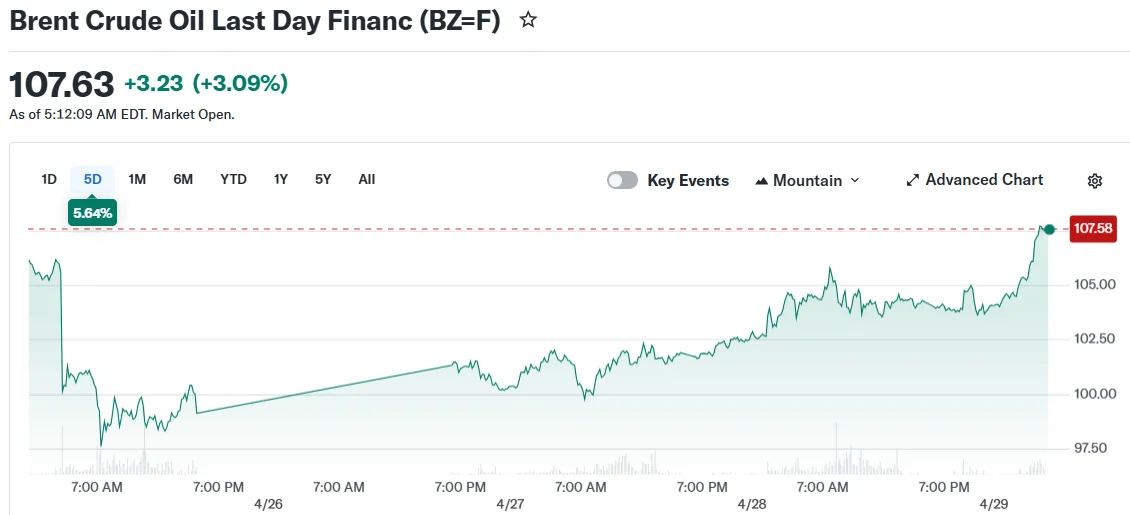
- Brent crude climbed 3.3% reaching $114.93 per barrel; WTI increased 3.8% to $103.65 per barrel
- Diplomatic negotiations between Washington and Tehran remain deadlocked, Strait of Hormuz closure continues
- Approximately 20% of global petroleum shipments transit through the Strait of Hormuz, maintaining supply uncertainty
Energy markets experienced significant upward momentum Wednesday following two critical developments: the United Arab Emirates’ declaration of its OPEC withdrawal and emerging intelligence that the Trump administration is organizing an extended Iranian blockade.
Brent crude futures, serving as the international pricing benchmark, advanced 3.3% to reach $114.93 per barrel. Meanwhile, U.S. West Texas Intermediate crude posted gains of 3.8%, settling at $103.65 per barrel.
The Emirates announced its withdrawal from OPEC becomes official this Friday, stating the decision enables the nation to prioritize its “national interests.” Historical tensions between the UAE and OPEC regarding production limitations suggest the Gulf state will expand output once freed from cartel constraints.
This strategic separation places the UAE in opposition to Saudi Arabia, OPEC’s primary influencer, during a period when the organization faces mounting challenges from the continuing Iranian conflict and global supply chain interruptions.

Neverthstanding, meaningful production expansion from the UAE faces constraints until the Strait of Hormuz resumes operations. This critical shipping channel along Iran’s southern border handles approximately twenty percent of worldwide petroleum transport and currently experiences virtually zero commercial traffic.
Blockade Strategy Elevates Market Concerns
The Wall Street Journal disclosed Tuesday that Trump has instructed his team to develop strategies for a sustained blockade targeting Iranian maritime facilities. This approach aims to severely restrict Iran’s petroleum exports while compelling Tehran toward diplomatic concessions.
The administration has additionally dismissed Tehran’s proposal to restore Strait access and conclude hostilities. The White House insists on more stringent controls over Iran’s nuclear capabilities before considering any settlement.
Iranian officials have demanded blockade termination as a prerequisite for resuming diplomatic discussions. Despite Trump’s announcement last week extending the ceasefire with Iran without time constraints, initiatives to facilitate bilateral negotiations have achieved minimal progress.
Market specialists at ANZ noted that diplomatic gridlock has heightened prospects for prolonged disruption of Persian Gulf petroleum flows. Their assessment indicates that market stabilization following eventual Strait reopening “will require years.”
Expert Market Analysis
Several market observers interpret the UAE’s departure as indicative of fundamental structural changes in oil markets. Julius Baer’s Norbert Rücker emphasized that petroleum-producing nations face broader competitive pressures from American shale operations, South American offshore drilling, and expanding Chinese electric vehicle adoption. His projections anticipate prices stabilizing in the upper $60s range long-term.
Capital Economics analysts suggest the UAE’s actions may reflect strengthening ties with Washington and Jerusalem. The nation was among the initial Abraham Accords signatories and has committed substantial investments in American artificial intelligence ventures.
Earlier this month, Emirates officials initiated discussions with Washington regarding a potential currency exchange mechanism, expressing concerns about economic consequences stemming from the Iranian situation.
Market participants are currently monitoring diplomatic developments and the forthcoming U.S. petroleum inventory data for indicators regarding stockpile depletion rates.
