


TLDR
- Law enforcement organizations are pushing back against DeFi developer protections in the CLARITY Act, claiming they hinder prosecution efforts
- Senator Thom Tillis insists these objections must be resolved before committee markup can proceed
- Industry representatives maintain the DeFi safeguard language is essential and cannot be removed
- Senator Cynthia Lummis characterizes the challenge as manageable and actively seeks compromise
- An August deadline approaches, with Galaxy Digital estimating a 50% probability of passage in 2025
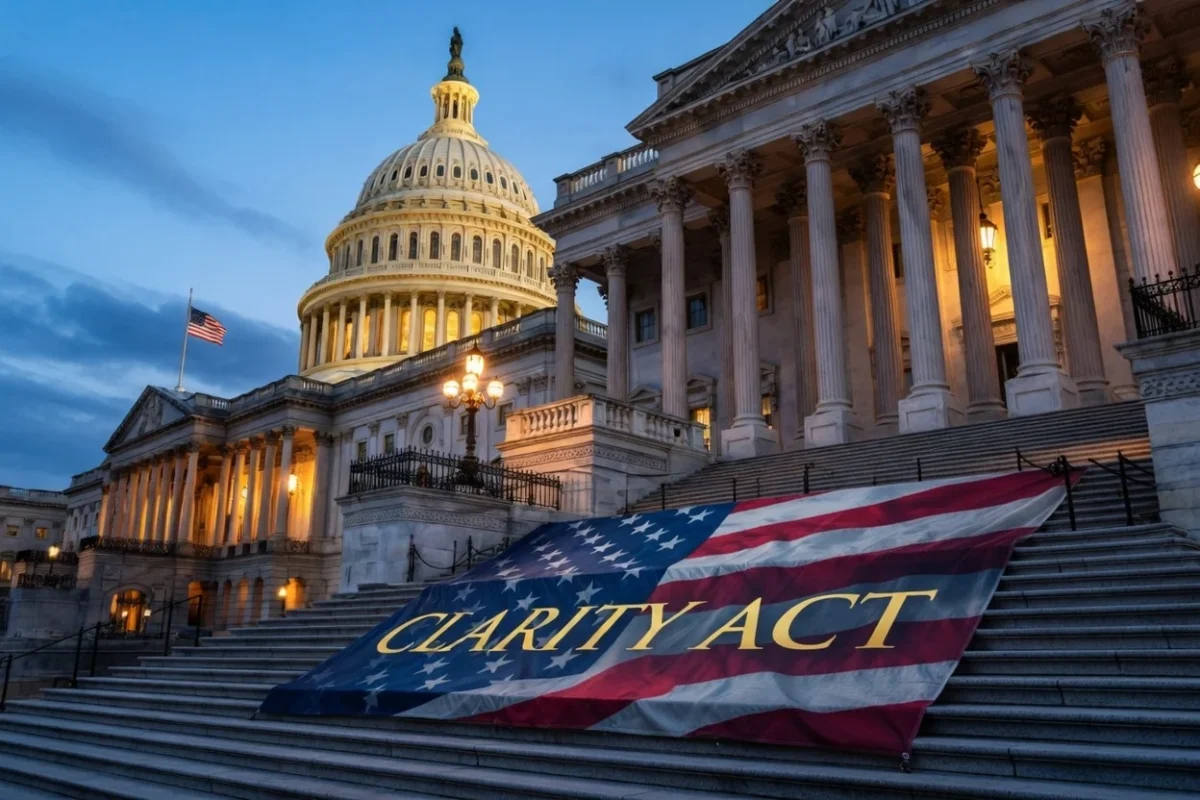
A critical piece of cryptocurrency regulatory legislation, the CLARITY Act, has encountered significant resistance from law enforcement organizations over language designed to protect decentralized finance developers.
According to Senator Thom Tillis, who serves on the Senate Banking Committee, these objections must be addressed before the legislation can advance to markup. Observers had anticipated a markup session in May.
The contentious language in question parallels provisions found in the Blockchain Regulatory Certainty Act. This section provides legal safeguards for DeFi developers, preventing them from being held liable for unlawful activities conducted by users operating on their platforms.
Organizations representing law enforcement officials, including police departments and prosecutors’ offices, contend that this protection clause would significantly impair their ability to investigate and prosecute financial crimes. These groups are demanding either elimination or substantial revision of the provision.
Conversely, cryptocurrency sector representatives have identified this provision as a fundamental requirement. Multiple stakeholders have indicated they consider its preservation non-negotiable. Reports suggest the White House administration also regards this element as critically important.

Senator Tillis has articulated his stance unambiguously. He has indicated the legislation must incorporate an ethics component, and has pledged to oppose the bill if that requirement is omitted. His endorsement is viewed as essential, particularly if the Senate Banking Committee must advance the measure through a partisan vote.
Lummis Pushes Back on Concerns
Senator Cynthia Lummis addressed the emerging challenges in a social media statement on X, dismissing characterizations of the issue as a “big new hurdle.” She indicated she is currently developing solutions.
“I am committed to keeping protections for non-money transmitting developers safe without tying law enforcement’s hands to hold bad actors accountable,” Lummis wrote.
Lummis had earlier announced at a Bitcoin industry event that markup proceedings would occur in May and expressed confidence the legislation would ultimately succeed.
Multiple Issues Still Unresolved
The DeFi developer protection language represents just one of several outstanding complications. Democratic lawmakers are advocating for mandatory ethics requirements within the legislation. Separate discussions continue regarding stablecoin yield provisions, with Tillis playing a central role in those talks.
Additional concerns involve the Securities and Exchange Commission. Democratic members seek balanced partisan representation on the SEC, while Republicans presently control three of five commissioner positions.
Time constraints add urgency to these deliberations. The Senate faces a five-week break preceding midterm elections, effectively establishing an August cutoff point.
Galaxy Digital analysts have assessed a 50% likelihood of the legislation passing during the current year. The research firm cautioned that these odds may decline substantially if the Senate Banking Committee fails to take action during May.
The CLARITY Act remains stalled at the committee level, with multiple contested provisions preventing forward movement.
