


Key Highlights
- Solana has breached critical support zones, currently exchanging hands around $77 following a dip to $75.80
- Futures market open interest declined approximately 2% to $5.09 billion, accompanied by negative funding rates
- A mere 20% of wallet addresses holding SOL are showing gains — marking the weakest reading since the end of 2023
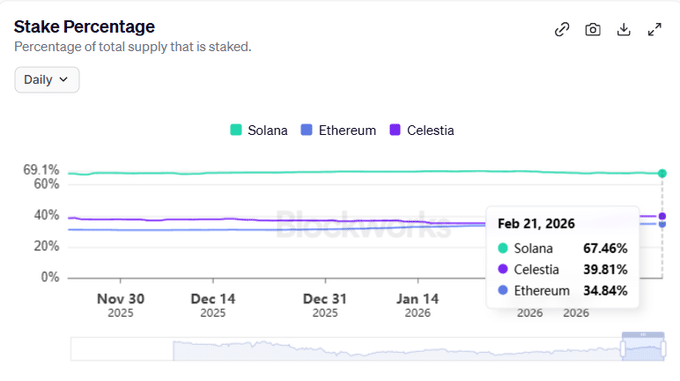
- Approximately 67% of Solana’s entire token supply is currently staked, limiting available circulation
- Corporate treasuries collectively control more than $1.3 billion in SOL, further restricting market liquidity
Solana (SOL) is currently changing hands near $77 following a recent bottom at $75.80, continuing a six-week downtrend that has dragged the cryptocurrency significantly below its earlier 2026 peak around $95.
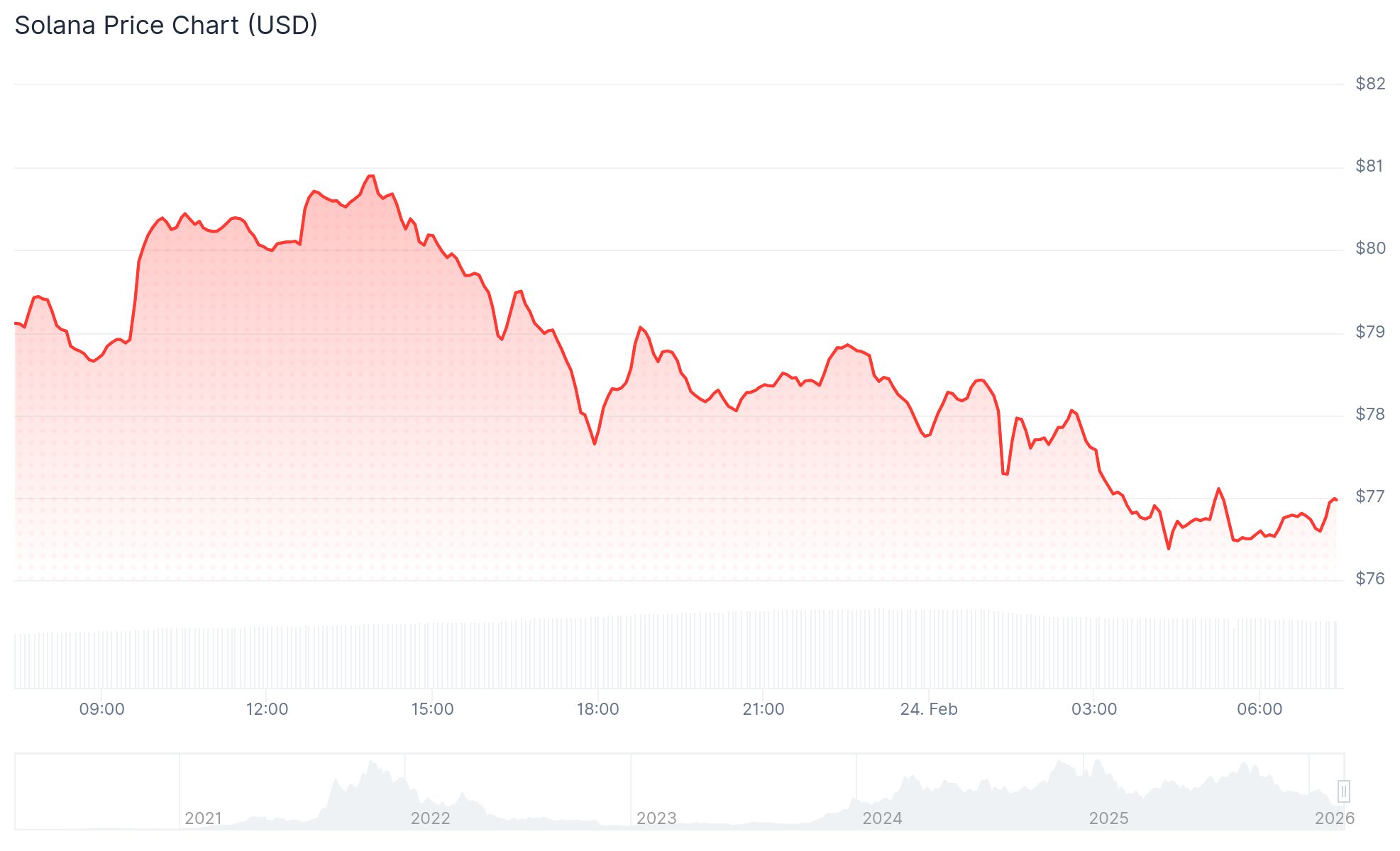
The downturn has been persistent and methodical. Solana has violated important technical thresholds, while market metrics indicate escalating hesitation among market participants.
Futures open interest for Solana contracted by approximately 2% to roughly $5.09 billion, despite a notable surge in trading activity. This divergence often indicates cascading liquidations rather than fresh capital entering the market.
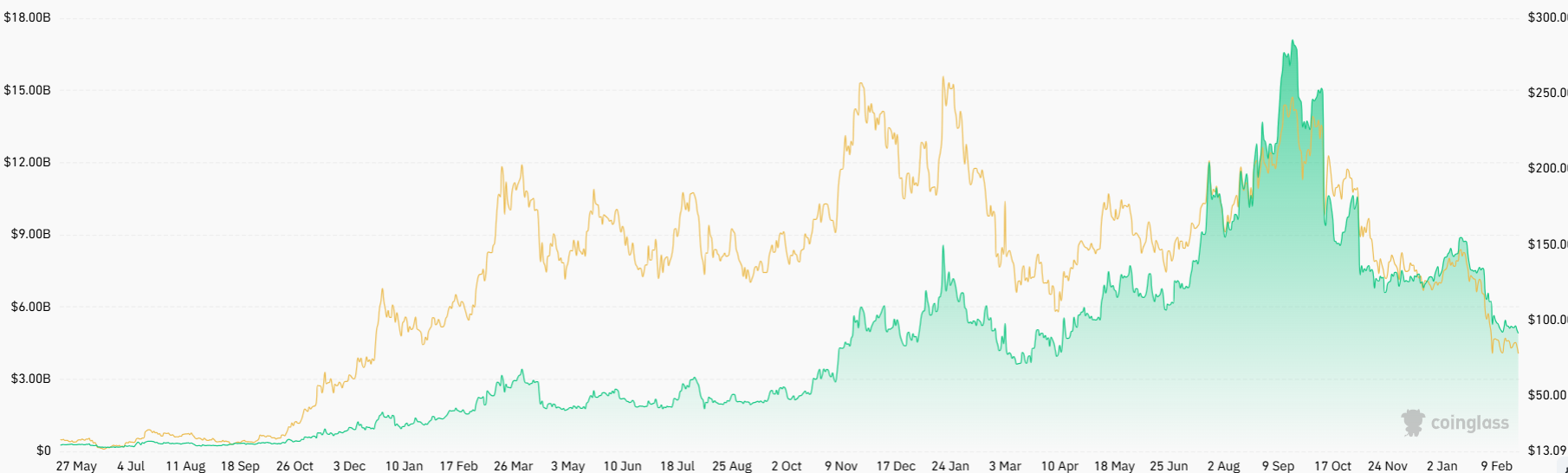
Funding rates have shifted into negative territory. The long-to-short ratio has fallen beneath 1. These indicators collectively point toward heightened bearish sentiment, with more participants wagering on additional declines rather than an imminent bounce.

Whale accounts have been establishing short positions, while smaller traders on platforms like Binance and OKX maintain leveraged long exposure. This positioning mismatch increases the likelihood of amplified price swings should existing support zones fail.
Blockchain Metrics Reflect Growing Pessimism
Blockchain analytics from Glassnode reveal that merely 20% of Solana addresses are currently holding unrealized gains. This represents the weakest profitability metric recorded since the latter part of 2023.
In previous market cycles, comparable profitability levels have coincided with capitulation events during extended bear markets, though experts emphasize this does not guarantee an immediate price floor.
Accumulation activity from long-term holders, which was prominent during the early months of this year, has diminished considerably since SOL dropped beneath the $100 threshold. This decline suggests weakening confidence among buyers who previously absorbed selling pressure during earlier corrections.
Technical momentum indicators continue trending downward. Relative Strength Index measurements are approaching oversold zones, reflecting sustained distribution rather than early reversal signals.
Reduced Circulating Supply May Influence Future Dynamics
Despite the bearish price action, Solana’s available supply has contracted significantly. Data from February 23 shows 67% of total SOL tokens are locked in staking contracts, representing substantial long-term conviction from holders resistant to selling.
Corporate treasuries have simultaneously amassed in excess of $1.3 billion worth of SOL tokens, withdrawing additional supply from readily available markets.
When such significant portions of supply become illiquid, the remaining circulating tokens grow increasingly scarce. Historical precedent suggests that supply constraints combined with renewed demand can trigger explosive price movements.
However, this scenario remains unrealized at present. Market observers indicate that broader cryptocurrency market stabilization and improved macroeconomic clarity are prerequisites before supply dynamics can catalyze significant upward momentum.
Currently, market participants are monitoring critical support between $75 and $67. A decisive breakdown below this zone could expose price levels around $62 or potentially $60.
On the resistance side, SOL confronts selling pressure between $82 and $83, where a descending trendline has established itself. At present, SOL is valued at approximately $77, marginally above its recent trough of $75.80.
