


TLDR
- Brent crude surged up to 2.5% reaching $107.97 per barrel while WTI approached $97
- Nearly 20% of worldwide crude supplies remain cut off as the Strait of Hormuz blockade persists
- Diplomatic negotiations between Washington and Tehran fell apart following Trump’s cancellation of envoy mission
- Tehran submitted a fresh proposal focused on reopening Hormuz while deferring nuclear discussions
- International Energy Agency identifies this as the most severe energy supply disruption on record
Crude oil markets experienced significant upward momentum Monday following the weekend collapse of diplomatic initiatives aimed at resolving the US-Iran standoff, with the strategically vital Strait of Hormuz entering its ninth consecutive week of effective closure.
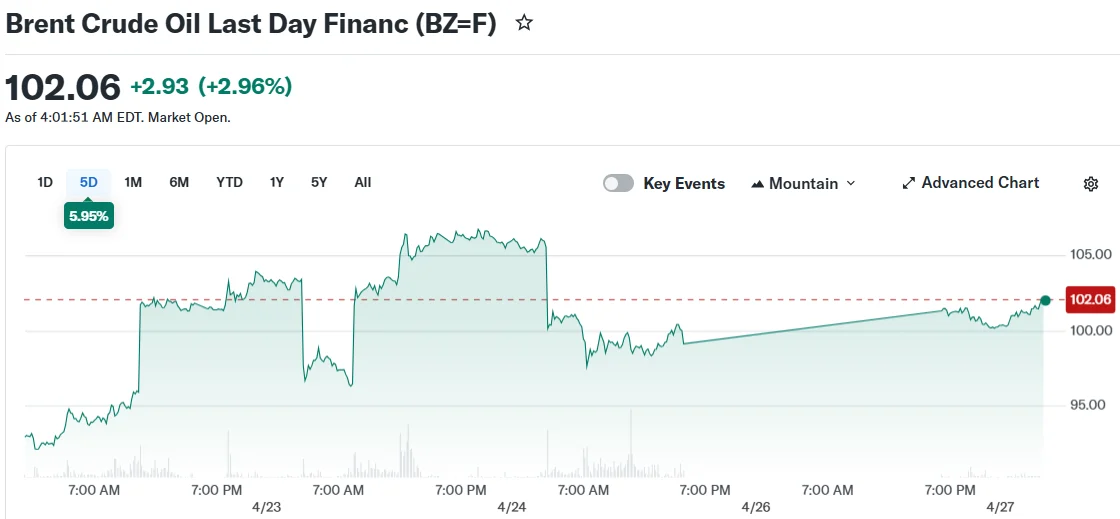
Brent crude futures surged by as much as 2.5% to reach $107.97 per barrel during trading. West Texas Intermediate climbed closer to the $97 mark. Market gains moderated somewhat after news outlet Axios disclosed that Iranian officials had transmitted a fresh proposal to American counterparts addressing the strait’s reopening.
The Strait of Hormuz, a critical maritime chokepoint handling approximately one-fifth of global petroleum shipments, has remained under a coordinated blockade implemented by both Washington and Tehran since February’s final days. Daily vessel passages through this waterway have plummeted to virtually zero.
The confrontation originated when Iranian forces moved to obstruct the strait following US-Israeli military actions in the region. While a ceasefire agreement took effect in early April, the naval blockade has persisted without meaningful progress toward a solution.

President Donald Trump withdrew plans for envoys Jared Kushner and Steve Witkoff to travel to Pakistan, which had been facilitating mediation efforts between the parties. Speaking to media, Trump characterized Iran’s position as falling short, stating they had “offered a lot, but not enough.”
Iranian President Masoud Pezeshkian declared that Iran would refuse “imposed negotiations under threats or blockade.” While direct military confrontations have ceased since the ceasefire implementation, fundamental disagreements continue to separate the adversaries.
According to Axios reporting, Iran’s latest diplomatic overture would address both the strait’s reopening and conflict termination, while postponing nuclear program discussions to subsequent negotiations. Washington has maintained demands that Tehran surrender its uranium stockpiles and halt all nuclear activities — requirements Iranian leadership has consistently refused.
Supply Shock Hits Global Markets
The International Energy Agency has characterized this confrontation as generating the most significant energy supply disruption in recorded history. Analysts consider a loss exceeding 1 billion barrels virtually inevitable, surpassing by more than double the emergency petroleum reserves released by governments worldwide.
India has experienced severe shortages of liquefied petroleum gas. Airlines have implemented flight reductions. Both fertilizer production and fuel distribution networks have suffered disruptions.
“The Strait continues to face an effective siege, with commercial traffic completely halted,” explained Mona Yacoubian from the Center for Strategic and International Studies. “We find ourselves trapped in this purgatory, with the situation completely deadlocked.”
Robert Yawger, who directs energy futures trading at Mizuho Securities, projected that price consolidation above the $100 threshold represents the trajectory ahead, noting that prospects for a negotiated settlement diminish with each day that passes.
US Central Command reported that American military units intercepted a sanctions-violating vessel in Arabian Sea waters Saturday. Since the blockade’s implementation, 38 commercial ships have been redirected from their planned routes.
Sanctions Add Pressure
The US Treasury Department confirmed its decision not to extend a waiver previously permitting purchases of Russian and Iranian petroleum already in transit, eliminating a temporary measure that had partially mitigated supply disruptions.
Friday brought US sanctions against Chinese refining company Hengli Petrochemical over alleged Iranian connections, implemented weeks before an anticipated meeting between Trump and Chinese President Xi Jinping. Hengli has categorically denied conducting any Iranian trade.
Iran directs the majority of its crude exports toward China, where independent Chinese refineries purchase these discounted barrels.
Haris Khurshid, serving as chief investment officer at Karobaar Capital, forecast that Brent crude will likely fluctuate within a $100 to $115 per barrel range absent broader regional military escalation.
Trump has scheduled a Monday national security briefing to address the stagnant negotiation process.
